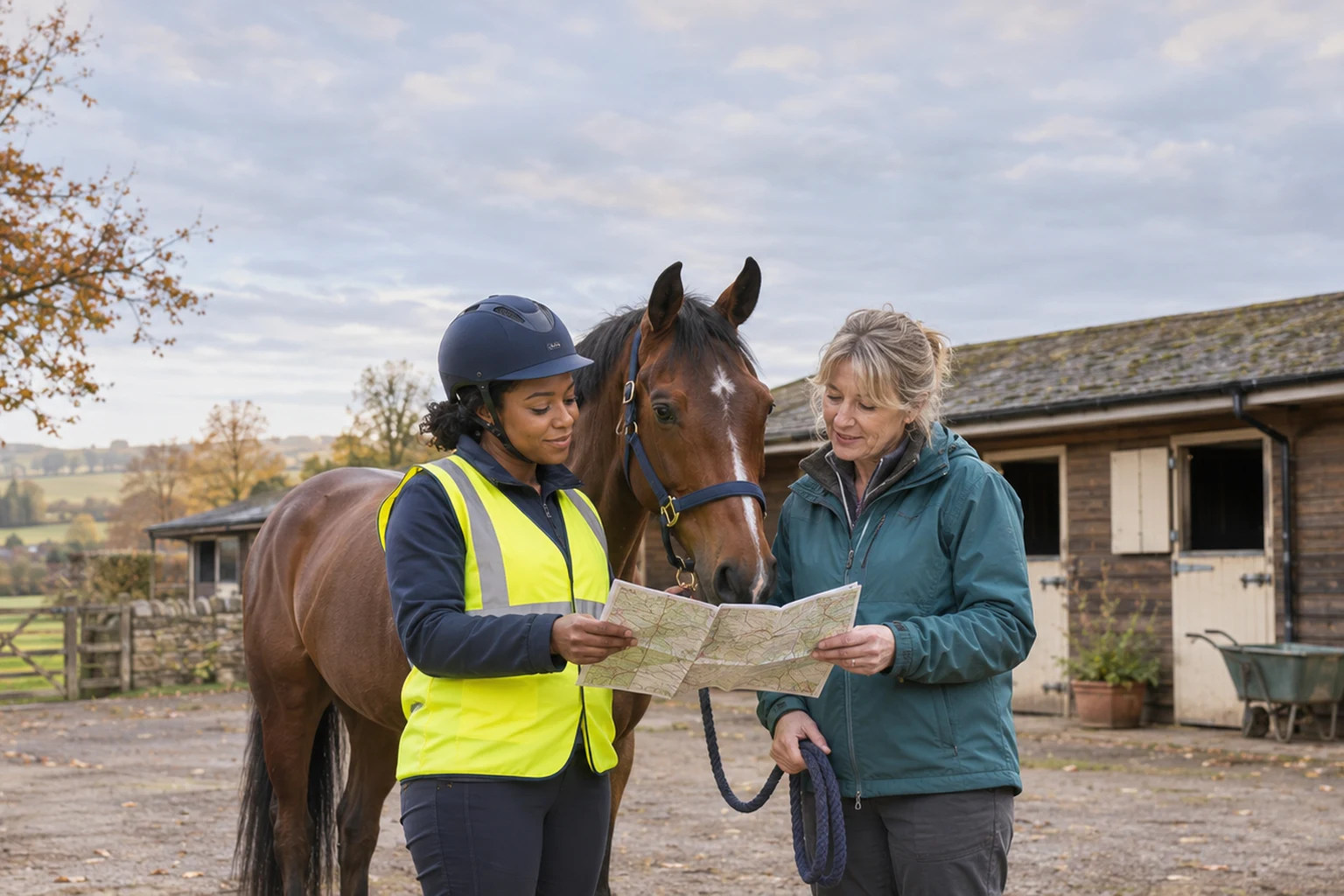


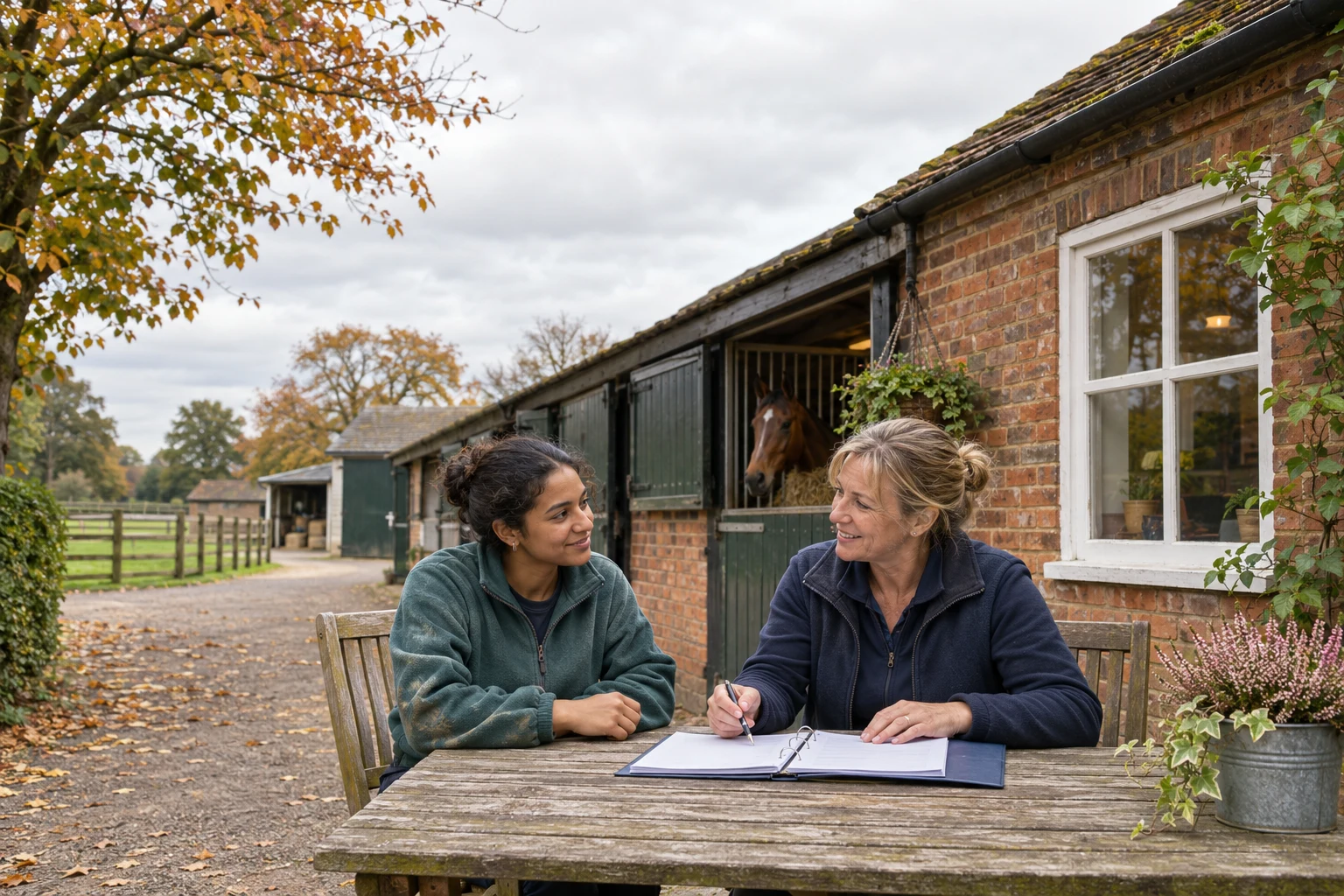
Before starting a groom job, ask for the working arrangements in writing and compare them with the day you have been offered. Talk through the hours, duties and any accommodation before making plans around the role. A friendly yard visit is useful, but it cannot answer every question about the job.
This guide helps you prepare that conversation. It is information and signposting, not legal advice or a way to decide your employment status. The written-statement rules differ between Great Britain and Northern Ireland, so check the guidance for where you will work.[1][3]
Find out what sort of arrangement is being offered
Ask who would employ you and whether the proposed arrangement is employment, worker status or self-employment. GOV.UK explains that employment status helps determine rights and employer responsibilities, and that status for tax can differ from status in employment law.[2] If the explanation is unclear, get advice rather than trying to settle it from a job advert.
Keep the advert, offer email and your questions together. During a visit, you could ask: “Who should I contact about the paperwork, and when can we go through it?” That gives you a named person and a next step without turning a first meeting into an argument.
Separate what you have been told from what you still need to ask. A note saying “occasional travelling” needs a conversation about the actual trips being discussed. Do not assume another groom’s arrangement will also apply to you.
Ask what an ordinary working week looks like
In Great Britain, the principal written statement must include hours and days of work, how they may vary, pay and how often it is paid, alongside other employment details. It must be provided on the first day of employment; the wider statement follows within two months.[1]
Use those headings to ask about the yard’s routine. What time would you start and finish? Who agrees the rota? How would competition days, weekend cover or a late return be handled? Ask to see an example week rather than relying on “we all pitch in” as the whole explanation.
Write down anything that would affect your journey or another commitment. If you depend on the last bus, say so before accepting a finish time you cannot manage. Where an answer remains open, ask when it will be confirmed and keep it marked as unresolved.
Talk through duties, training and the first day
Ask which tasks belong to the role and who will show you how the yard does them. You might want to discuss handling unfamiliar horses, using yard equipment or travelling with the team. These are questions for the employer about the actual role, not instructions to attempt a task you have not been trained for.
The Great Britain guidance includes a job title or description of work, probation conditions and obligatory training among the principal statement’s details.[1] Read those parts alongside what you were told at the visit. If the written description and conversation do not match, ask about the difference.
Before your first morning, agree where to report and who your contact will be. Ask how to raise a question when that person is busy or away. A name written beside your start time is more useful than arriving with a question nobody expects to handle.
Keep accommodation questions separate from the job description
If the offer includes somewhere to live, ask for the accommodation arrangements in writing too. As preparation questions, you could ask what space you would have, who shares it, what payments are proposed and what happens if either the work or housing arrangement changes. Do not treat these prompts as a statement of your housing rights.
Arrange to see the accommodation and think about ordinary life there. Would the journey to shops work without a car? Is there somewhere private to make calls? Ask which questions the yard can answer and which need independent advice before you make a commitment.
Avoid filling gaps with assumptions about being “part of the family”. You can welcome a friendly atmosphere while still asking how time away from duties and accommodation arrangements will work.
Check the right guidance and agree your next step
Northern Ireland has different written-statement rules. Nidirect says an employee employed for longer than one month should receive the statement within two months of starting work.[3] Do not apply the Great Britain day-one rule to every UK yard.
GOV.UK points people with employment-status or rights questions to Acas, or the Labour Relations Agency in Northern Ireland.[2] Take the advert, offer and unanswered questions to an advice conversation rather than relying on somebody else’s experience at another yard.
For now, choose one action: request the paperwork, arrange a call or ask for a missing answer in writing. Keep a copy of what comes back and check it before making further arrangements. You can also visit the Equi Mind hub for more articles for people whose lives revolve around horses.
Sources
[1] Employment contracts: Written statement of employment particulars – GOV.UK