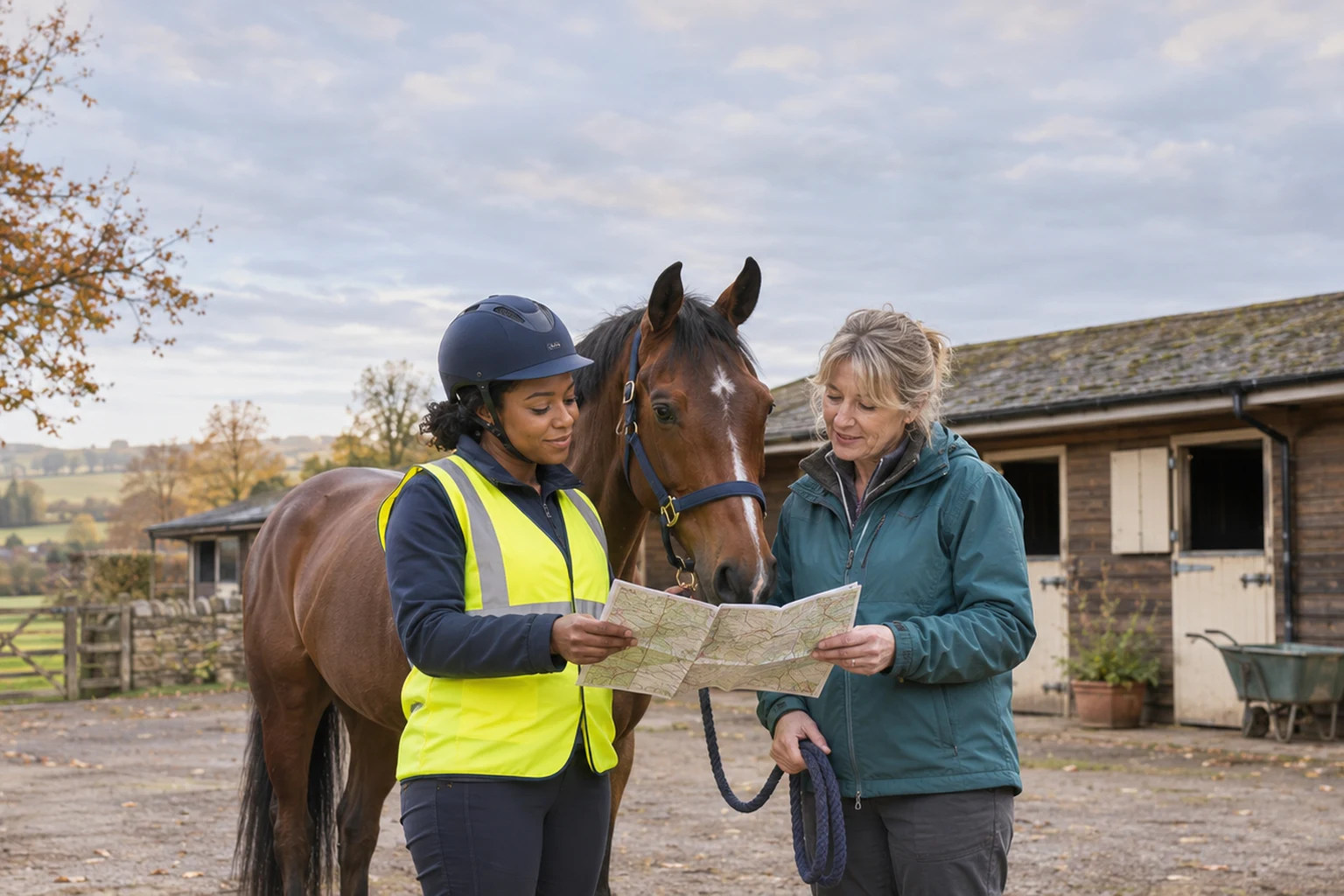
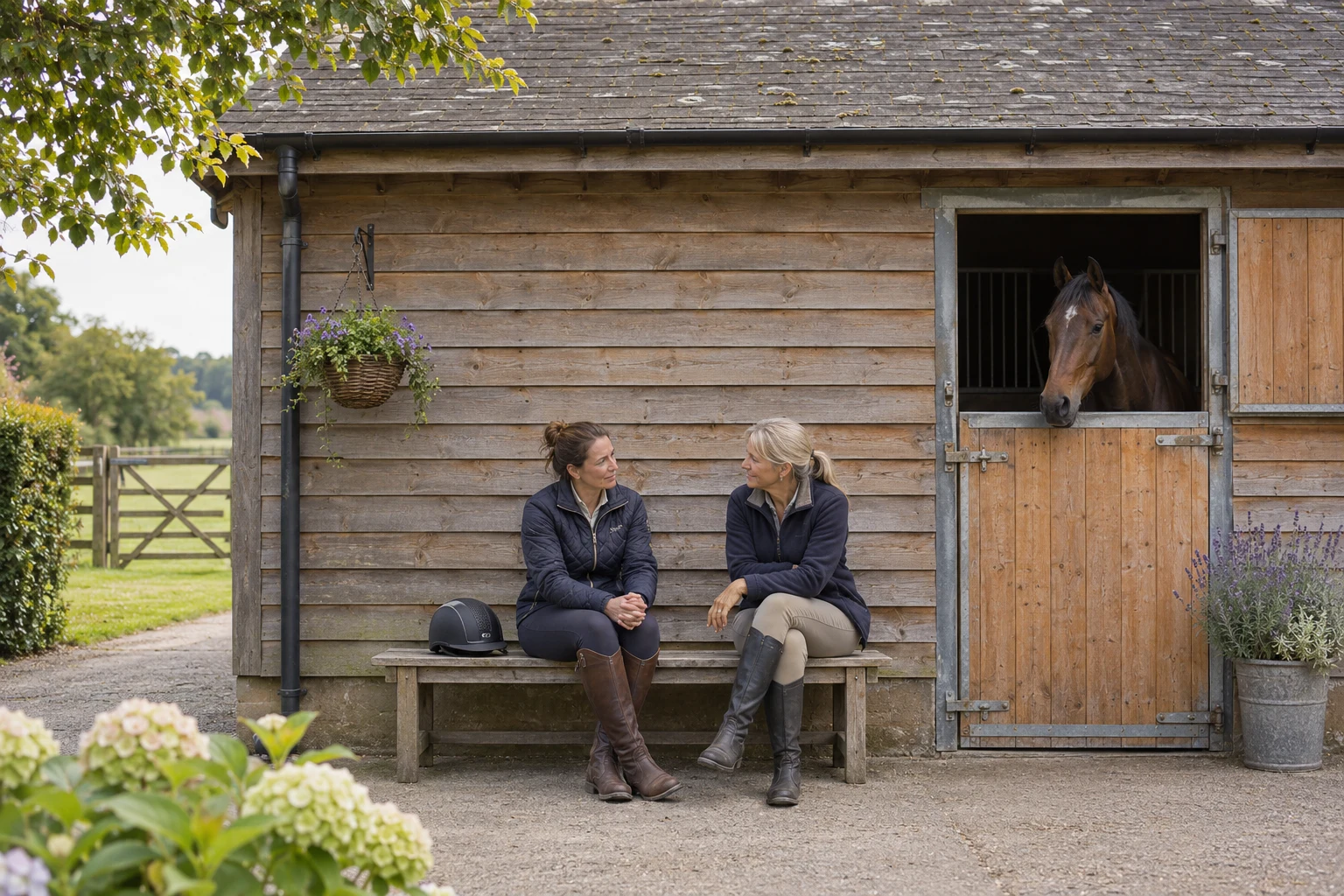
If you have lost motivation to ride, start by separating the riding you want to do from the goals you feel expected to meet. Before booking another lesson or entering a competition, talk through what you would like to change with your coach. You do not have to settle the future of your whole hobby in that conversation.
Perhaps you still look forward to seeing your horse but dread being asked about the next show. Or you enjoy a quiet lesson until it becomes another test of progress. The suggestions here are prompts for reflection and conversation, not a diagnosis or a programme for treating low mood.
Find the part you no longer enjoy
Think about your most recent visit rather than trying to explain everything at once. At what point did you wish you were somewhere else? Was it before the lesson, while discussing a competition, or after comparing your progress with somebody else’s?
Write down what happened, what you wanted instead and what you would like to ask about. Keep the note private if that makes it easier to be honest. You might discover that the question is about a particular goal or teaching arrangement rather than whether you still like horses.
The NHS recommends talking to someone you trust and breaking demanding tasks into more manageable parts when dealing with stress.[1] For this conversation, choose one part of the riding week to discuss instead of arriving with a plan to change everything.
Check whose goal you are working towards
Look at the next event or milestone in your diary. Ask yourself whether you would choose it now if nobody else knew about it. A goal you wanted last year can be reconsidered without dismissing the effort you have already put in.
There may be a mismatch between your idea of a satisfying lesson and your coach’s understanding of what you want. Try a specific opening: “I don’t want to prepare for a show at the moment. Can we talk about what I would enjoy working on instead?”
If you do want to compete, say which part feels unwelcome. Ask the coach to help distinguish questions about preparation or riding safety from the pressure you feel around results. Leave technical decisions to someone qualified who knows you and the horse, rather than following a stranger’s training plan online.
Ask for a different kind of conversation
Arrange a few minutes before the next booking, rather than trying to explain while a lesson is already under way. Say what you have noticed and what you are asking for. You could request a discussion about a different focus, fewer performance targets or whether to postpone an entry.
You do not have to share private health details to explain a preference. “I’d like to enjoy learning without a competition deadline” gives the coach something concrete to respond to. Ask what a revised arrangement would involve before agreeing to it.
If you feel unheard, take time to consider the answer. You can ask another qualified coach about their approach without immediately booking sessions or making a permanent decision. For a younger rider, involve a parent or trusted adult in arranging that conversation.
Make a small plan with a review point
Choose a manageable next step, such as a conversation about the next lesson’s focus. Agree when you will review it and what you want to notice: whether you are looking forward to the session, whether you feel listened to, or whether the goal still suits you.
If you decide to pause riding, discuss the practical arrangements separately. Make sure the horse’s care remains covered, and ask the relevant professionals about any changes affecting its needs. A personal break should not leave an unspoken gap in daily responsibilities.
Avoid turning the review into another scorecard. “Did that feel more like the riding I want?” is a useful question to bring back to the coach. You can revise the plan rather than treating one disappointing session as a final answer.
Notice when the difficulty reaches beyond riding
If little feels enjoyable anywhere, or low mood is affecting daily life, do not rely on changing lessons alone. The NHS advises seeing a GP if low mood lasts more than two weeks, you are struggling to cope, or things you are trying are not helping.[2]
For someone to listen, Samaritans is available free, day or night, on 116 123.[3] In England, for urgent mental health help, call NHS 111 and choose the mental health option.[4] Call 999 in an emergency, including if you cannot keep yourself or someone else safe.[4]
For now, write down the goal you would like to reconsider and arrange one conversation before your next booking. The Equi Mind hub has more reading for the people behind the horses. Your next step can be deciding what you want to ask, rather than deciding whether to give up riding.
Sources
[1] Stress: Every Mind Matters