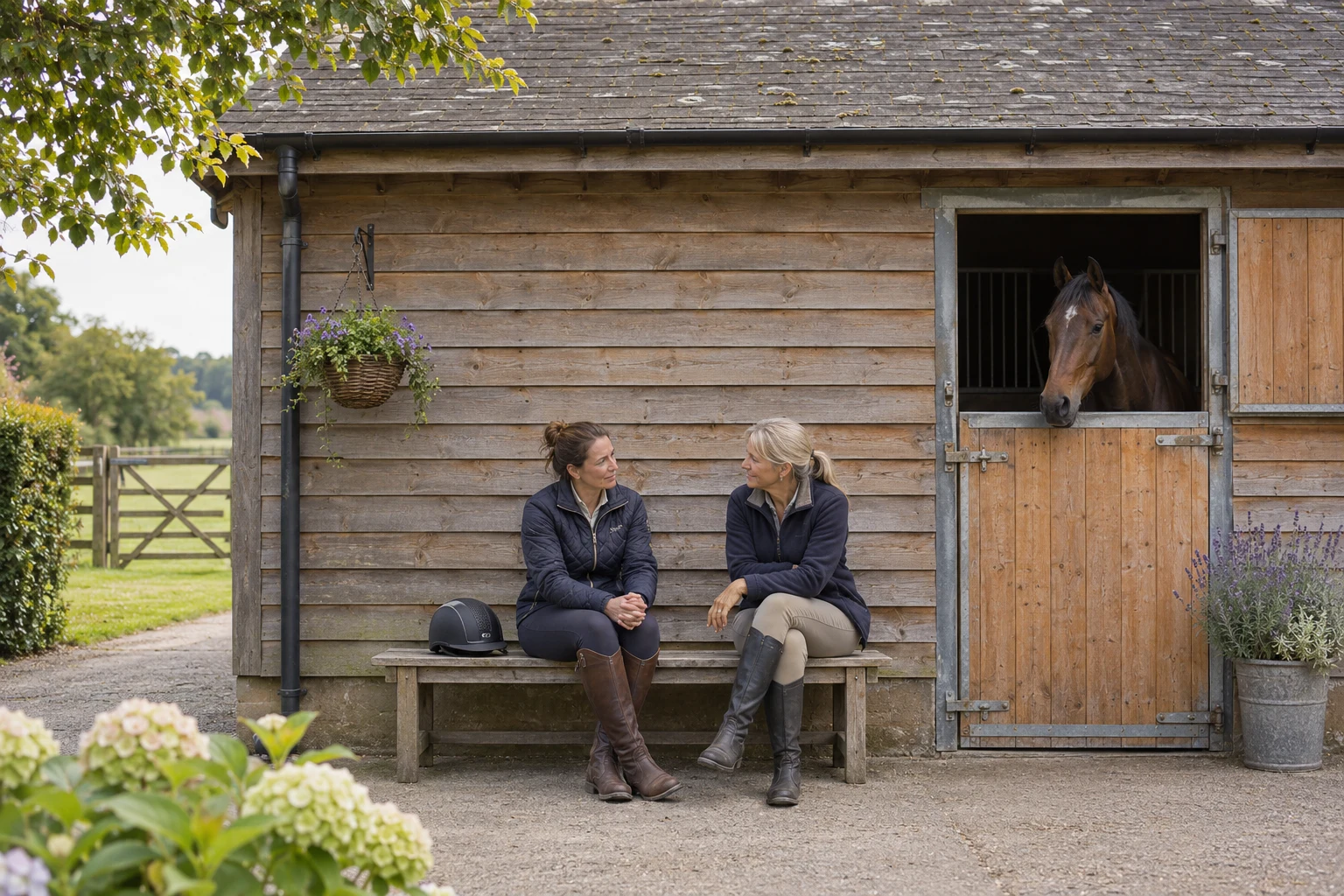
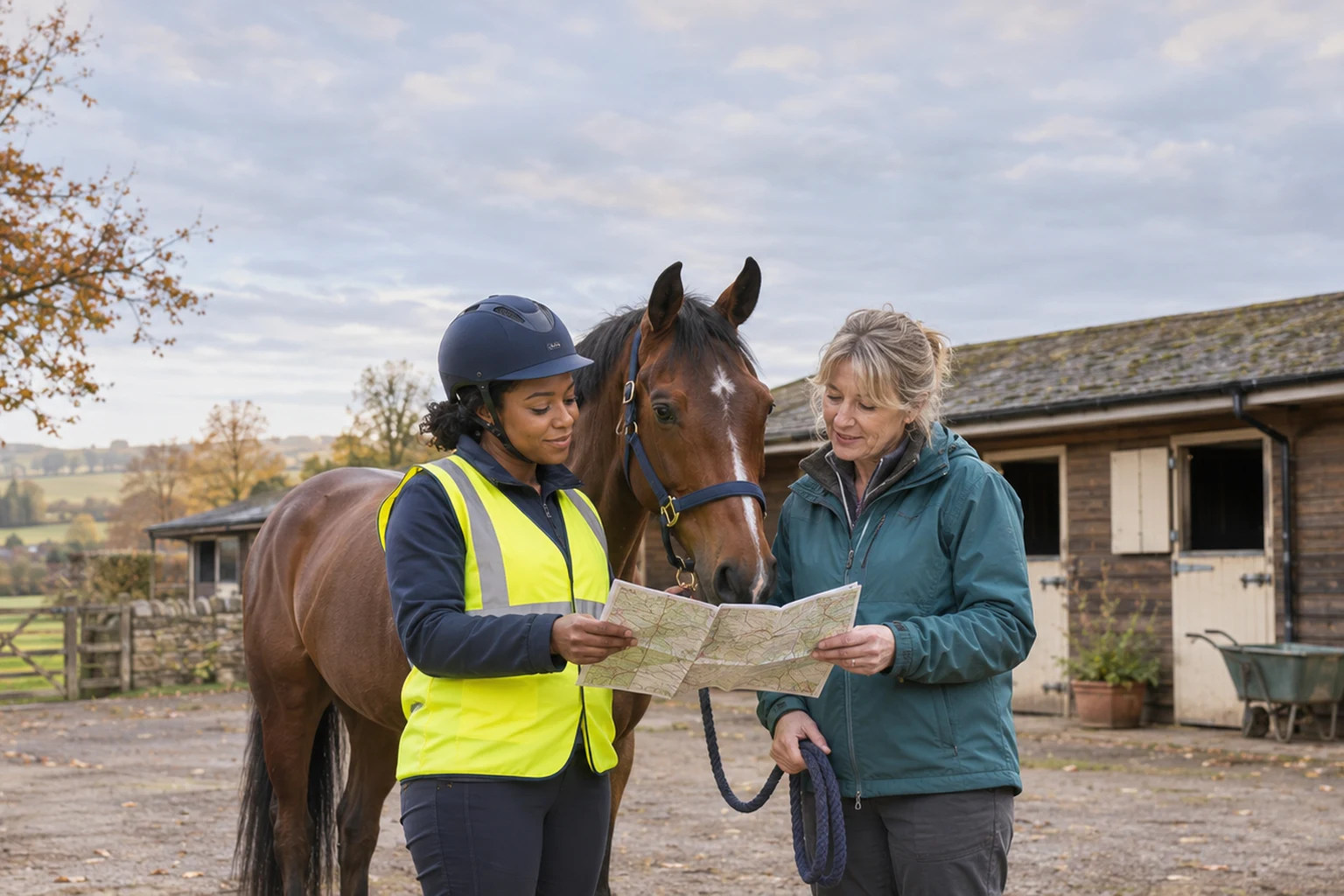
Before taking your horse onto the road, review the route with someone who knows your riding and your horse. Look at the actual road sections, decide whether the outing is suitable and leave a clear plan with somebody at the yard. A familiar loop still deserves a fresh look.
This is a preparation guide for riders in England, Scotland and Wales, not a riding lesson or legal advice. Use it to organise questions for a qualified coach and read the full Highway Code guidance linked below before making riding decisions.
Start with the route you actually intend to ride
Lay out the proposed route before tacking up. Mark where you would leave the yard, join traffic and reach any off-road section. The Highway Code recommends using a bridleway where possible and avoiding roundabouts wherever possible.[1] A line on a map is a starting point for discussion, not confirmation that a route is suitable for you and your horse.
Ask someone who knows the area which parts need a closer look. You could ask about a junction you have not used, a stretch with nowhere obvious to leave the road or a gate you would need to manage. Keep those questions specific. “Is the western loop all right?” leaves much more room for misunderstanding than naming the junction that concerns you.
If nobody can answer an important question, leave that part unresolved rather than filling the gap with an assumption. Discuss a different route or another activity with your coach. There is no need to make today’s outing match somebody else’s usual distance.
Match the plan to the horse and rider
The Highway Code says to check that tack fits and is in good condition, and that you can control the horse, before going onto the road.[1] Those are matters to work through with someone competent to assess them, rather than tick off because you have ridden the route before.
Tell your coach what has changed since your last road ride. Perhaps you are returning after time away, riding a different horse or planning to go with a new group. Ask which skills you need to practise before the proposed outing and what an appropriate first route would look like. Be clear about anything you have not tried.
The Code points inexperienced riders and people returning after a break towards the British Horse Society’s Ride Safe Award.[1] You could ask your coach whether that training would be useful for you. Reading an article cannot assess your readiness or replace supervised practice.
Review visibility before choosing a departure time
The Highway Code recommends light-coloured or fluorescent clothing in daylight and says it is safer not to ride on roads at night or in poor visibility.[1] The BHS recommends hi-vis and reflective equipment for both rider and horse.[2] Read their full guidance when reviewing your equipment, rather than treating one bright item as the whole plan.
Put the intended leaving time and return time alongside the route. If a lesson, delivery or yard job delays you, revisit the plan before setting off. Ask whether the same outing still makes sense, rather than automatically keeping it because everyone has already got ready.
This is also a useful moment to talk with anyone accompanying you. Explain what you have agreed with your coach and raise any uncertainty before the group moves off. Do not leave an important question until you reach the difficult part of the route.
Leave a clear plan with someone at the yard
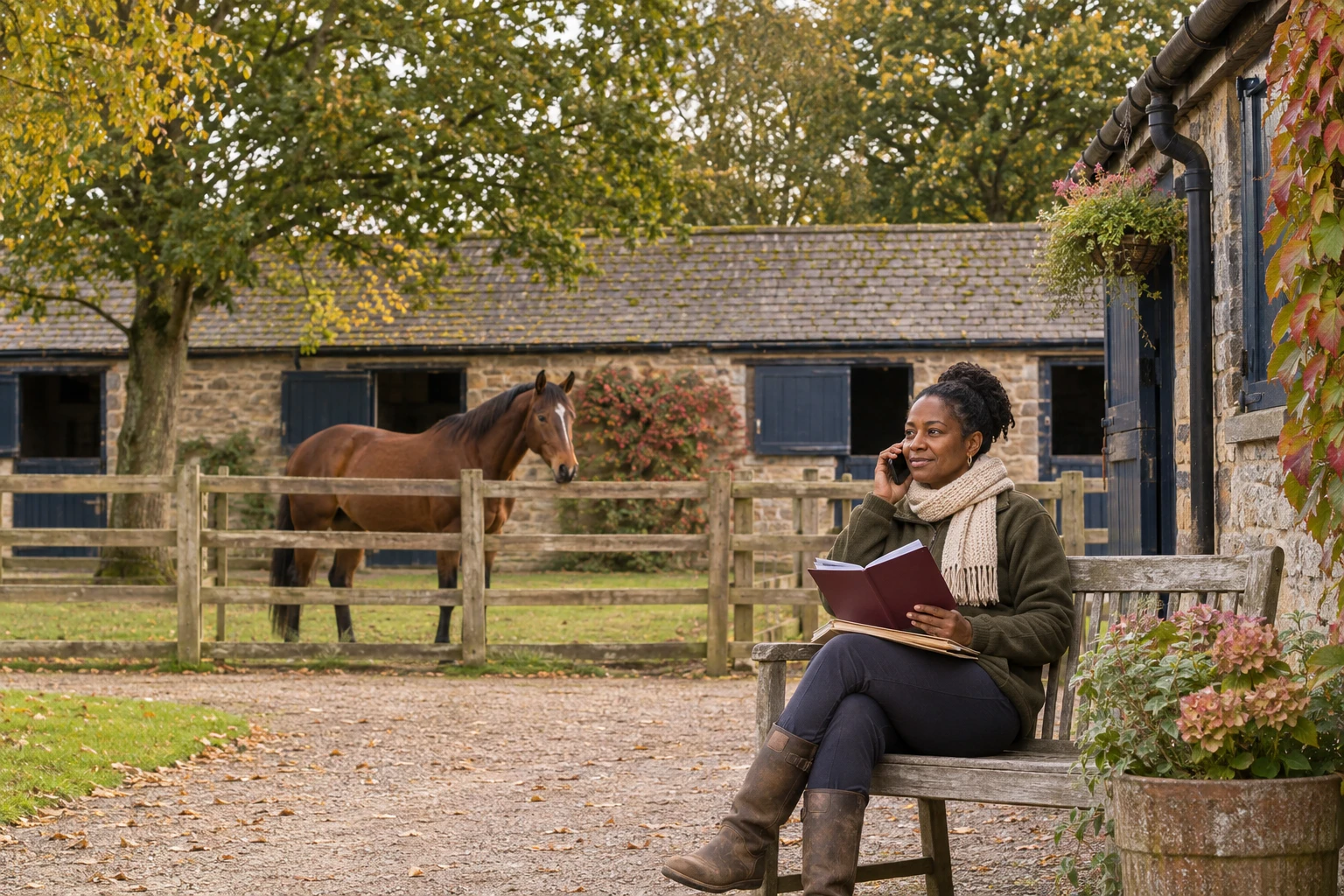
The BHS advises telling somebody where you are going and how long you expect to be out. It also recommends carrying a charged mobile phone for emergencies, not using it while on the road.[2] Make the arrangement with a particular person rather than assuming somebody saw you leave.
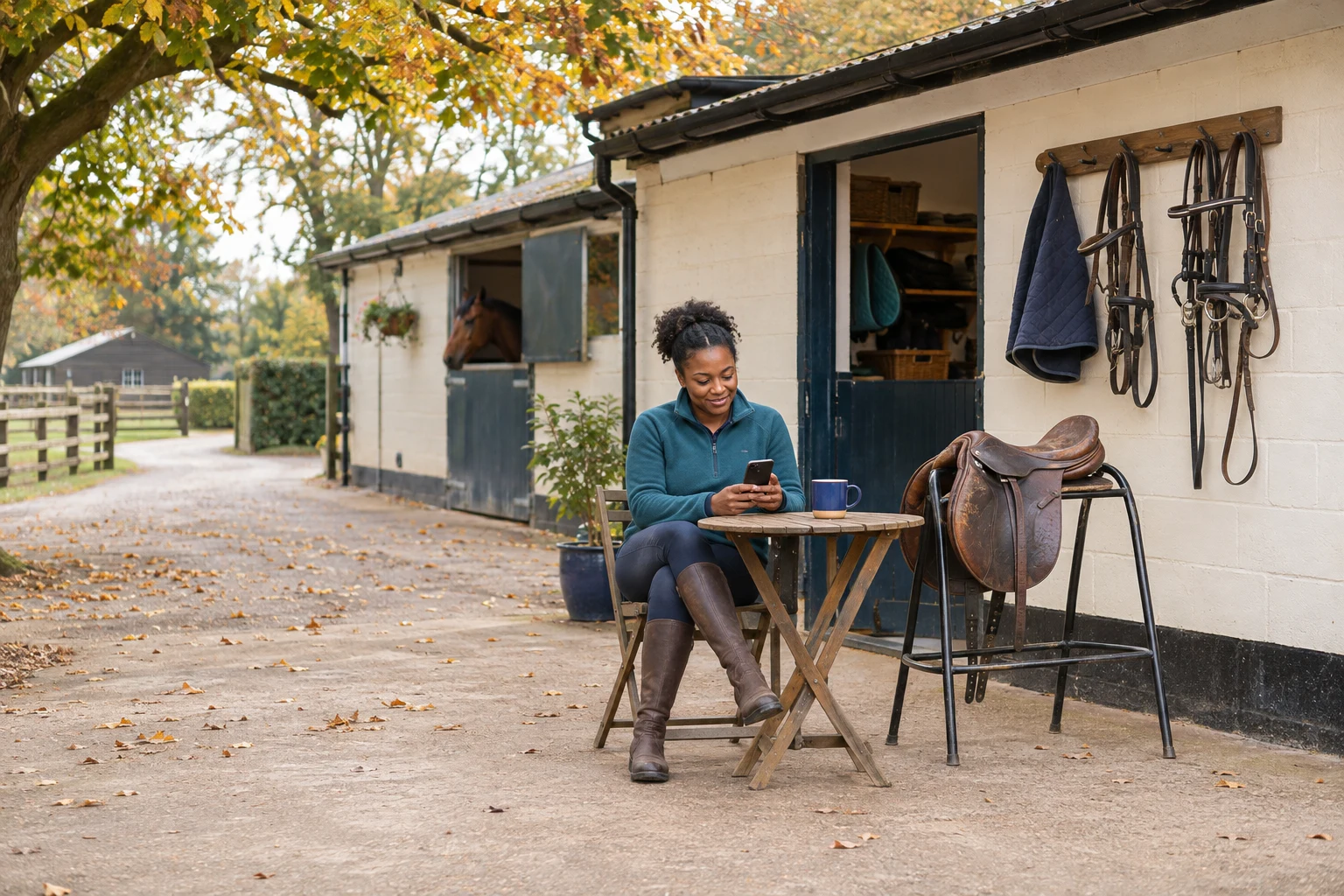
As a practical organising step, send or write down the agreed route and expected return time. Ask your contact to confirm they have received it. If several people share yard duties, decide who is actually holding that information while you are away. A message buried in a busy group chat may not provide the arrangement you intended.
Talk through what your contact should do if you do not return when expected, including who else they can reach. Agree this before departure. Keep the plan understandable without requiring them to guess which route you chose or who went with you.
Take one concrete question to your coach
For your next planned hack, choose the part you are least sure about and ask for help reviewing it. That might mean looking at a junction together, checking your proposed company or arranging further training. Finish the conversation with a clear decision about what needs to happen before that ride.
You can also explore the Equi Mind hub for more practical reading about life around horses. Route planning belongs alongside the rest of yard preparation, with room to change the outing when something does not fit.