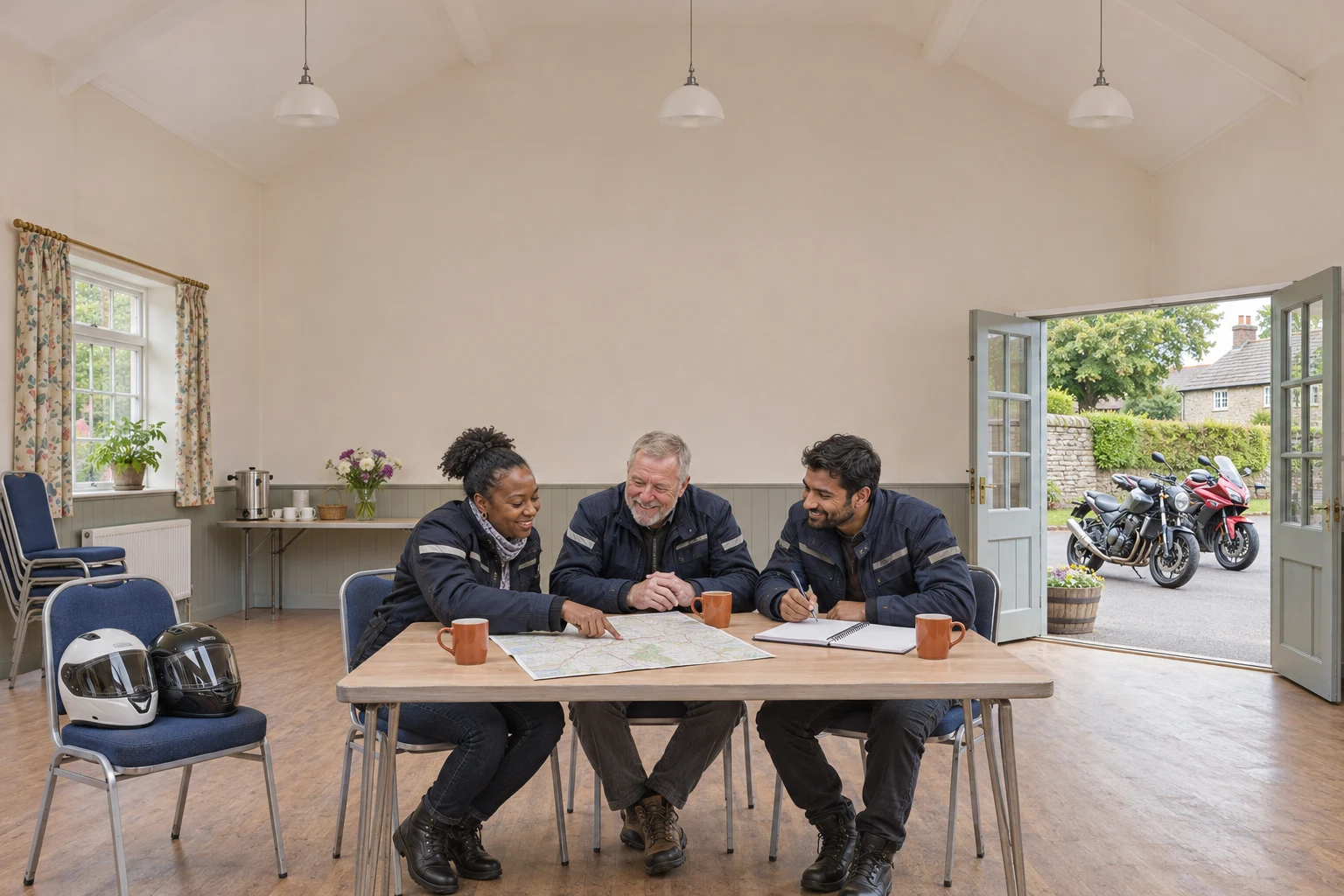
Start by choosing the charity, agreeing how donations will reach it and finding out what the event needs before you advertise a motorcycle charity ride. The government’s voluntary-events guide recommends settling the scale, sharing the work and checking permissions, safety and insurance during planning.[2]
You do not need to begin with a huge convoy. A club can first explore a modest gathering or a ride ending at an agreed venue. This article offers questions for that early conversation, not a road-event safety plan or legal or financial advice. Get appropriate help for the actual arrangements before inviting riders.
Speak to the charity before making promises
Choose the organisation you want to support and contact it with a short description of your idea. Ask whether it has a fundraising contact, an approved donation page and guidance for independent supporters. Explain who would organise the day rather than assuming the charity will supply staff or manage it.
Charity Commission guidance says that people fundraising independently should make clear they are acting in a personal capacity, “in aid of” their chosen charity, and that the charity is not responsible for their actions.[1] Ask the charity how it wants its name used and whether you may use its logo before designing publicity.
Be careful about promising a particular use for the money. If you want donations spent on something specific, the Commission says to contact the charity first to check it accepts funds for that purpose.[1] Supporting the charity’s general work may be the conversation to have, rather than inventing a project for it.
Write down what the day would involve
Put the proposed meeting place, destination and likely size on one page. Include whether people are arriving for a static gathering, taking part in an organised ride or simply making their own journey to the same venue. Bring that description to the people checking your plans.
Speak to the venue or landowner about the actual proposal, including parking, toilets and access. Ask the relevant council about permissions rather than treating a familiar meeting spot as an approved event site. Government guidance covers permissions, road closures and insurance as separate planning questions.[2]
A donation page does not settle those questions. Avoid announcing road closures, traffic control or a guaranteed route until the appropriate arrangements have been confirmed. If the proposed ride needs expertise your group does not have, seek experienced event support or discuss a smaller, static alternative.
Make the donation arrangements easy to understand
Before sharing a link, check where it leads, which charity receives the money and what fees apply. The Commission recommends reputable fundraising or payment systems, explaining how donations reach the charity and avoiding personal bank accounts for collection.[1]
Separate the questions about attendance charges, donations and event expenses in your planning notes. If you intend to deduct expenses from donations, the Commission says donors must be told from the outset.[1] Do not write “every penny goes to charity” while those arrangements are still undecided.
Make cancellation part of the first discussion. Ask the charity and fundraising platform what donors should be told if weather stops the ride or a sponsored challenge cannot be completed. Commission guidance says to explain upfront what happens to donations if a fundraising challenge cannot be completed.[1] Settle the wording before collecting money, rather than improvising a promise afterwards.
Share the work and make room for non-riders
Ask who will answer enquiries, deal with the venue and keep the planning notes. Give each task a named person and check they can actually take it on. The government’s events guide recommends sharing out the work and working to a realistic budget.[2]
Plan the welcome as well as the ride. Could a member who is not currently riding join everyone at the destination? Can someone help with a quiet preparation task instead of being expected to manage arrivals? Offer specific roles without assuming that every club member wants responsibility on the day.
The Fundraising Regulator’s event guidance includes accessibility, risk assessment and clear advance information for participants.[3] Use those prompts to identify questions for the venue and experienced organisers. Do not treat this article, or a volunteer wearing a high-visibility vest, as a substitute for suitable event arrangements.
Leave the planning meeting with a next step
Before publishing an invitation, ask one person who missed the meeting to read it. Can they tell who is organising, where to ask questions and how to donate? If the answers depend on knowing someone in the club, revise it.
The Charity Commission guidance cited here applies to England and Wales and links to the relevant regulators for Scotland and Northern Ireland.[1] Check the rules for the nation and event concerned; do not assume an arrangement elsewhere transfers unchanged.
For now, send the charity your outline, arrange the venue conversation and set a date to review unanswered questions. Share a public invitation once the arrangements are ready. For more reading about life around the riding community, visit the Bikers’ Mind hub.
Sources
[1] Raising money for charity: public guidance – GOV.UK