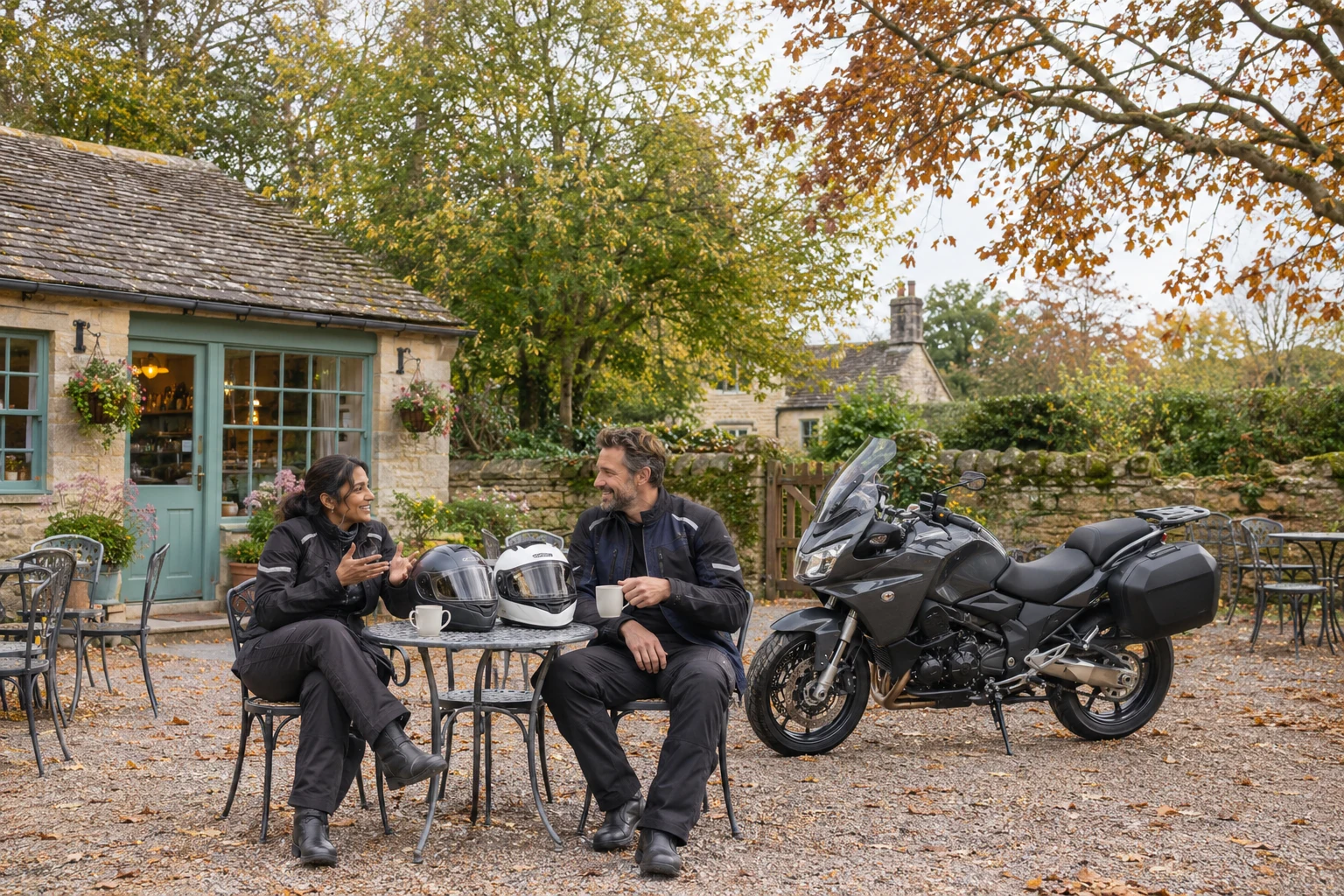
Before your first ride as a motorcycle passenger, talk through the journey with the rider, check the passenger arrangements and agree how you will ask to stop. You can make that conversation part of deciding whether to go, rather than something squeezed in after you have put your helmet on.
This guide is for adults considering a first pillion outing. It offers preparation questions, not riding instruction or legal advice. For the practical skills involved, ask a qualified motorcycle instructor rather than trying to learn them from an article.
Check the passenger basics together
For England, Scotland and Wales, Highway Code rule 85 says the motorcycle must be designed to carry a passenger, with no more than one pillion passenger seated astride on a proper seat.[1]
The passenger should face forwards with both feet on the footrests.[1]
Provisional licence holders must not carry a pillion passenger.[1]
Northern Ireland has its own Highway Code with the same passenger requirements, including the restriction on provisional licence holders.[2]
Read the guidance for where you will ride, and ask the rider to resolve any uncertainty before making plans.
Both Codes require an appropriate protective helmet, securely fastened, with an exemption for followers of the Sikh religion wearing a turban.[1][2]
They also recommend strong boots, gloves and suitable clothing for protection.[1][2]
Ask an instructor or competent motorcycle equipment specialist for help with fit and suitability; do not leave that question until departure.
Describe the outing before accepting it
Ask what the rider has in mind. A local journey with one planned stop is a different invitation from joining a club ride that lasts most of the day. Find out the intended destination, the likely time away and whether other people are expecting you.
You might suggest a short first outing with a pause to talk before deciding about anything longer. That is a proposal to discuss, not a distance or duration that this article can declare suitable. The rider needs to consider the actual route and conditions, alongside their own readiness to carry a passenger.
Be specific about your availability too. If you need to be home for a caring responsibility or work, say so before agreeing the trip. Avoid making the first outing depend on keeping up with somebody else’s full itinerary.
Ask for an explanation, not a quick reassurance
Tell the rider that you have not travelled pillion before. Ask them to explain what you need to know before departure, including getting on and off, where to hold on and what to expect during the journey. If they cannot explain clearly, suggest speaking with an instructor together before going further.
Rather than saying you understand when you are still unsure, repeat the explanation back in your own words. Name the part that needs more help. A question about getting off the motorcycle deserves an answer of its own, not a general assurance that everything will be fine.
Keep riding techniques separate from this planning conversation. This article cannot assess either person’s skills, the motorcycle or your equipment. If something remains unresolved, postpone the outing and get appropriate instruction.
Agree how to request a stop
Before putting helmets on, ask how you will communicate during the ride and how you can request a stop. Agree a method with the rider that they understand and can explain back to you. Do not assume they will recognise a gesture you have never discussed.
If an intercom is part of the arrangement, ask to check it together before departure. Discuss what happens if it stops working. Keep the conversation focused on what you have actually agreed, rather than treating a piece of equipment as the entire plan.
Make room for either person to change their mind. You can ask to postpone without having to produce an impressive reason. If you are organising the ride, avoid putting the passenger on the spot in front of friends or presenting their first outing as a test of nerve.
Leave with one clear next step
You do not have to decide on a whole day out at the first conversation. Your next step might be arranging instruction, checking equipment with someone competent or agreeing a more limited plan. Write down any unanswered question and who will help resolve it.
If you decide not to ride, you could still meet the group at the cafe another way. Keep the invitation to spend time together separate from the decision to get on the motorcycle.
For more reading about riding and the people around it, visit the Bikers’ Mind hub. Start with the conversation you need now, and leave the longer trip for a separate decision.