If you ride a motorbike and work nights, start by protecting time for sleep at home, then make a separate plan for travel and social rides. HSE recommends discussing your shift pattern with family and friends and arranging domestic jobs so they do not replace rest.[1]
That might mean telling the club you will miss a morning meet-up, or asking someone else to answer the door. This is practical information for organising life around shifts, not a sleep treatment or a way to decide whether you are fit to ride.
Put sleep on the household calendar
Write down your next few shifts and when you expect to be asleep. Include the journey home and any responsibilities you already know about. Ask the people you live with to look at the same plan rather than assuming that being home means being available.
Choose one recurring interruption to discuss first. Perhaps a delivery regularly arrives just after you get into bed, or someone expects you to collect shopping on the way home. Agree who can take that job, whether its timing can change and what happens when nobody is available. Avoid promising a solution that depends on someone who has not agreed.
If you live alone, look at the bookings you control. Could the garage appointment move to a day off? Does a parcel need to arrive that morning? The aim is a workable arrangement for the next shift, not a perfectly organised household.
Check the room before buying anything
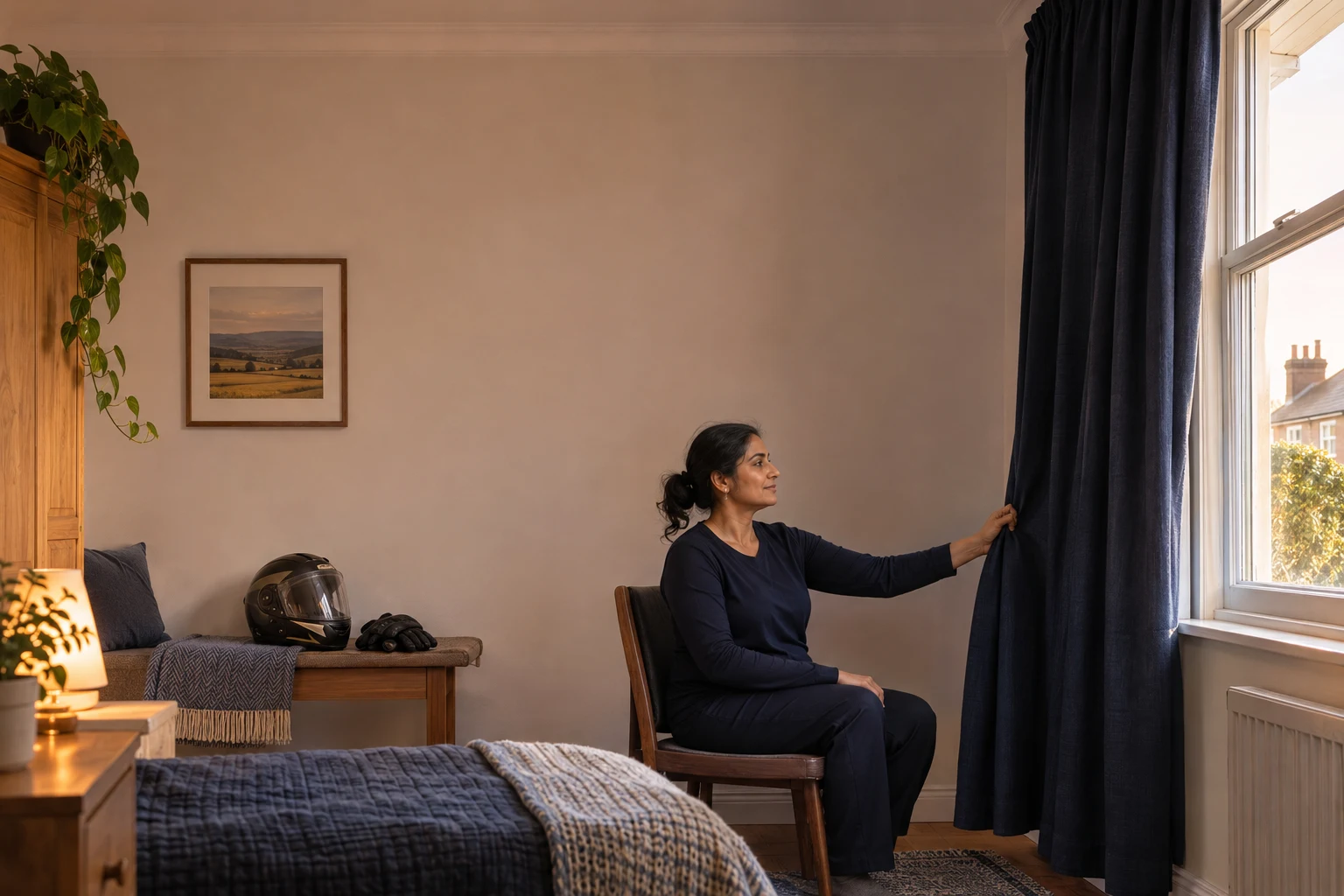
HSE suggests a darkened bedroom, less phone noise, a comfortable temperature and asking others to keep noise down during sleep.[1] Start with the room you already have. Check whether existing curtains close properly and explain which hours you need quiet before buying new equipment.
A phone setting needs a little thought if you also care for somebody or have an agreed emergency contact. Decide together how an important call would reach you. Try the arrangement while awake; do not discover afterwards that you silenced something you needed to hear.
Keep the distinction between sleep time and spare time visible. A motorcycle maintenance job can wait for the time you have actually set aside for it. If the bedroom is also where you deal with household admin, consider whether that paperwork could live somewhere else. HSE advises keeping the bedroom for sleep rather than work or television.[1]
Keep the riding friendships without every early start
Give your riding friends a clear answer about the next outing. You might say, “I am working overnight, so I will miss breakfast. Could we meet on my day off instead?” You do not need to promise a later ride before you know how you feel.
Offer an alternative you would genuinely enjoy. That could be a short catch-up on a different afternoon or helping plan a future route when you are off shift. Avoid replacing one commitment with another that leaves just as little room for sleep.
Keep the commute separate from the social invitation. HSE identifies travel after night shifts as a particular risk and suggests considering alternatives such as public transport or a taxi.[1] Check what is actually available at your finish time and how you would collect the bike later. The NHS says not to drive when sleepy.[2] Do not use a club arrangement as a test of whether you can manage another journey.
Bring a recurring problem back to work
If the rota repeatedly leaves rest difficult to arrange, take a specific example to your manager or occupational health contact. Explain the finish time, the next start and the practical problem. Ask what can be reviewed and when you will hear back.
HSE’s shift-work guidance includes regular breaks, managing overtime and shift swaps, and providing health assessments for night workers.[3] Those are useful subjects for a workplace conversation, rather than reasons to treat sleep as something you must fix entirely at home.
Keep brief notes of your shifts, sleep and interruptions if that helps explain the pattern. HSE suggests a sleep diary as a way to describe tiredness and sleep difficulties.[1] You do not need a completed diary before asking for help.
Know when to ask for health support
The NHS advises seeing a GP if changing sleep habits has not helped, problems have lasted for months, or sleep difficulties make everyday life hard to cope with.[2] Tell them you work nights. Ask a doctor before taking anything for sleep; some pharmacy sleep aids can cause drowsiness that affects driving.[2]
If you need someone to listen, Samaritans is free on 116 123, day or night.[9] For urgent mental health help in England, call NHS 111 and choose the mental health option. Call 999 in an emergency, including if you cannot keep yourself or someone else safe.[10]
Before your next shift, agree one household arrangement and tell your riding friends when you are available. For more reading about life around the riding community, visit the Bikers’ Mind hub. Keep the next step small enough to carry out, and leave health questions with the professionals who can assess your situation.
Sources
[1] Hints and tips for shift-workers – HSE
[2] Insomnia – NHS
[3] Good practice guidelines – HSE