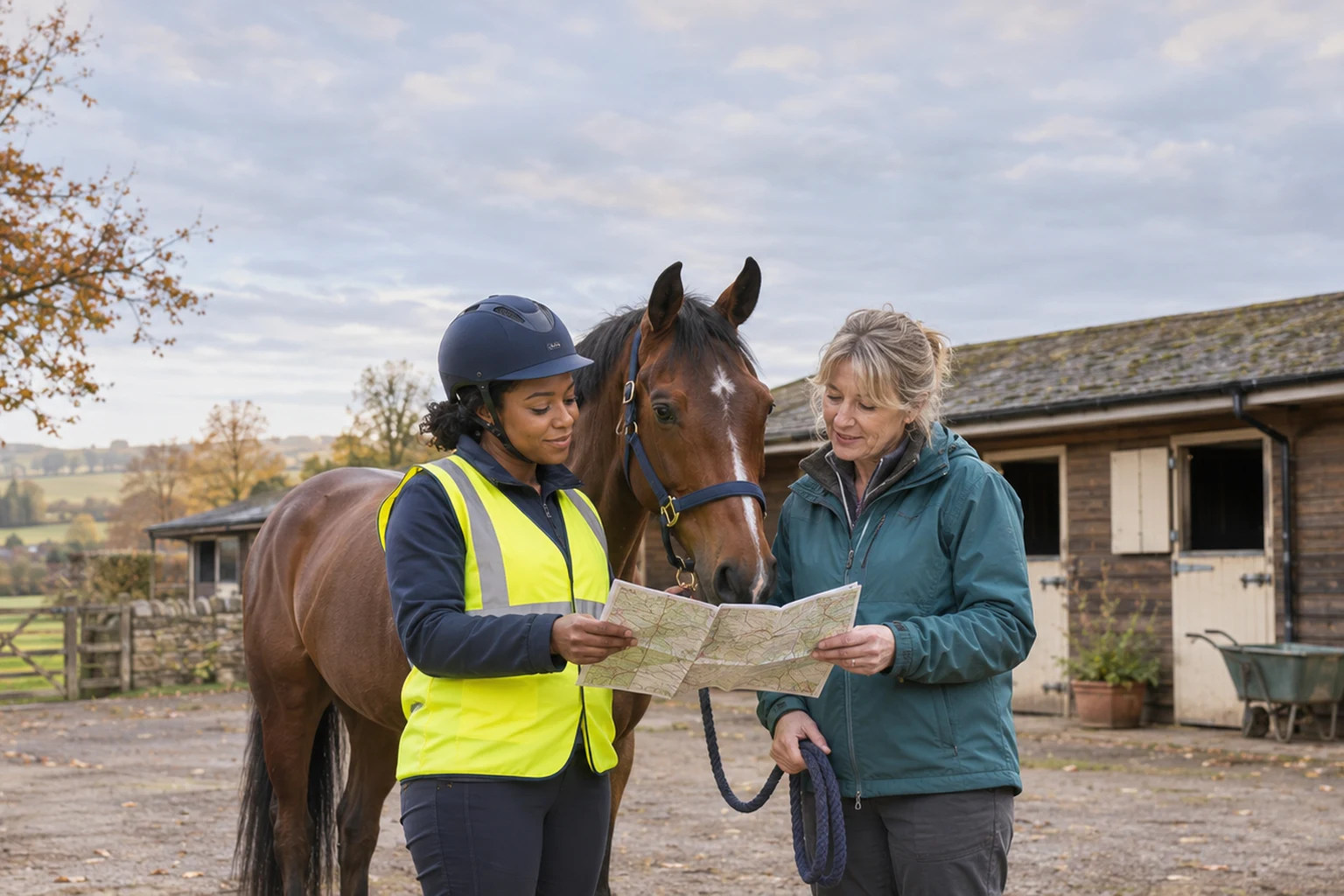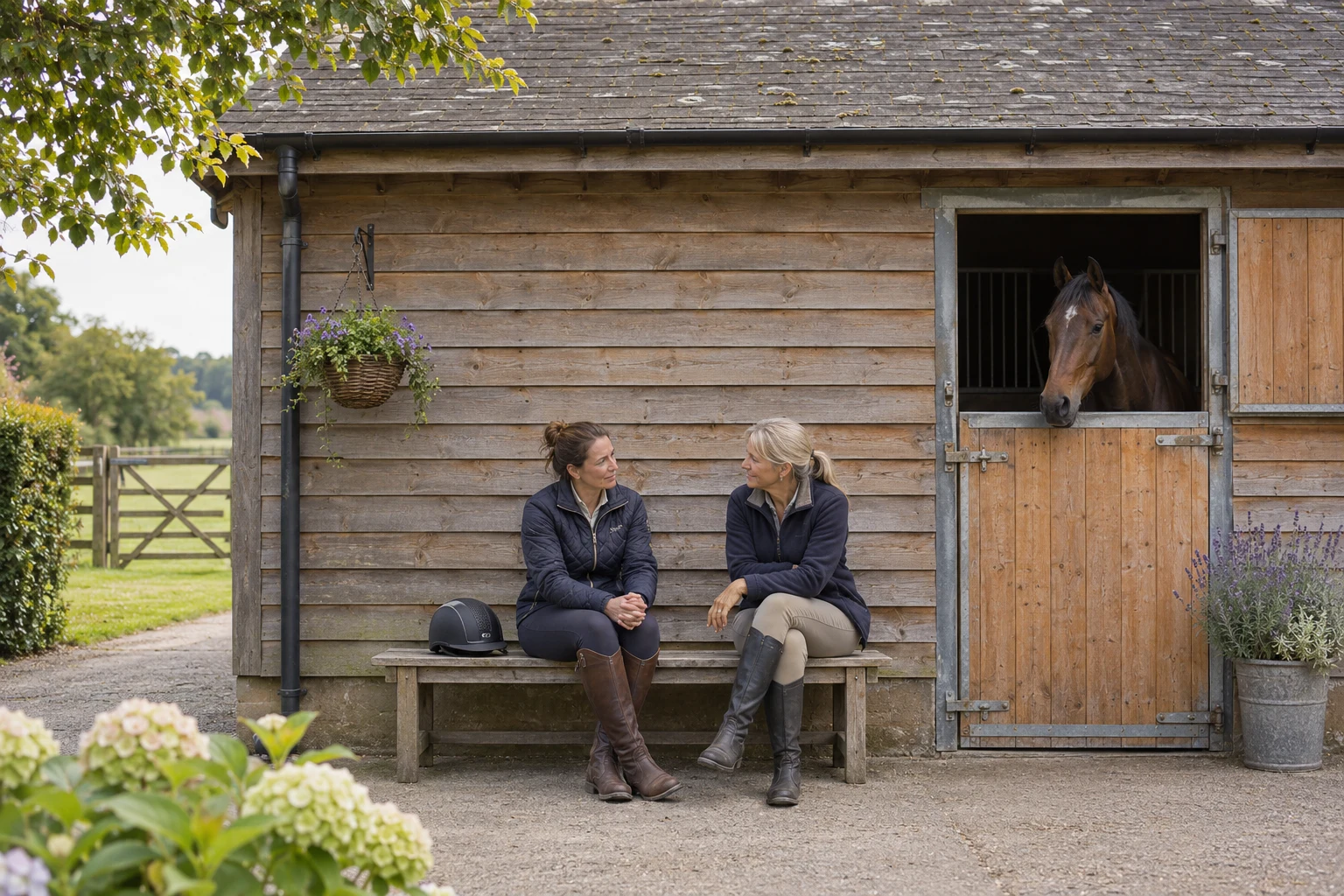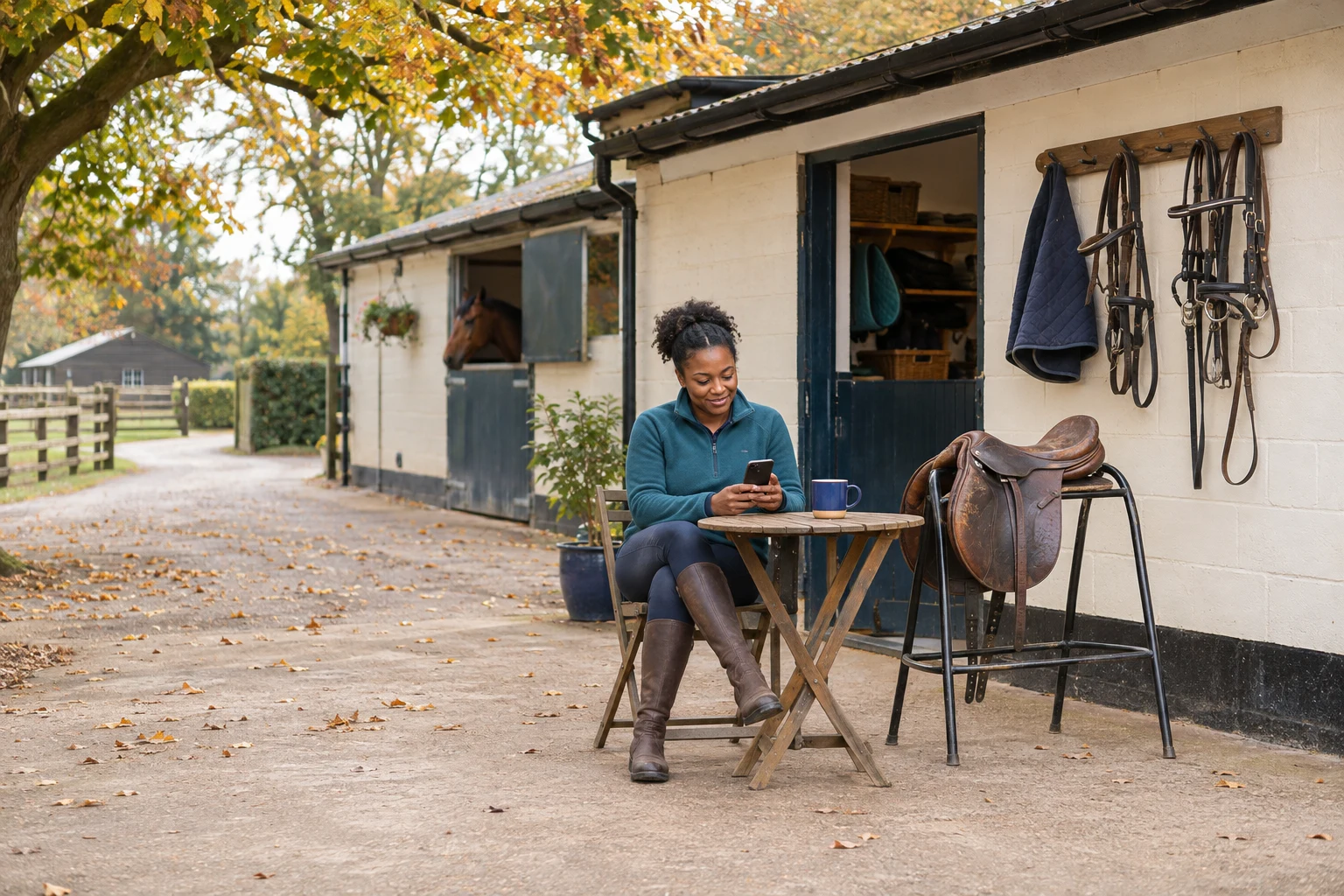

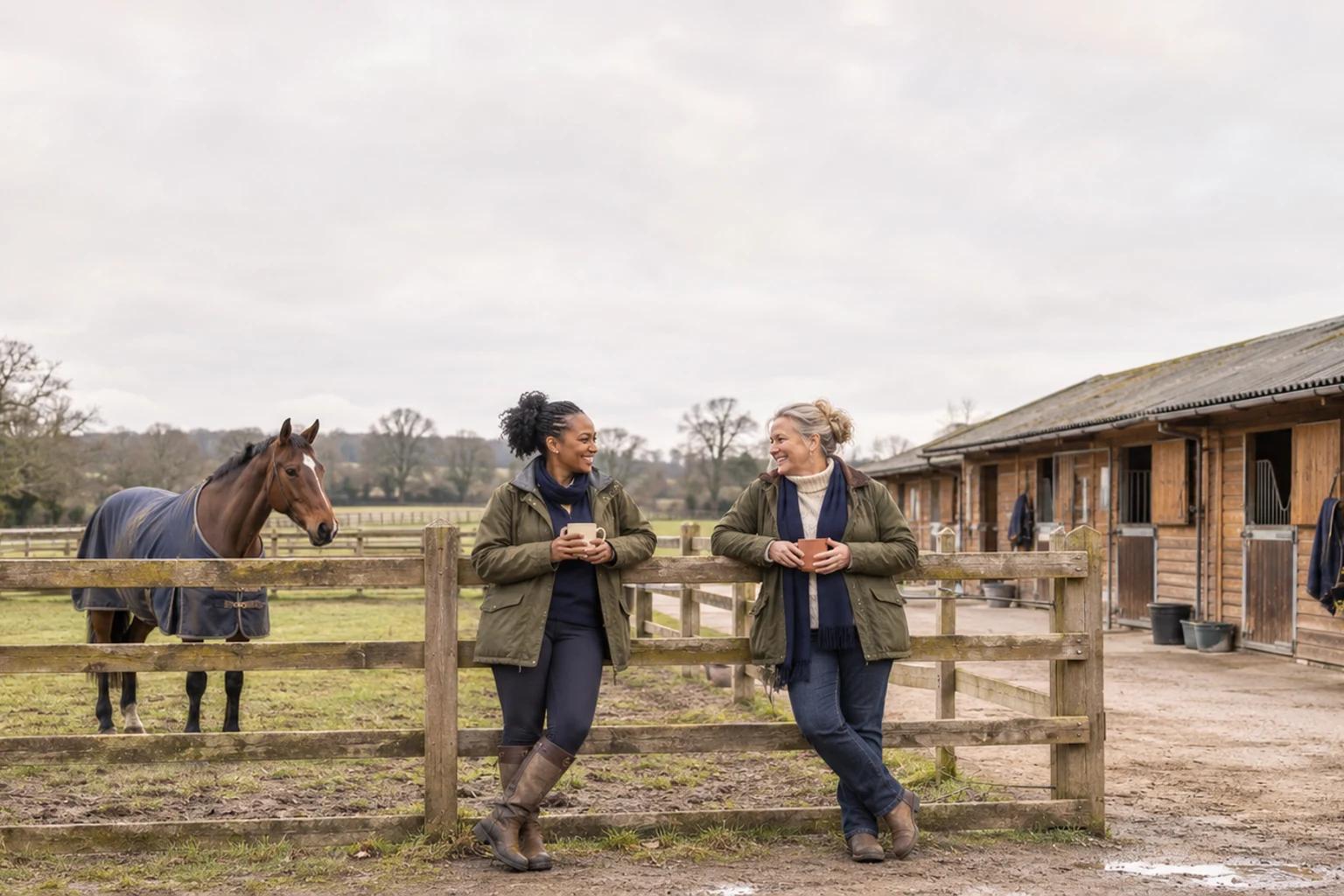
Start with one person and an invitation that fits an ordinary yard visit. You could suggest a cup of tea after the morning jobs, rather than waiting until you have the confidence, transport or spare money for a whole new activity. The NHS suggests regular contact and meeting for tea or coffee as ways to connect with other people.[2]
This article offers practical ideas for adult horse owners and riders looking for company. It is information and signposting, not treatment or a riding plan. Choose what fits your circumstances, and keep horse care and safe riding arrangements separate from the wish to make friends.
Work out what kind of company you miss
A busy yard does not automatically provide the connection you want. The NHS explains that people can feel lonely even while spending time with friends or family.[9] Perhaps you exchange messages about turnout but have nobody to talk to after a difficult day. You might want a riding companion, or simply someone who will sit with you without discussing a training problem.
Try finishing this sentence privately: “I would like someone to…” Your answer might be “have a coffee with on Sunday” or “come with me to watch a local event”. Naming the missing part gives you a more useful starting point than deciding you need to become more sociable in every setting.
Think beyond the people who ride at your level. You can enjoy someone’s company without sharing the same competition plans, horse budget or confidence in the saddle.
Make an invitation someone can answer
Choose a moment when neither of you is handling a horse or rushing through a job. An opening could be: “I usually finish here about eleven on Saturday. Would you fancy a tea afterwards?” That is a suggested invitation, not a promise that the other person will be available.
Keep the arrangement small enough that you would still want to do it on a tiring week. Say where you mean, roughly how long you have and whether you need to leave for work or family. Avoid offering to cover someone else’s stable duties just to create a reason to spend time together.
If they cannot come, leave room for another occasion. One unanswered message does not tell you everything about a possible friendship. You can also try someone outside the yard, including a friend you have not spoken to for a while; keeping in touch with existing friends is another NHS suggestion.[2]
Explore a group without committing to everything
If the yard offers little company, look at a local riding club’s social events, an equestrian talk or a shared-interest group outside horses. Ask the organiser what a first visit involves, whether you can attend without riding and whether there is a charge before booking.
The NHS suggests joining a group around something you enjoy and asking to watch first if you feel nervous.[9] You could ask who will welcome you and where to meet them, rather than arriving at a busy venue with no contact name.
Wanting company does not mean you need to agree to a hack, handle an unfamiliar horse or take on volunteering. Check riding suitability with an appropriate qualified professional. For a social visit, agree how you will get there and home, and choose a public meeting place if you are meeting someone new.[2]
Keep friendship separate from yard pressure
You do not have to earn company through unpaid jobs, lending equipment or joining every group chat. Before agreeing to help, consider what you actually have time for. A clear response might be: “I can meet for coffee, but I cannot take on morning turnout.”
If a conversation repeatedly leaves you uncomfortable, consider a different person or setting. You can keep personal information private and take specific concerns about the yard to the manager. This article cannot judge a dispute or tell you whether a particular yard is right for you.
For now, choose one manageable next step: send an invitation, contact an organiser or arrange a call with an existing friend. The NHS recommends small achievable targets rather than trying to change everything at once.[9]
Find support when company is not enough
If loneliness is affecting everyday life, tell someone how things are. The NHS recommends speaking to a GP if you are struggling to cope with stress, anxiety or low mood, or things you are trying are not helping.[9] You can describe what has changed without deciding on a diagnosis yourself.
Samaritans offers a free listening service on 116 123, day or night.[3] For urgent mental health help in England, call NHS 111 and choose the mental health option. In an emergency, including when someone’s life is at risk or you cannot keep yourself or someone else safe, call 999 or go to A&E.[4]
Put the next conversation in your diary if that helps you follow it through. For more information written for people in the equestrian community, explore the Equi Mind hub.
Sources
[2] NHS: loneliness