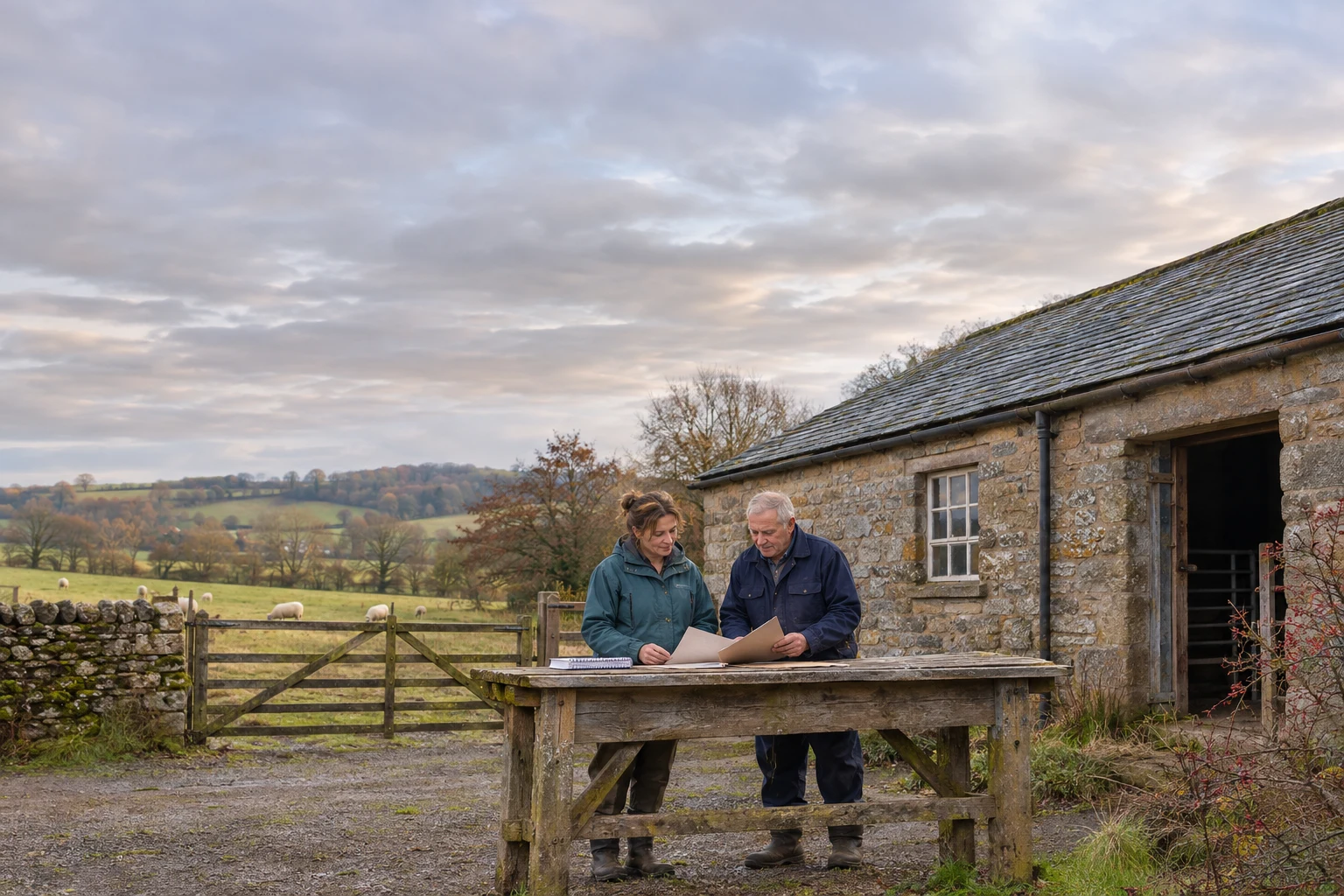
If you are worried about an RPA sheep inspection, start by reading what that particular visit checks, finding your records and writing down questions you need answered. In England, sheep and goat identification visits check tagging, movement reporting and the holding register.[1] This article offers practical preparation and wellbeing signposting, not legal, veterinary or clinical advice.
Find out which visit you are preparing for
The Rural Payments Agency uses the term “site visit” in its sheep and goat identification guidance. That guidance applies to England and links to separate information for Scotland, Wales and Northern Ireland.[1] Use the guidance for your own nation rather than relying on a neighbour’s experience elsewhere.
For these English visits, holdings can be selected randomly or because of risk factors; selection does not, by itself, tell you what the officer will find.[1] Avoid trying to work out the outcome from the fact that your farm has been chosen.
There may be little warning. GOV.UK says these visits are usually unannounced, although some receive up to 48 hours’ notice.[1] If you have been contacted, keep that message and check what kind of visit it describes. Do not assume a scheme visit or another inspection follows exactly the same process.
Make the preparation specific to your sheep records
The published checks include animal head counts, tags, the holding register and movement documents.[1] Put the records you already keep somewhere you can find them. If you use a computer, check you can open the relevant files rather than discovering a forgotten login during the visit.
Choose a manageable first task, such as finding the movement folder. The NHS recommends planning ahead for stressful events and setting small targets instead of trying to do everything at once.[6] You could set aside a short period to locate the records, then decide what still needs a question answered.
If something looks missing or inconsistent, note the exact gap and ask the appropriate official contact how to address it. Avoid guessing dates or changing a record simply to make it look tidy. For help with the English visit guidance, GOV.UK points readers to the Farming Advice Service.[1]
Plan the farm day around the visit
GOV.UK says these particular visits usually take about five hours.[1] Treat that as a planning guide, not a promise about your own visit. Consider who will handle feeding and other routine work while you speak to the officer.
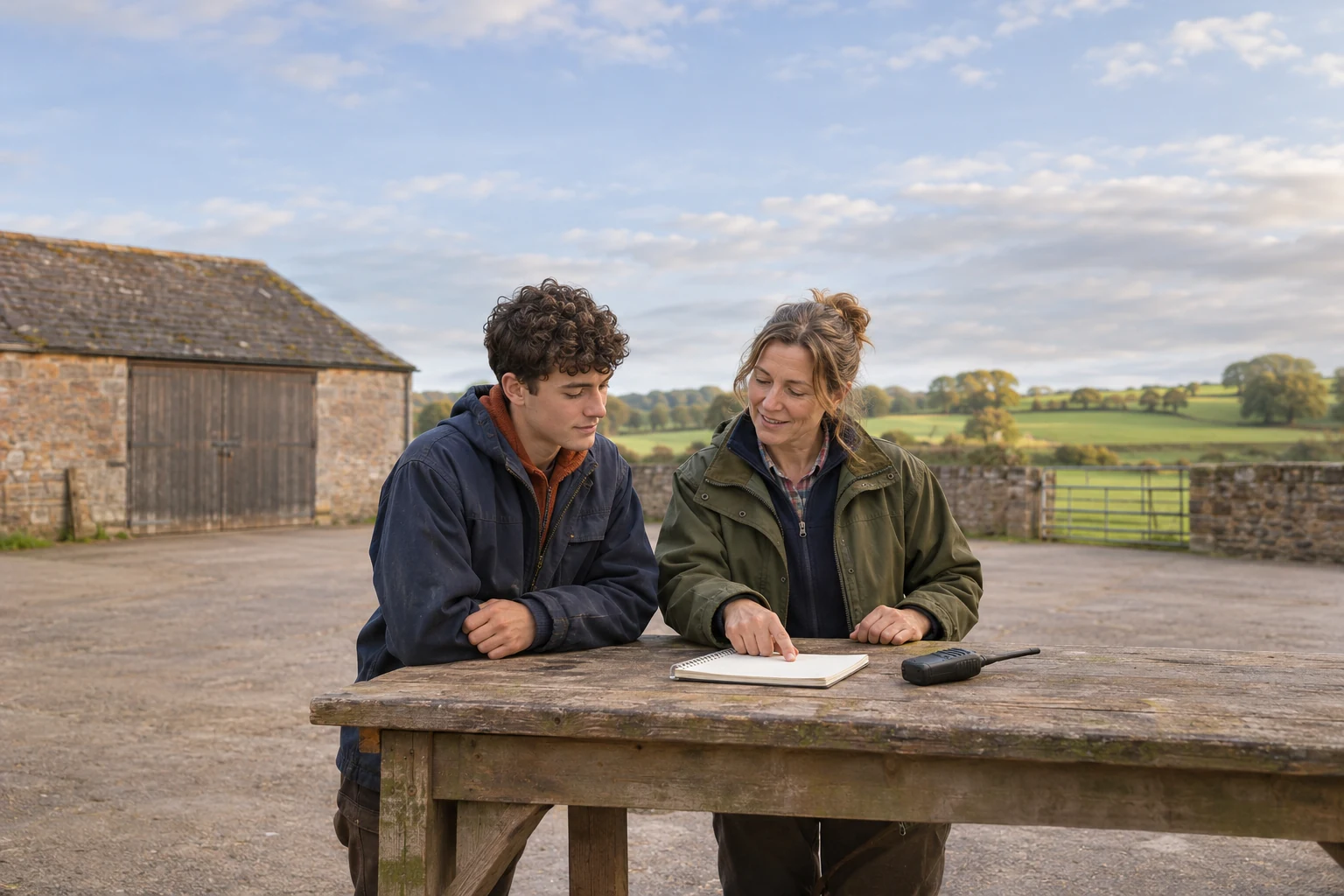
If another family member holds some records, ask where they are and whether they can be available. A farm worker helping on the day could ask the person responsible for the holding which information they need to provide. Keep those arrangements clear rather than leaving everyone to answer the same question separately.
Write your questions on one sheet. You might want to ask which records the officer needs first, what a particular finding means, or how you should follow up something you cannot answer immediately. These are prompts for the conversation, not a substitute for the current official requirements.
Ask about findings and the next step
RPA says its field officer will discuss the findings after a sheep and goat visit and, where necessary, give guidance on correcting errors.[2] It also says you will receive a copy of the completed report afterwards.[2]
Before the officer leaves, ask them to explain anything you have not understood. If they identify an action, ask what you need to do, who to contact with questions and whether a deadline applies. Keep your own note beside the report when it arrives.
If you are worried about a finding’s legal or financial consequences, take the actual correspondence to a suitably qualified adviser. This article cannot tell you what a particular outcome means for your holding. Avoid making decisions from a social media account of someone else’s visit.
Get support with the worry as well as the paperwork
The Farming Community Network supports farmers and farming families through difficult times and offers a confidential helpline.[3] Its support is separate from professional advice.[3] You can use its website to find a way to contact the charity if you want to talk to someone who understands farming.
If stress is affecting your daily life or you are struggling to cope, the NHS advises seeking GP support.[6] Describe what is happening, including any effect on sleep or concentration, rather than trying to name a diagnosis yourself.
Samaritans is available free, day or night, on 116 123.[4] In England, for urgent mental health help, call NHS 111 and choose the mental health option.[5] In an emergency, or if you cannot keep yourself or someone else safe, call 999.[5]
For today, find the right visit guidance and write down the question that is bothering you most. The Rural Mind hub offers more reading for farming and rural life.
Sources
[1] GOV.UK: Sheep and goat identification site visits: what to expect
[2] RPA: Farm visit guidance series
[3] Farming Community Network: About FCN
[4] Samaritans: Talk to us on the phone