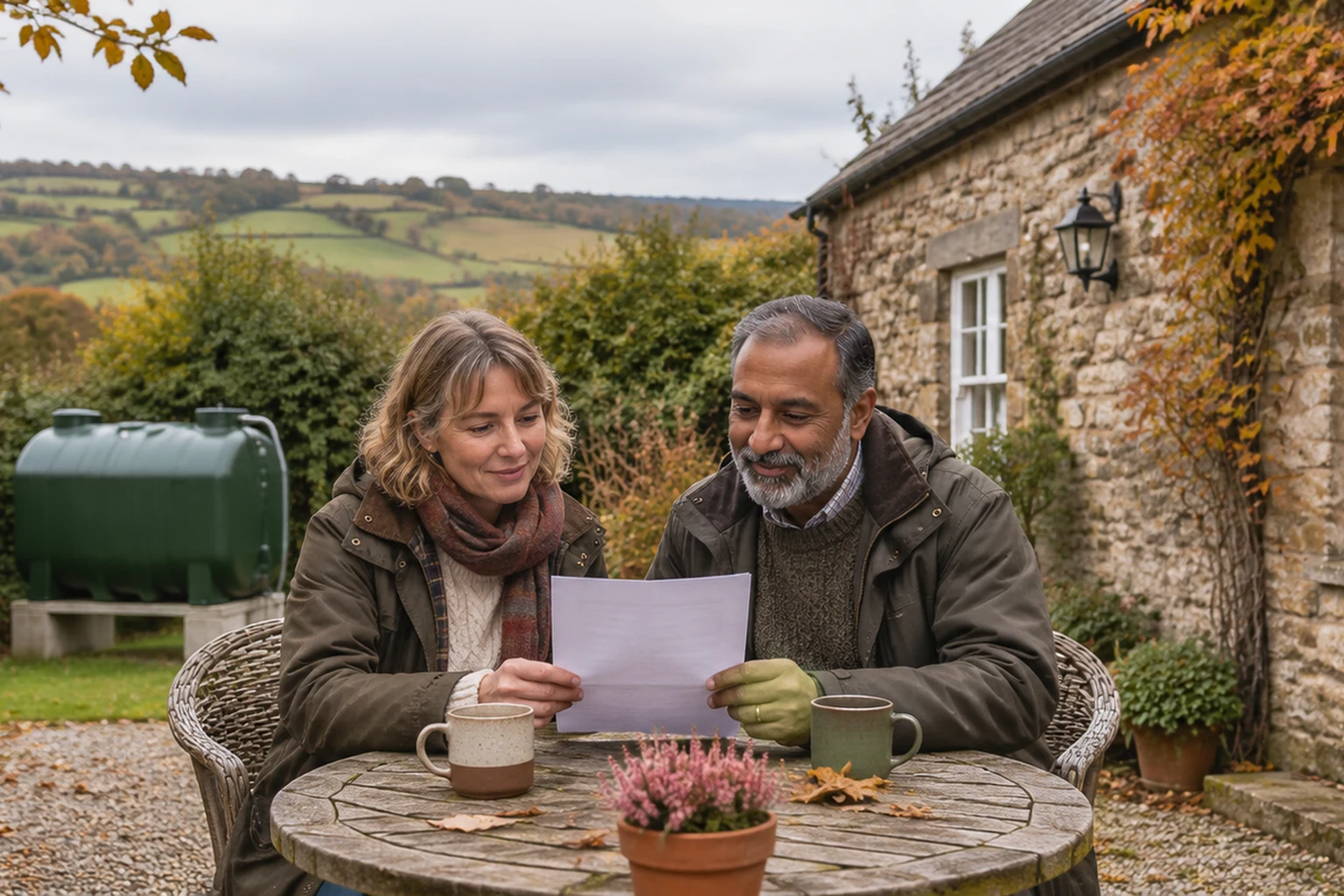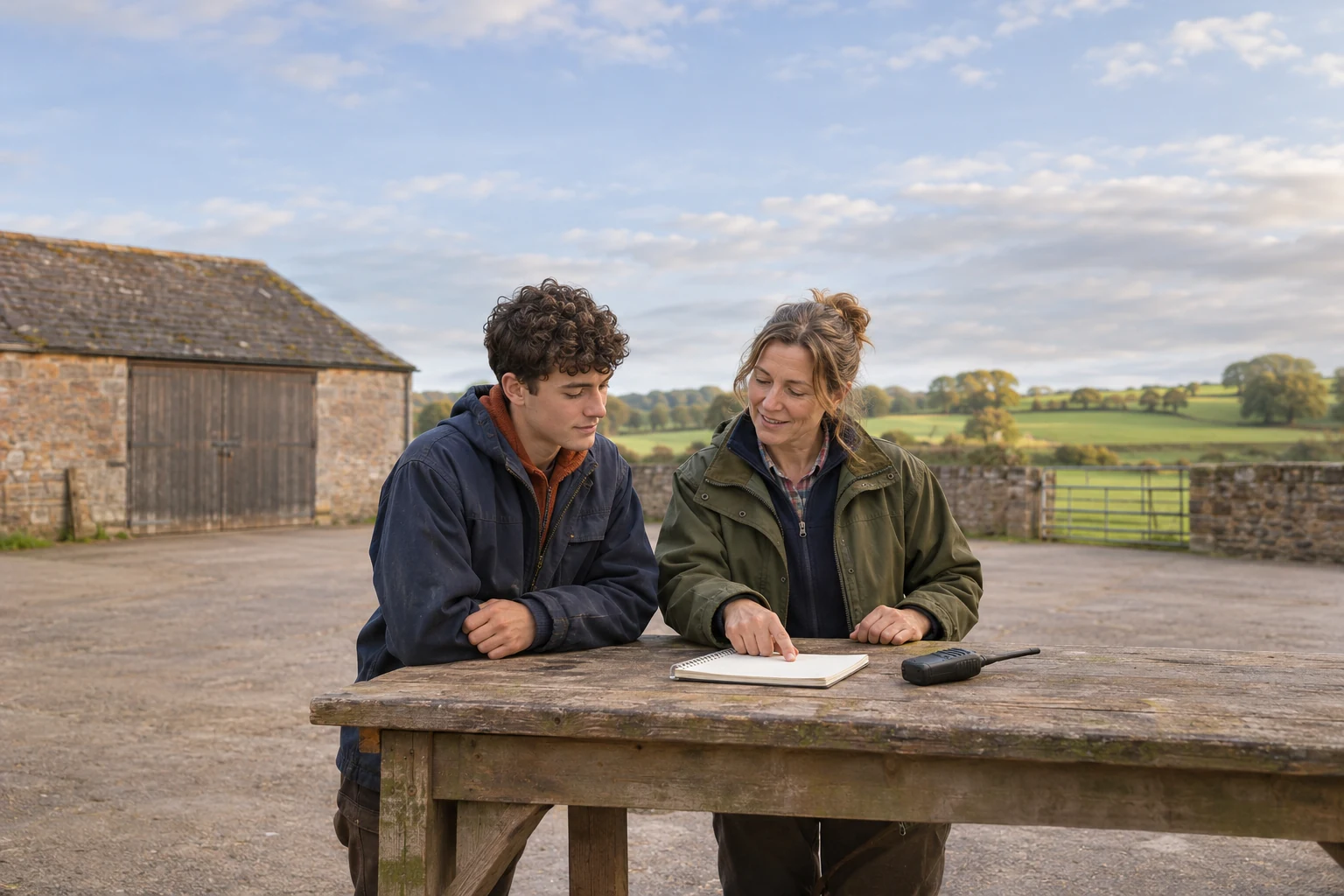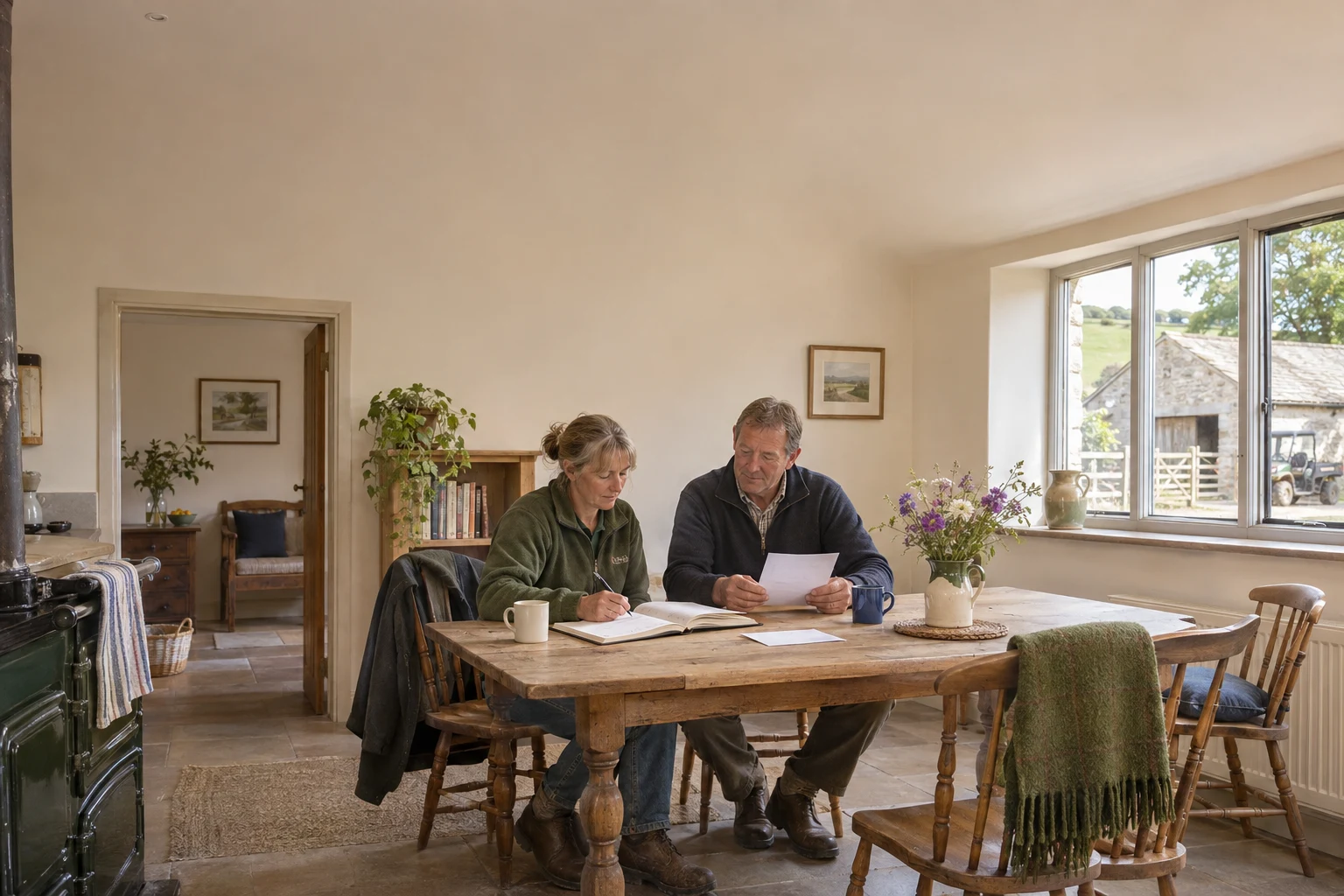
If you are stepping back from farm work but staying at the farmhouse, start by agreeing what your new role actually includes. The Farming Community Network recognises that retirement from farming involves much more than simply stopping work.[1]
The difficult bit may be walking past the yard without joining in, or hearing a supplier call and wondering whether to answer. These prompts are for discussing everyday working arrangements. They do not settle ownership, housing, pensions or anyone’s employment rights; take those questions to an appropriate qualified adviser.
Describe the smaller role you want
Before agreeing to “help out now and then”, think about what that would mean in an ordinary week. Perhaps you want to stop the early starts but keep one agreed paperwork task. Perhaps you want a complete break from operational decisions. Write your preference in your own words before asking what others expect.
Include the things you want to stop, as well as anything you would like to keep. Being willing to explain an old record does not mean being available to cover every absence. If you are unsure, say so and propose a time to return to the question.
Ask everyone involved to distinguish a suggestion from an agreement. A conversation about reducing your hours does not itself transfer a responsibility. Essential work needs an agreed, suitable person to take it on before you withdraw from it.
Agree how people will ask for your input
Discuss when somebody wants your experience and when they are simply keeping you informed. You could suggest: “If you want my view, please ask me directly. Otherwise I will leave the decision with you.” This is possible wording to adapt, not a rule for every farming family.
The arrangement works both ways. Before offering an opinion, ask whether it would be welcome. If the person running the job chooses a different approach, avoid turning every passing conversation into another review of the decision. Raise genuine safety concerns through the farm’s agreed arrangements; stepping back is not a reason to ignore them.
Ask suppliers and other regular contacts to use the agreed operational contact rather than treating you as the default. Changes to formal permissions or business authority need their own proper process. Do not assume that a new phone number on a noticeboard changes those arrangements.
Make time at home genuinely your own
Choose a particular period to discuss, such as a Wednesday afternoon away from routine farm calls. Agree who will handle the work and how a genuine emergency would reach the right person. Keep necessary emergency arrangements intact rather than simply silencing every message.
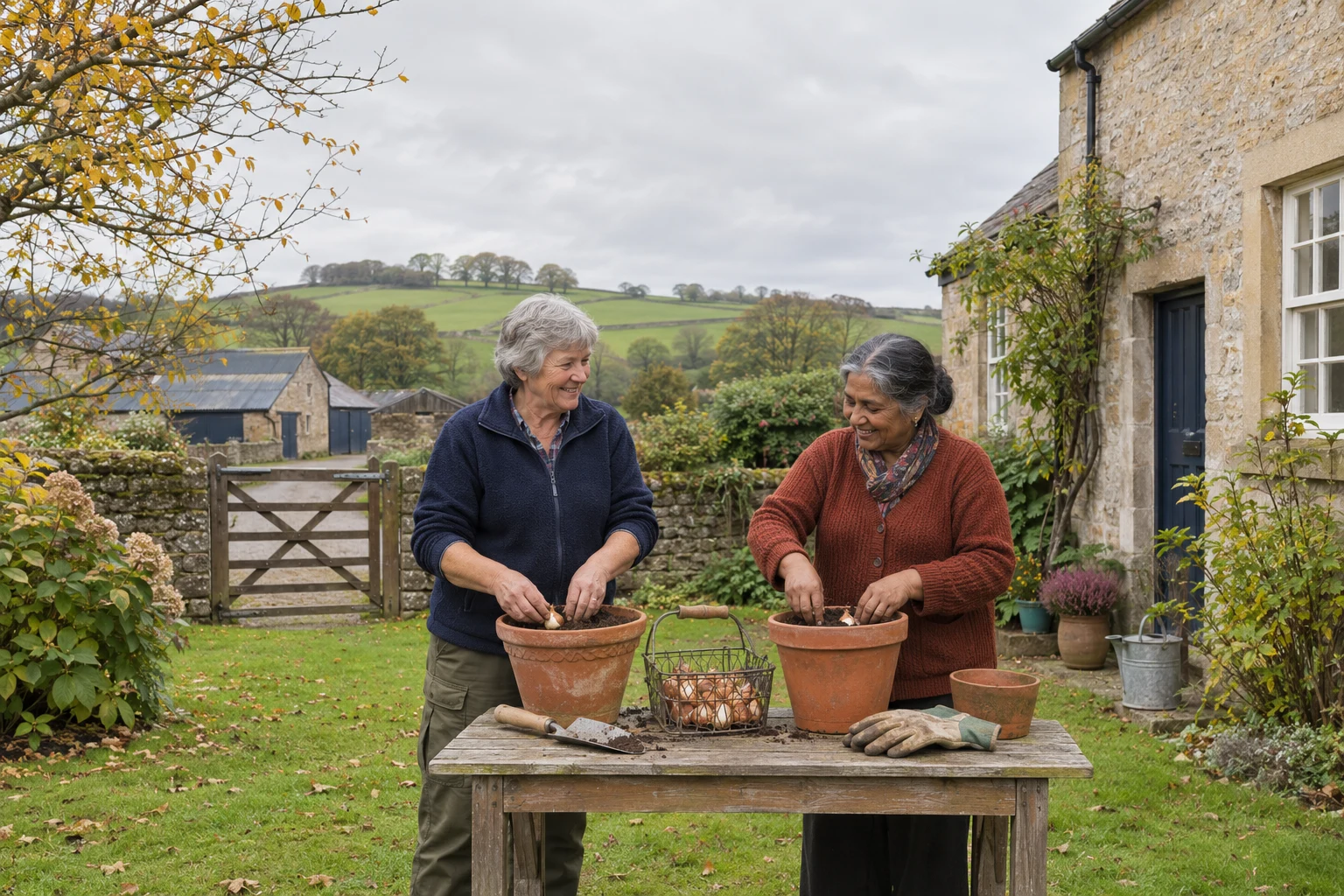
Explain what you would like that time for, without presenting it as something you must earn. You might garden with a friend, see family or do something away from the farm altogether. NHS wellbeing guidance includes relationships and learning new skills among ways to support mental wellbeing.[2]
If you share the farmhouse, ask the other people living there what they want from the change too. They may have their own work, caring or plans. Avoid replacing your old farm timetable with an assumption that someone at home will always be free.
Keep experience available without remaining on call
If you would like to pass on knowledge, offer a bounded arrangement rather than permanent availability. That might be a planned conversation about where historic records are kept, with the person taking over writing their own notes. Ask what they need instead of preparing a complete manual unasked.
Separate sharing knowledge from doing the task again. Agree who follows up unanswered questions and who checks specialist matters. This article is not a training plan or a substitute for the farm’s safety procedures.
After trying the arrangement, ask whether you felt able to decline extra work and whether the other person knew when to contact you. If “just this once” has become the usual pattern, bring a specific example to the next conversation. Revisit what each person actually agreed, without guessing their motives.
Review the change and find support if needed
Set a date to talk about how the smaller role feels, not just whether the farm jobs were completed. You can want less work and still have mixed feelings about the change. Ask for a conversation that leaves room for those feelings rather than demanding a final retirement decision.
FCN supports farming people through difficult times and periods of change. Its confidential helpline is 03000 111 999, open daily from 7am to 11pm, with local volunteer support across England and Wales; volunteers do not provide professional advice.[3]
For today, write down one responsibility you want to discuss and arrange a time with the person involved. More farming-specific reading is available in the Rural Mind hub.
If you need someone to listen, Samaritans is free on 116 123, day or night.[4] In England, for urgent mental health help, call NHS 111 and choose the mental health option; urgent NHS routes elsewhere in the UK differ.[5] In an emergency, including if you cannot keep yourself or someone else safe, call 999 or go to A&E.[5]
Sources
[1] Farming Community Network: Family and retirement
[2] NHS: Five steps to mental wellbeing
[3] Farming Community Network: About FCN