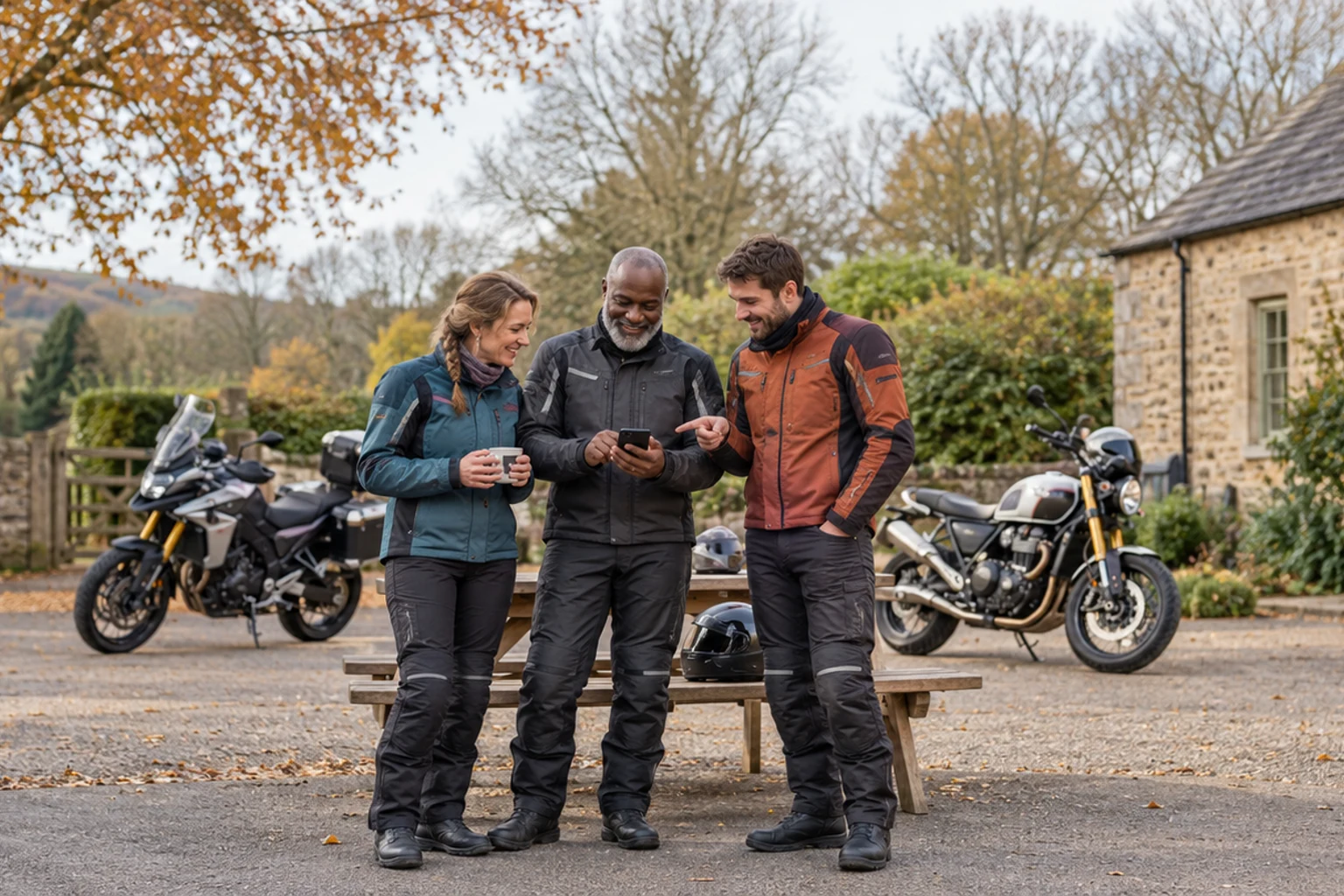

If you feel sleepy after a ride, do not set off again just because home is only a few miles away. The Highway Code says not to begin a journey when tired and to stop somewhere safe if you become sleepy.[3]
For the next ride, plan the return journey as carefully as the outward leg. Leave room for breaks, a shorter day or another way home. This is general information for riders, not medical advice or a way to judge whether an individual is fit to ride.
Give the journey home its own plan
When arranging a ride-out, work backwards from getting home rather than only choosing the destination. Include the time needed to reach the meeting point and the final stretch after the group splits up. Ask yourself whether the day still works after a poor night’s sleep or a late finish at work.
Choose places where you could stop properly and tell someone if your plans change. Keep enough flexibility to leave earlier or miss the ride entirely. A shorter outing can still include the part you wanted, whether that is seeing friends or having breakfast together.
For longer journeys, the Highway Code recommends at least a 15-minute break after every two hours of driving. It also says to avoid long journeys between midnight and 6am.[3] Treat planned stops as part of the day, not as a timetable you must reach before you are allowed to stop.
Make stopping easy to say out loud
Before leaving, agree that anyone can ask for an extra stop or change their plans without an argument. An organiser could say, “Tell me if you need a break. We can change the route.” Agree how riders will communicate a change without needing to handle a phone while moving.
If you feel sleepy, stop in a safe place. The Highway Code specifically says not to stop in a motorway emergency area or on the hard shoulder for this purpose.[3] Once safely parked, contact whoever needs to know and reconsider the onward journey rather than rushing to catch up.
A cafe stop does not create an obligation to continue. If you are still too tired to ride, explore a lift, public transport or somewhere to stay, with a separate arrangement for collecting the bike. Availability will depend on where you are, so think about alternatives before travelling somewhere remote.
Look at the shift before the ride
A ride home from work deserves the same attention as a weekend trip. HSE identifies journeys after long working hours, especially night shifts, as situations where drivers and riders are more likely to experience fatigue.[5] Put the whole working day beside the planned journey when deciding your arrangements.
If riding is part of your job, raise tiredness and journey planning with the person responsible for work arrangements. Explain the actual hours, route and opportunities to stop. If you are commuting, consider asking about practical alternatives for the days when you cannot safely ride home. Do not assume a colleague or manager knows you are struggling unless you tell them.
Notice a pattern without diagnosing yourself
If tiredness keeps recurring, write down when it happens, your recent sleep and whether it affects other parts of the day. This can help you describe the problem when asking for support. It is not a test to complete before seeking help, or proof that motorcycling caused it.
The NHS lists several possible causes of fatigue, including insufficient sleep, stress, illness and some medicines. It advises against self-diagnosis and recommends seeing a GP if tiredness has lasted a few weeks without a clear reason or affects daily life.[4] Ask a pharmacist or doctor about medicines if you are unsure whether they could impair your riding.[3]
Keep the social part when you skip the miles
If you decide not to ride, you could still meet friends at the destination by another means, invite someone round or arrange a separate catch-up. Be clear about what you would enjoy rather than agreeing to a journey you do not feel able to make.
If there is more behind the tiredness and you need someone to talk to, Samaritans is available on 116 123.[6] In England, for urgent mental health help, call NHS 111 and choose the mental health option. Call 999 in an emergency, including if you cannot keep yourself or someone else safe.[7]
Before your next ride
Choose one practical change now: shorten the route, agree an extra stop or arrange a backup journey home. If unexplained tiredness is continuing, contact your GP rather than trying to solve it through ride planning alone.[4]
You can also explore the Bikers’ Mind hub for more on life on and off the bike. Taking part in the community does not have to depend on making every ride-out.
Sources
[3] The Highway Code: rules for drivers and motorcyclists
[4] NHS: tiredness and fatigue
[5] HSE: driving and riding safely for work