
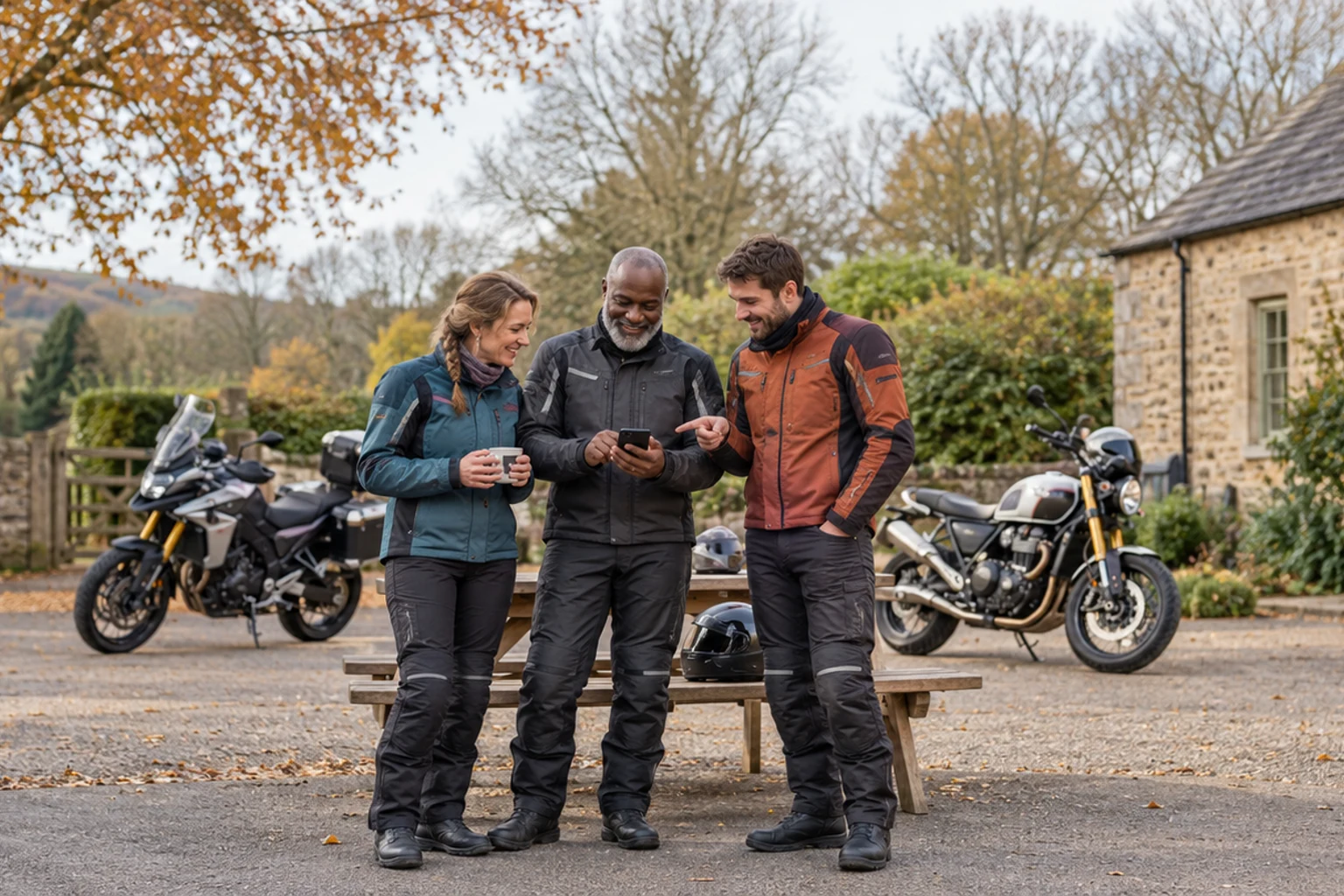
Before adding riders to a motorcycle club WhatsApp group, explain who will be there and what they will be able to see. In an ordinary WhatsApp group, every member can see the other members’ phone numbers, so ask people before including them.[12]
A useful starting point is a small group with a clear purpose, agreed boundaries and someone responsible for checking membership. This is practical information for volunteer organisers and riders, not legal advice or a promise that any messaging app can make a conversation completely private.
Ask before you add someone
At the next meet-up, ask whether people want to join and explain what the chat is for. “We use it for Sunday ride arrangements, and everyone in it can see your number” gives someone enough information to make a choice. Do not treat joining the club as automatic agreement to join every chat.
Keep another way to get essential arrangements, such as a direct message or a conversation with the organiser. Someone who prefers not to join should still be able to find the meeting point. Ask what works for them rather than making them explain their reasons to the group.
Be precise about the type of space you are inviting people into. WhatsApp describes different number-visibility arrangements for Communities and ordinary groups; do not assume a Community’s privacy features apply to every group within it.[12] If you are unsure, check the official guidance before promising that numbers are hidden.
Keep the purpose narrow and the welcome clear
Decide whether this is a ride-planning chat, a general social space or an announcements group. A suggested welcome message could explain the purpose, name the organisers and ask members not to add other people without checking first. Agree how changes to meeting times will be confirmed.
Keep membership under review instead of letting an old event chat become the permanent home for every new ride. The National Cyber Security Centre recommends reviewing group members and independently verifying or removing participants you do not recognise.[4] For a club, that might mean asking the organiser face to face who a new number belongs to.
Consider having a second trusted organiser available when the usual admin is away. Agree who will answer membership questions and who can step in if an unfamiliar account appears. Give newcomers a named person to contact privately rather than expecting them to ask everything in front of the group.
Agree what stays out of the chat
Suggest a simple rule: ask before posting somebody else’s photograph, contact details or personal news. Keep home addresses and arrangements for an empty garage out of the general ride-planning conversation. Share only what the people organising that particular journey need.
WhatsApp warns that other users can take screenshots of messages or record calls and pass them on.[12] A friendly group is therefore still the wrong place for something you would be uncomfortable seeing outside it. Ask members not to forward conversations, while being honest that an agreement cannot prevent copying.
Try the app’s privacy checkup together at a club evening if members would find that useful. WhatsApp places it under Settings, then Privacy.[12] Let each person make their own choices on their own phone. Helping someone understand a setting does not require taking over their account or reading their messages.
Check unusual messages outside the group
If an account asks for a code, an unexpected QR scan or an urgent favour, pause before responding. NCSC guidance says not to share verification codes or scan unexpected QR codes, and warns about impersonation and duplicate contacts.[4] A familiar name or profile picture should not settle the question.
Agree a way to check unusual requests with the person concerned, such as calling a number you already know or speaking at the next meet-up. Do not rely solely on a reply from the same account that sent the questionable message. Tell an organiser privately if something looks wrong, so they can check before more members respond.
NCSC also recommends two-step verification and checking linked devices in account settings.[4] Make those checks a short club reminder rather than a technical test that embarrasses less confident members. Nobody needs to show the group their security codes or account screen to prove they have done it.
Make one improvement before the next ride
Start with the member list and the welcome message. Ask whether everyone still wants to be included, confirm how essential arrangements reach people outside the chat, and agree who checks unfamiliar accounts. You do not need to rebuild the club’s communication overnight.
Riders can review their own privacy settings separately. Organisers can keep the group focused on arranging enjoyable time together, without expecting constant replies or explanations for quiet periods. For more perspectives on life around two wheels, explore the Bikers’ Mind hub.