
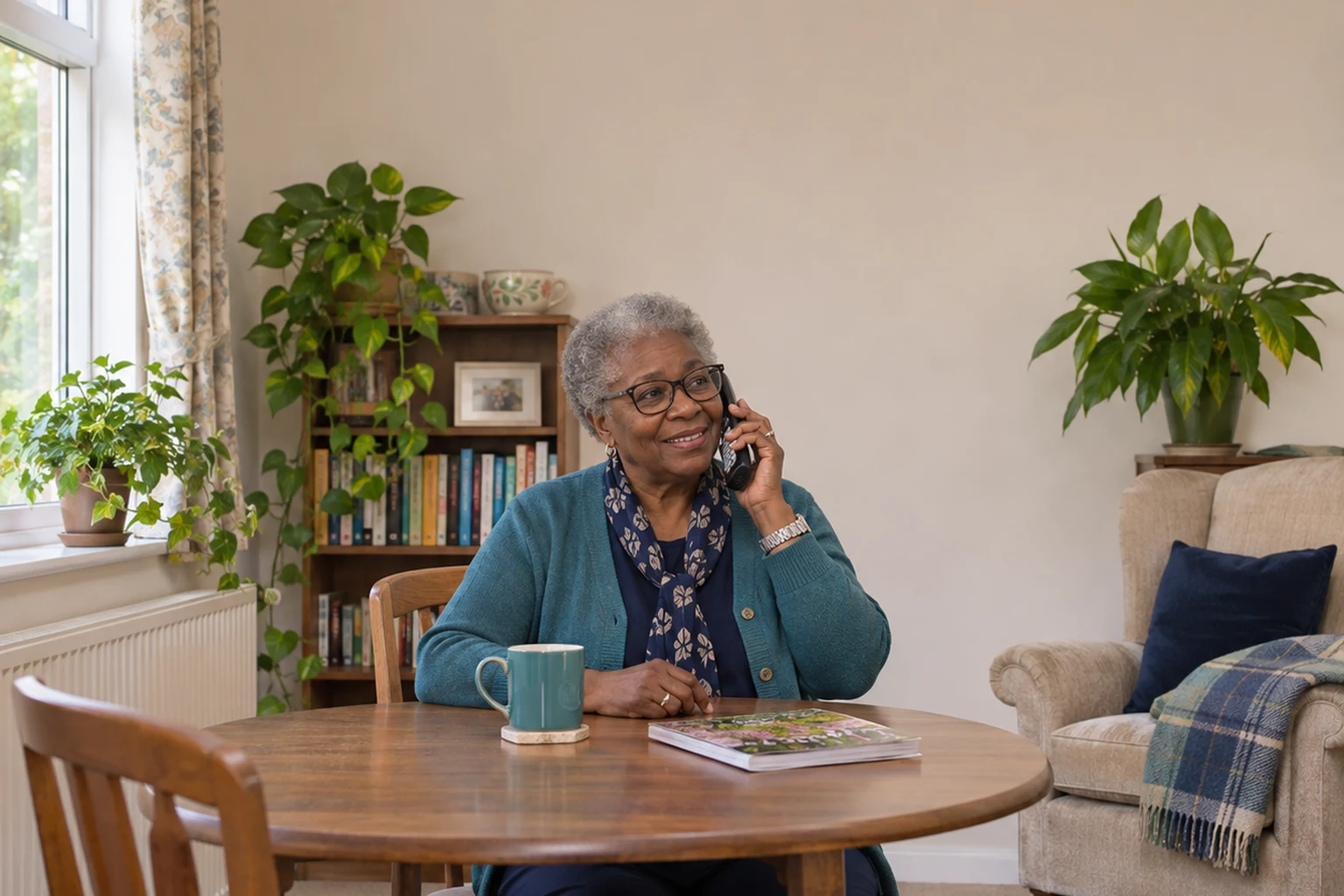
Start by asking a recognised befriending service how its regular calls work and whether they suit you. Age UK’s free Telephone Friendship Service matches people over 60 with a volunteer for a scheduled weekly conversation.[1]
You can enquire for yourself. If someone is helping you find a service, ask them to go through the information with you rather than deciding on your behalf. This article offers practical preparation and signposting, not a treatment plan or a promise that a particular service will be right for you.
Decide what you would enjoy talking about
Perhaps you would welcome someone to discuss the garden with, hear about your week or share a conversation that is not about appointments. Write down what you would like from a regular call before contacting a service. A few words will do; you are not preparing an application for a job.
You do not have to live alone or describe yourself as lonely to use Age UK’s telephone friendship service.[1] You might already have people around you but still miss an unhurried conversation about your own interests.
Think about whether you would prefer an ongoing arrangement or the chance to ring someone when you feel like talking. Those are different requests. Tell the organisation which you mean so you can check the actual offer rather than relying on the word “befriending”.
Check the arrangements before signing up
Age UK’s regular service requires your own landline or mobile, the ability to hear and be understood by phone, and a commitment to the same weekly time.[1] Consider where you would take the call and which part of your week you can usually keep free.
Ask about referral steps, the current wait and how you will hear back. Age UK warns that high referral numbers can mean a wait, so do not plan around an immediate start.[1] If a family member completes a form with you, keep a note of the submission and the organisation’s instructions about following up.
Explain any communication needs before agreeing to calls. Ask about language, hearing and whether another format might suit you better. Avoid assuming every local or national service has identical arrangements. You can also ask your GP about social prescribing and finding local support, an option included in NHS loneliness guidance.[2]
Make the first conversation comfortable
Choose a quiet spot where you can sit comfortably and hear the phone. Put a drink nearby if you would like one, and leave yourself enough time that you are not about to rush out. You need not tidy the whole house for a telephone call.
Keep two or three possible topics beside you if that makes starting easier. You could mention something you have watched, a place you used to visit or what is growing outside your window. These are conversation ideas, not questions you must answer. You can ask your telephone friend what interests them too.
Give yourself time to find out whether the arrangement suits you. Afterwards, note what you enjoyed or found difficult. If the timing, pace or match feels wrong, tell the service coordinator and ask about the options. Age UK specifically invites people who are struggling with their match to contact its team.[1]
Know who to contact when plans change
Before calls begin, save the service’s contact details separately from any appointment reminder. Ask what to do if you are away, miss a call or want to stop. Agreeing the process at the start saves having to work it out during a busy week.
Keep personal boundaries clear. Age UK says its system connects callers without giving your telephone friend your number, and asks you not to share your address or telephone number with them.[1] If anything about a call concerns you, take it back to the organisation rather than feeling obliged to carry on.
If a weekly arrangement is not what you want, The Silver Line offers a different route: a free, 24-hour telephone service across the UK for people aged 55 or over. Call 0800 4 70 80 90 for friendship, conversation and support.[5]
Get further support if a chat is not enough
A friendship call should not delay asking for help with your health. The NHS recommends speaking to a GP if you are struggling to cope with stress, anxiety or low mood, or things you are trying are not helping.[2] Describe what is happening in your day; you do not need to choose a diagnosis first.
Samaritans is free on 116 123, day or night, if you need someone to listen.[3] For urgent mental health help in England, call NHS 111 and choose the mental health option. In an emergency, including if you cannot keep yourself or someone else safe, call 999.[4] Elsewhere in the UK, check your nation’s NHS urgent support route.
For today, choose one service to ask about and note the questions that matter to you. You can explore more reading in the Seasoned Mind hub while you decide what kind of contact you would welcome.
Sources
[1] Age UK: telephone friendship