

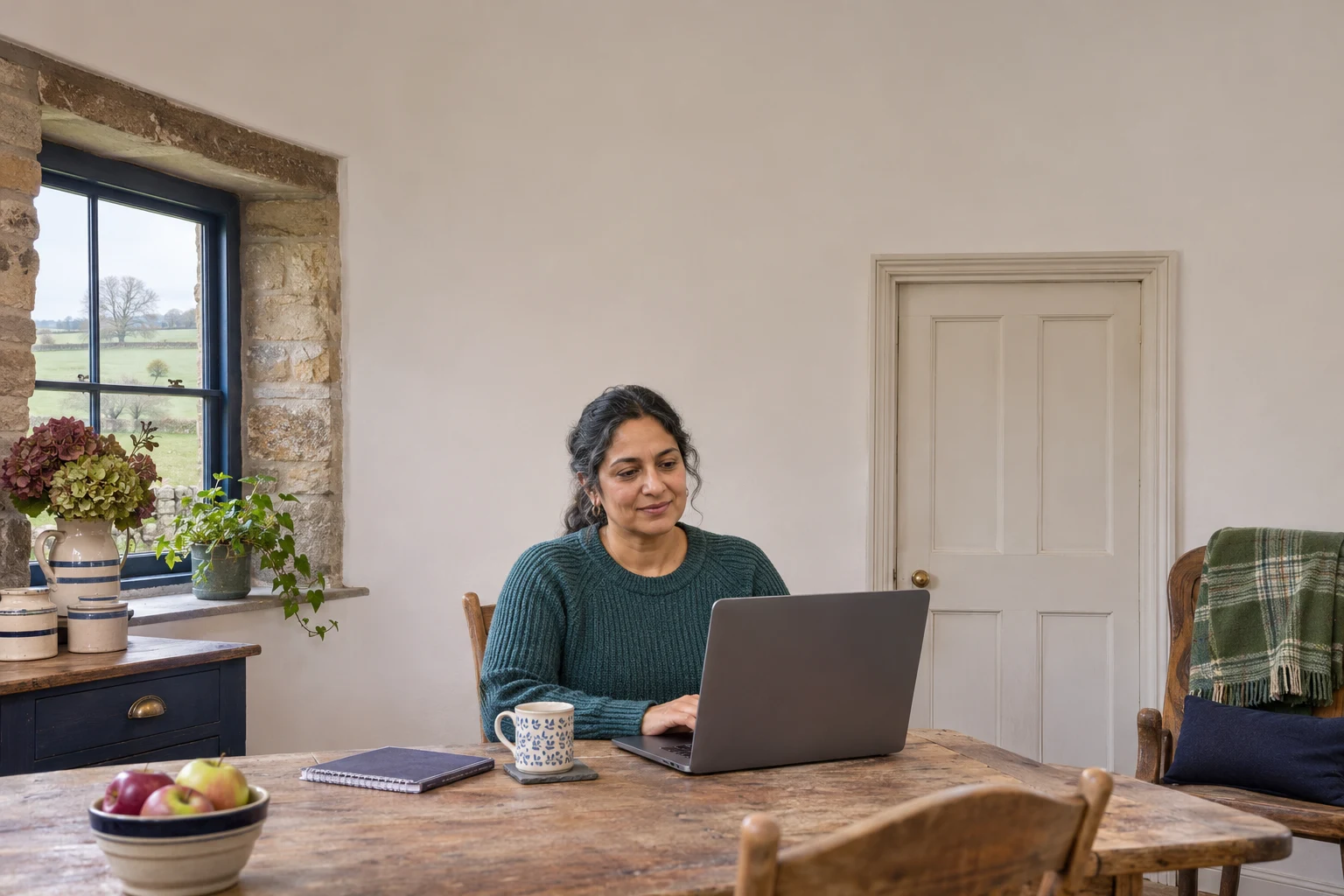
If distance makes getting to talking therapy difficult, ask the service about phone or video appointments. The NHS says talking therapies can take place in person, by phone or video, or through an online course; the offer depends on your needs and local availability.[2] You do not have to decide which treatment would suit you before asking about access.
This guide offers practical preparation and signposting, not diagnosis or treatment advice. The NHS self-referral route described below is for England. If you live in Scotland, Wales or Northern Ireland, ask your GP practice or local health service which talking-therapy route applies where you live.
Ask what the service actually offers
In England, adults can refer themselves to NHS talking therapies for anxiety and depression without already having a diagnosis.[3] The NHS finder covers people aged 18 and over, with access from 16 in some areas; you can also ask your GP to refer you.[3] If you are unsure whether this is the right service, the NHS recommends speaking to your GP.[3]
When making contact, explain the practical barrier plainly. Perhaps a hospital journey means finding someone to cover livestock, or the bus timetable makes a short appointment an all-day absence. Ask whether assessment and later sessions can happen remotely, rather than assuming they follow the same arrangement.
Clarify what any offer means. Is it a live conversation, a group session or material you work through with support? Ask how long to set aside and whether the appointment pattern can fit around essential responsibilities. These are questions to discuss, not a request for a particular treatment.
Find somewhere you can speak freely
Before accepting a home appointment, think about the room you would use. Would you feel able to talk honestly there? A farmhouse kitchen may be convenient until someone comes in for a coat or starts discussing the next delivery.
Our suggestion is to agree uninterrupted time with the people who share the space. You can say you have a private appointment without explaining its subject. Consider whether a closed door is enough, whether voices carry into the next room and whether anyone is likely to walk behind the camera.
Tell the service if home is not private or safe enough for a conversation. Ask what other arrangements might be possible. Avoid choosing a parked vehicle simply because it is out of earshot if you would be cold, uncomfortable or unable to concentrate there. Do not take the appointment while driving or working with machinery or animals.
Check the connection before the appointment
Ask which device and connection the appointment needs, how you will receive the joining instructions and whether someone can help you check the setup beforehand. Follow the service’s own instructions rather than buying equipment on the assumption that video is required.
If reception is unreliable, describe what actually happens. Does the call drop in the room you intend to use? Can you hear clearly there? Ask whether a telephone appointment is an option and agree what happens if the connection fails. Do not assume the clinician will automatically phone back.
Have the service’s contact details to hand, along with the agreed appointment time. If a family member helps with the technical setup, decide when you want them to leave. Their help with a laptop does not mean they need to remain for the conversation.
Make space around the farm day
Treat the appointment as time you will be unavailable, rather than fitting it between two jobs that cannot wait. Consider asking a trusted person to cover a specific responsibility, and leave a little space afterwards before returning to demanding work.
Before the first conversation ends, ask about the next contact, expected waiting time and what information will be shared. The NHS says the talking-therapies service will contact you after self-referral and, if it can help, explain the wait and what it will share with your GP.[3]
Write down the agreed next step. If the proposed format leaves you unable to participate, explain the difficulty and ask to discuss alternatives. A rural address alone does not tell the service what your day or connection is like.
Know where to turn while you wait
Do not wait for a routine therapy appointment if you need urgent help. In England, call NHS 111 and choose the mental health option, or ask for an urgent GP appointment.[4] Elsewhere in the UK, check your local health service’s urgent mental health route.
Samaritans is available free on 116 123, any time, day or night, if you need someone to talk to.[5] In an emergency, including when someone’s life is at risk or you cannot keep yourself or someone else safe, call 999 or go to A&E.[4]
For a routine next step, contact the service or your GP practice with the access question that matters most: privacy, distance or a connection that will not hold. For more practical reading for farming families and rural households, visit the Rural Mind hub.
Sources
[3] Find NHS talking therapies for anxiety and depression