

If farm work is making it difficult to attend cancer appointments, tell your hospital team what is getting in the way and ask a trusted person to help organise cover. If you cannot attend at the time given, contact the hospital or clinic to discuss rearranging it rather than simply missing it.[5]
This guide is for farmers, farm workers and farming families organising the practical side of cancer care. It is information and signposting, not medical advice, a decision about fitness for farm work or advice to change treatment. Keep questions about your care with your own healthcare team.
Explain the farm day to the hospital team
Before calling, write down the particular difficulty. Perhaps the appointment clashes with milking, nobody has confirmed livestock cover, or the journey leaves you unsure when you will be home. Explain that obstacle rather than saying only that you are busy.
Ask whom to contact about appointment arrangements and what information they need. The NHS says appointment formats are agreed with your healthcare professional according to your needs and preferences.[5] Ask what is suitable for your care; do not assume a telephone appointment can replace a hospital visit.
Macmillan recommends asking your healthcare team what to expect before making decisions about work.[2] Describe your actual tasks, including machinery, animal handling and lone working, and take questions about these to the team. This article cannot tell you which tasks are safe during treatment or how you will feel afterwards.
Turn offers of help into confirmed cover
Someone saying they will help is a useful opening. Agreeing a particular job and day makes the offer easier to rely on. Macmillan suggests identifying daily tasks, considering who could cover them and checking that helpers have the necessary skills.[3]
For the next appointment, ask the person organising the farm work to confirm who will handle each essential responsibility while you are unavailable. If you usually coordinate everything, could a trusted colleague take that role for the day? Keep specialist animal-care questions with the appropriate person, including your farm vet where needed.
Ask helpers what they can realistically commit to. Leave them a contact for work questions that does not automatically send every problem back to you in the waiting room. Do not expect a child or an inexperienced relative to take on an unfamiliar farm task because an adult has an appointment.
Plan for the whole visit, not just the appointment time
Check the instructions in your appointment letter and ask the clinic about anything unclear. The NHS advises allowing plenty of time because appointments can overrun or a healthcare professional may be called to an emergency.[5] A cover plan based on an exact finishing time may need a backup.
Ask your team about any arrangements needed for the journey home and afterwards. Do not guess whether you can drive or return to a farm task. If transport itself is the obstacle, explain that separately to the clinic; arranging labour cover does not solve the journey.
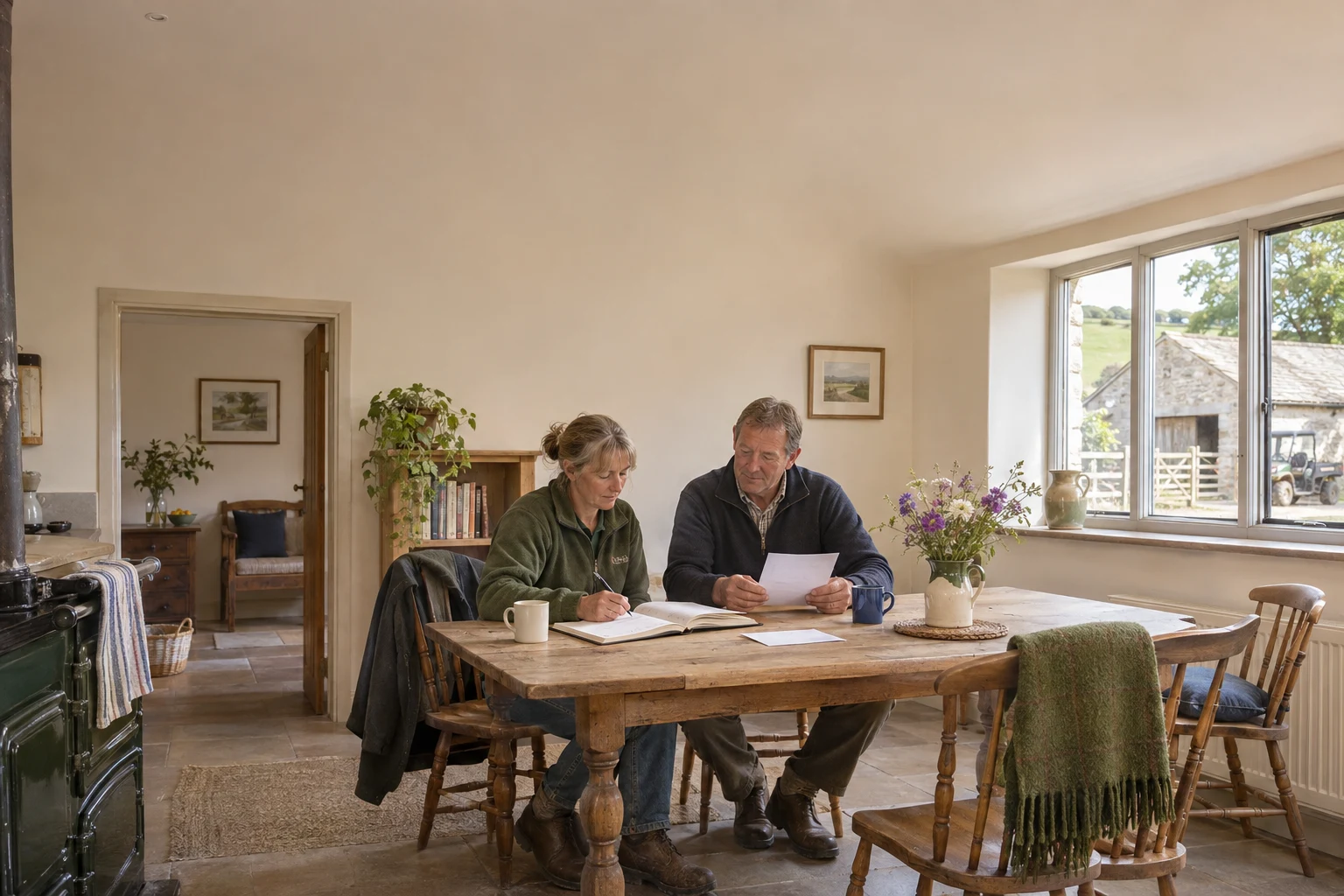
Keep the day’s practical details together: the clinic contact, agreed lift and the person coordinating work. Decide what appointment information you want to share. A farm rota needs to show when you are unavailable, not contain your medical history.
Keep the next appointment separate from the farm’s future
You may need to talk about the business as well as the next visit. Macmillan advises being realistic about business demands and seeking appropriate expert help when making decisions.[3] You do not have to use a rushed conversation over breakfast to settle every longer-term question.
Start with the immediate gap: an unconfirmed afternoon, calls that need answering or a task only you currently manage. Write down larger questions for a separate discussion with the relevant adviser. This guide does not assess employment rights, insurance, benefit entitlement or what the farm can afford.
For an employed farm worker, ask your employer for a private discussion about the practical arrangements. For a farming family, ask what support the person having appointments actually wants before organising everything on their behalf. They may welcome help with calls while wanting to keep the healthcare conversation private.
Choose one arrangement to confirm today
Start with whichever part is unresolved: contact the clinic, ask for specific cover or confirm the journey. At the appointment, take your questions and ask for anything unclear to be explained again; NHS guidance supports preparing notes and bringing someone with you if you wish.[5]
If the worry feels difficult to carry, Samaritans is available free on 116 123, day or night.[6] In England, for urgent mental health help, call NHS 111 and choose the mental health option. In an emergency, including if you cannot keep yourself or someone else safe, call 999 or go to A&E.[7] Elsewhere in the UK, check your nation’s health service for its urgent mental health route.
For further reading about farming life and support, visit the Rural Mind hub.
Sources
[2] Getting organised before cancer treatment: Macmillan
[3] Making decisions about your business: Macmillan
[5] Outpatients and day patients: NHS