You do not have to come from a farming family to join Young Farmers. NFYFC says you do not need to be involved in farming; an interest in the countryside and rural life is enough.[1] If you are starting an agricultural apprenticeship, studying at college or simply hoping to meet people nearby, ask your local club about joining before ruling yourself out.
This guide is about finding a place to belong, not proving how much you already know. It offers practical suggestions and signposting, not mental health advice or a promise that joining a club will solve loneliness.
Check the age group and local arrangements
NFYFC’s safeguarding guidance describes clubs for young people aged 10 to 28.[8] Its joining directory covers England and Wales.[9] Do not assume those arrangements apply to every organisation using the Young Farmers name across the UK. Check directly with the club or federation where you live.
Ask which age groups attend the meeting you are considering and what that evening involves. A person starting work at 18 may want something different from a younger member attending with parental support. Ask about membership fees and any separate activity costs before committing; do not rely on a price quoted for another county.
You do not need to own land, have a tractor or turn up with a farming CV. If your question is whether beginners are welcome at a particular activity, ask that plainly. Being interested and being experienced are different things.
Find an activity you would actually enjoy
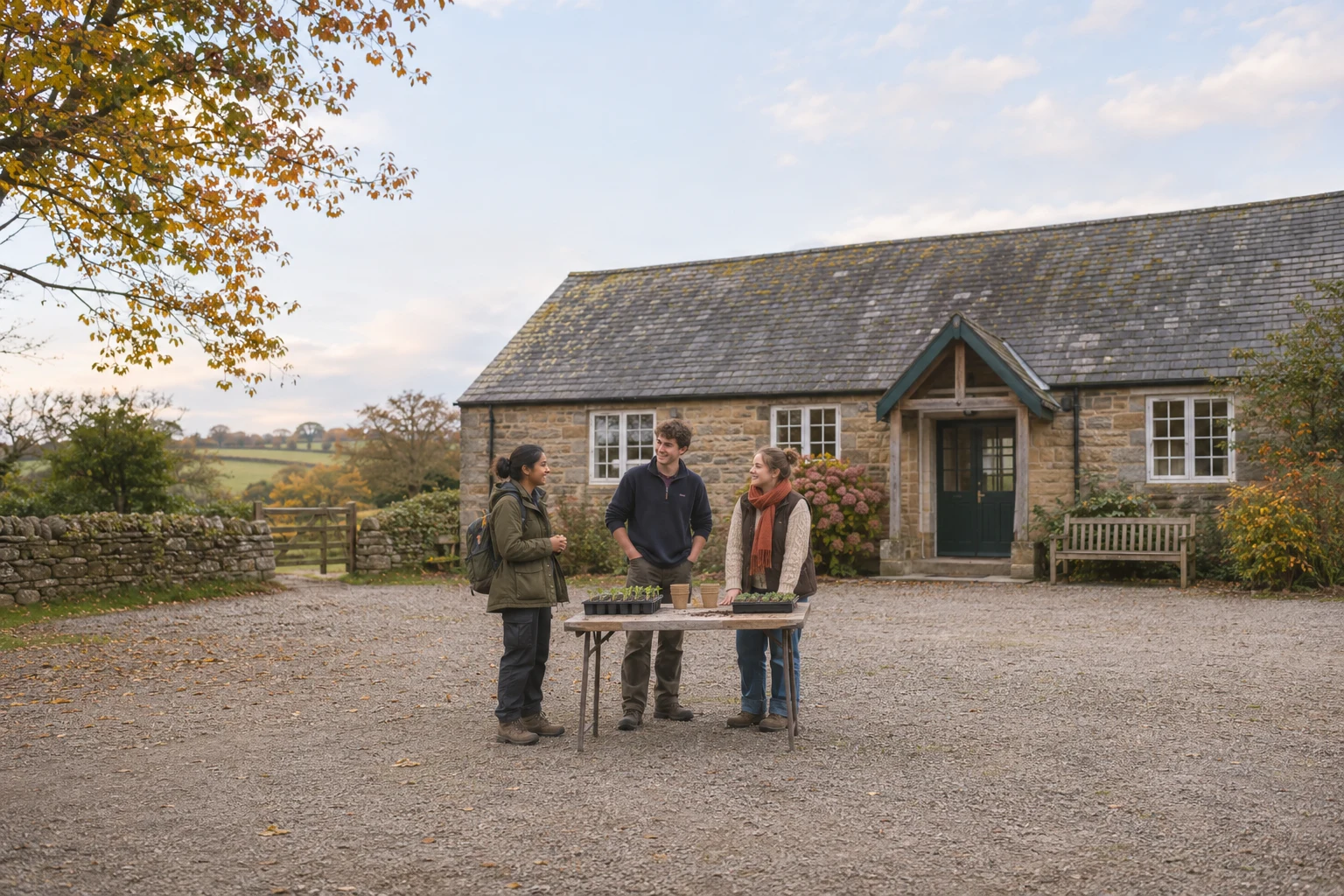
NFYFC describes opportunities including rural learning, sport and performing arts, alongside social events.[1] Ask the local club for its current programme rather than assuming every meeting involves livestock or agricultural competitions.
Choose something you would be curious about even if you knew nobody there. If you are new to farming, a practical club activity might give you something to talk about without making your work experience the whole conversation. You can say you are learning. You do not have to pretend to understand an unfamiliar term.
For apprentices, keep club activities separate from workplace training. If you need help with a task at work, ask your supervisor or training provider for instruction. A social introduction to other young farmers is not a substitute for the support you need to do your job safely.
Make the first visit less of an unknown
NFYFC’s joining guidance says you should be able to attend up to three club meetings before signing up; confirm the arrangements with your chosen club.[9] Ask who will meet you and whether there is an ordinary club evening you can attend, rather than choosing a large event as your introduction.
A short message could say: “I’m new to the area and interested in joining, but I don’t come from a farming family. Which meeting would be a good first visit?” You need not explain your wellbeing or personal circumstances to ask about the programme.
Check the finish time and journey home before setting off. If a late milking shift or college timetable makes that evening difficult, ask about another date. Avoid making your first visit depend on an uncertain lift or agreeing to something you cannot realistically fit around training.
Keep under-18 arrangements clear
Young Farmers includes children as well as adults. NFYFC says under-18 membership needs parental consent, and its safeguarding guidance covers supervision, communication with parents and transport arrangements.[8][9] A parent or carer should check those details with the club before a young person attends.
Ask for the named safeguarding contact and how to raise a concern. Use the club’s official contact route for arrangements, rather than relying only on someone encountered through a social-media group. If you are under 18 and something feels unsafe, speak to a trusted adult; you do not need to handle it alone.
For an apprentice, that trusted person might also be a college tutor or training provider’s safeguarding lead. If the person you first approach is part of the problem, choose another trusted adult. This article does not ask you to send MH360 personal information about yourself or anybody else.
Take one step, with support beyond the club
Start by finding the local federation’s official contact details and asking about one suitable meeting. Afterwards, consider whether the activity interested you and whether you felt welcome. You can ask another question before deciding to join. Explore the MH360 Rural hub for more articles about rural life and farming communities.
If you need someone to talk to, the NHS lists Childline on 0800 1111 for anyone under 19, free at any time.[2] Samaritans is free on 116 123, day or night.[4] In England, for urgent mental health help, call NHS 111 and choose the mental health option; elsewhere in the UK, check your local urgent mental health route.[3] In an emergency, or if you cannot keep yourself or someone else safe, call 999 or go to A&E.[3]
Sources
[1] NFYFC: Young Farmers clubs
[2] NHS: Mental health charities for children and young people
[3] NHS: Where to get urgent help for mental health
[4] Samaritans: Contact a Samaritan