
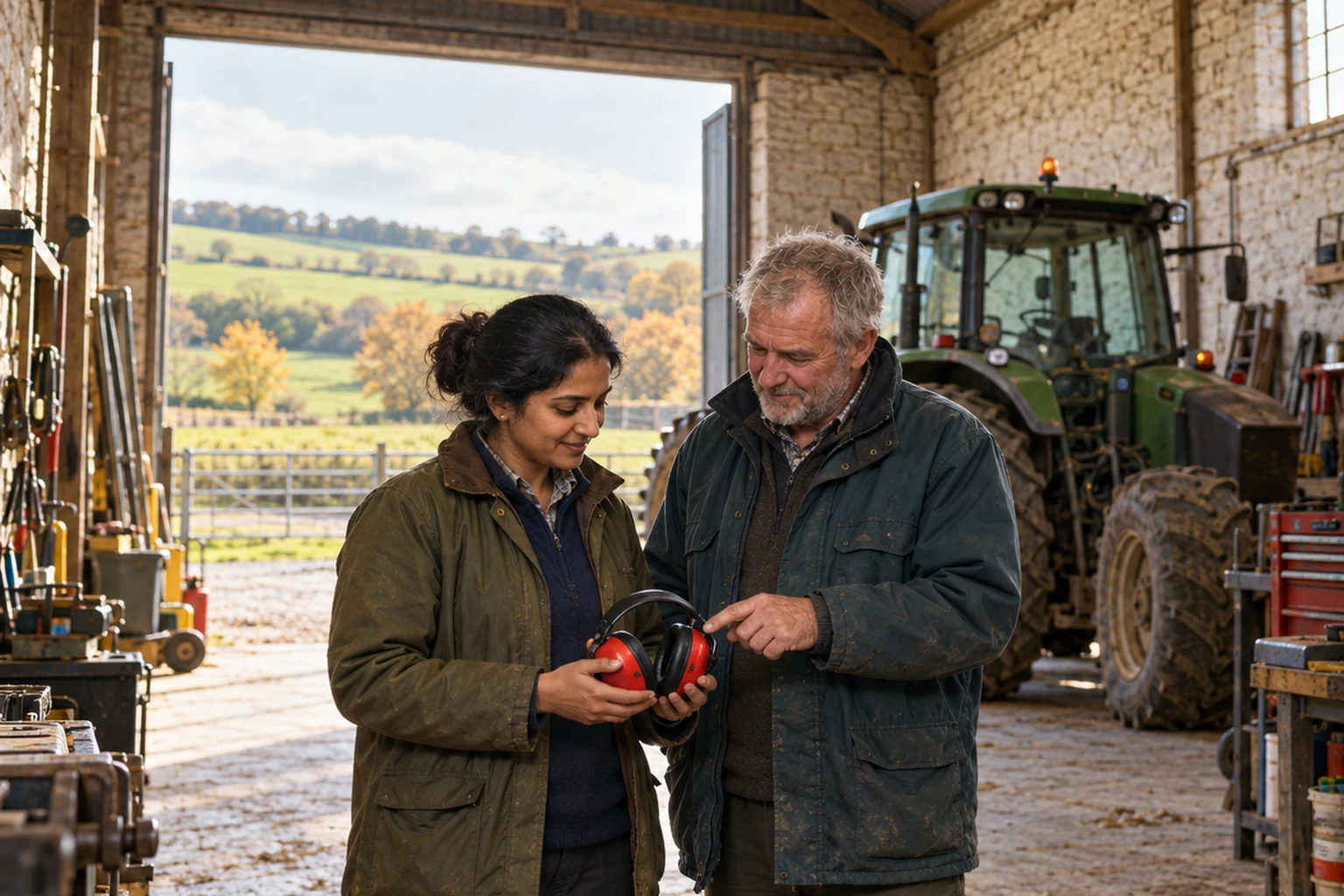
For noisy farm work, start with reducing the noise and checking the task, then choose suitable hearing protection for the exposure that remains. Ear defenders are part of the answer, not a replacement for controlling noise at source.[4][5]
Before buying another pair, take the questions below to whoever manages safety on the farm or a competent noise adviser. This is general information and signposting, not a noise assessment, equipment prescription or medical advice.
Start with the whole working day
A tractor job, time beside a grain dryer and a spell using powered tools may feel like separate activities. HSE’s farming guidance warns that exposure from different sources adds up, even when each encounter is brief. It also includes livestock noise, not just machinery.[4]
For your preparation, note the tasks, roughly how long they take and who else is nearby. Include people helping occasionally, not only the regular operator. Record what you actually do on a busy day rather than the tidier version in the machinery manual.
HSE’s worker guidance flags having to raise your voice for a normal conversation about two metres apart as a reason to consider noise risk.[7] Treat that as a prompt to ask for an assessment, not a way to measure exposure or declare another task safe.
Ask what can change before choosing ear defenders
HSE recommends having noise levels assessed by a competent person and keeping a record. Its farming guidance describes quieter equipment, separation from noisy processes and changes to working arrangements as ways to reduce exposure.[4]
A useful question for your next machinery or safety discussion is: what could make this particular job quieter? Ask about the equipment already there as well as future purchases. Put any proposed change beside the person responsible and a date to review it.
The machinery guidance specifically identifies missing or poorly maintained covers and enclosures as a problem, and says operating instructions should explain noise levels and remaining controls.[6] Find the instructions for the machine you use. Ask a competent person to investigate damaged enclosures or changed noise; do not improvise modifications or remove guards to make access easier.
Check fit, condition and communication together
HSE advises choosing protection that suits the work and the person, including how it fits with other protective equipment. It also warns that cutting out too much sound can interfere with communication and warning signals.[5] The strongest-looking pair on a shelf is not automatically the right choice.
Take the actual combination of equipment into the discussion. Ask the supplier or safety adviser how the protectors work with your eye protection, headwear and any other required kit. Explain the task and ask them to show you how to fit and check the chosen protection.
Check maintenance instructions too. HSE highlights earmuff seals, headband tension and the condition and cleanliness of plugs.[5] Make it clear where replacements come from. A pair hanging beside the workshop door is only useful if it is suitable and ready for the person who needs it.
Agree how people will communicate during noisy work
Before a task starts, ask how operators and other workers will get each other’s attention and where a conversation can happen safely. Include visiting contractors in that discussion rather than assuming they know the farm’s arrangements.
HSE tells workers to follow the noise controls and working methods provided, and to wear required hearing protection properly throughout noisy work. Removing it briefly can undermine protection.[7] Do not make lifting an ear cup beside running equipment the normal way to exchange instructions; ask for a safer agreed arrangement.
In Northern Ireland, HSENI also highlights how noise can mask warnings and reduce awareness of surroundings. Its guidance recommends a prioritised action plan, named responsibilities and checking that changes have worked.[8] Use HSENI as the Northern Ireland starting point; the HSE links below are the Great Britain route.
Leave with one task to follow up
For today’s next step, choose a noisy job and gather its instructions, the protection currently used and your questions. Ask who will review the exposure and what happens while any improvements are arranged. Keep a note of the answer so the discussion produces something you can follow up.
If you are an employee, report problems with protection or noise controls to your employer or safety representative. HSE also identifies occupational health and your GP as routes to help with hearing concerns.[7] This article cannot tell you what a hearing change means or whether your equipment provides enough protection.
For more practical reading about farming and rural life, visit the Rural Mind hub. Take the official guidance below into your next safety conversation rather than trying to settle the assessment from a general article.
Sources
[6] HSE: Agricultural machinery and noise