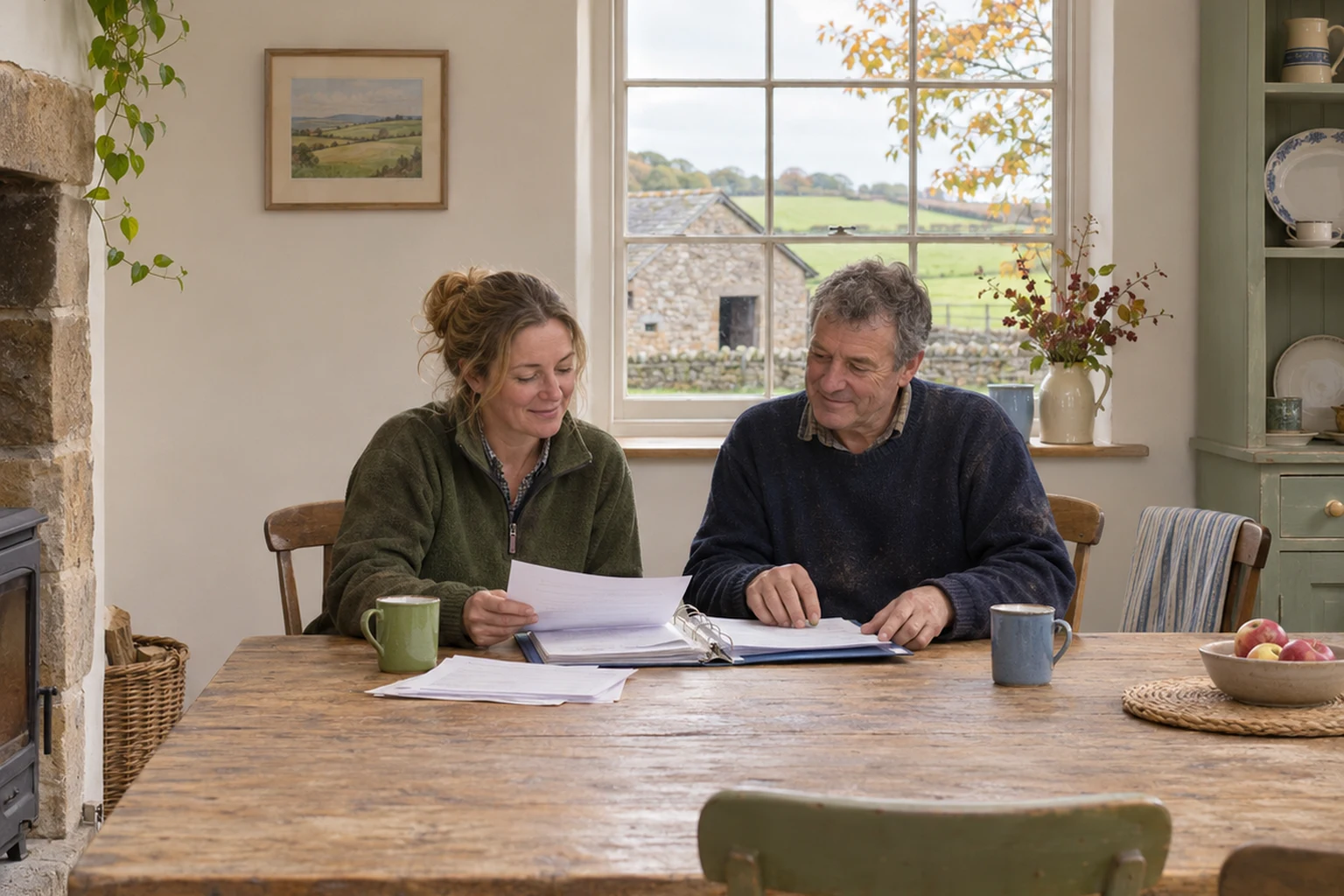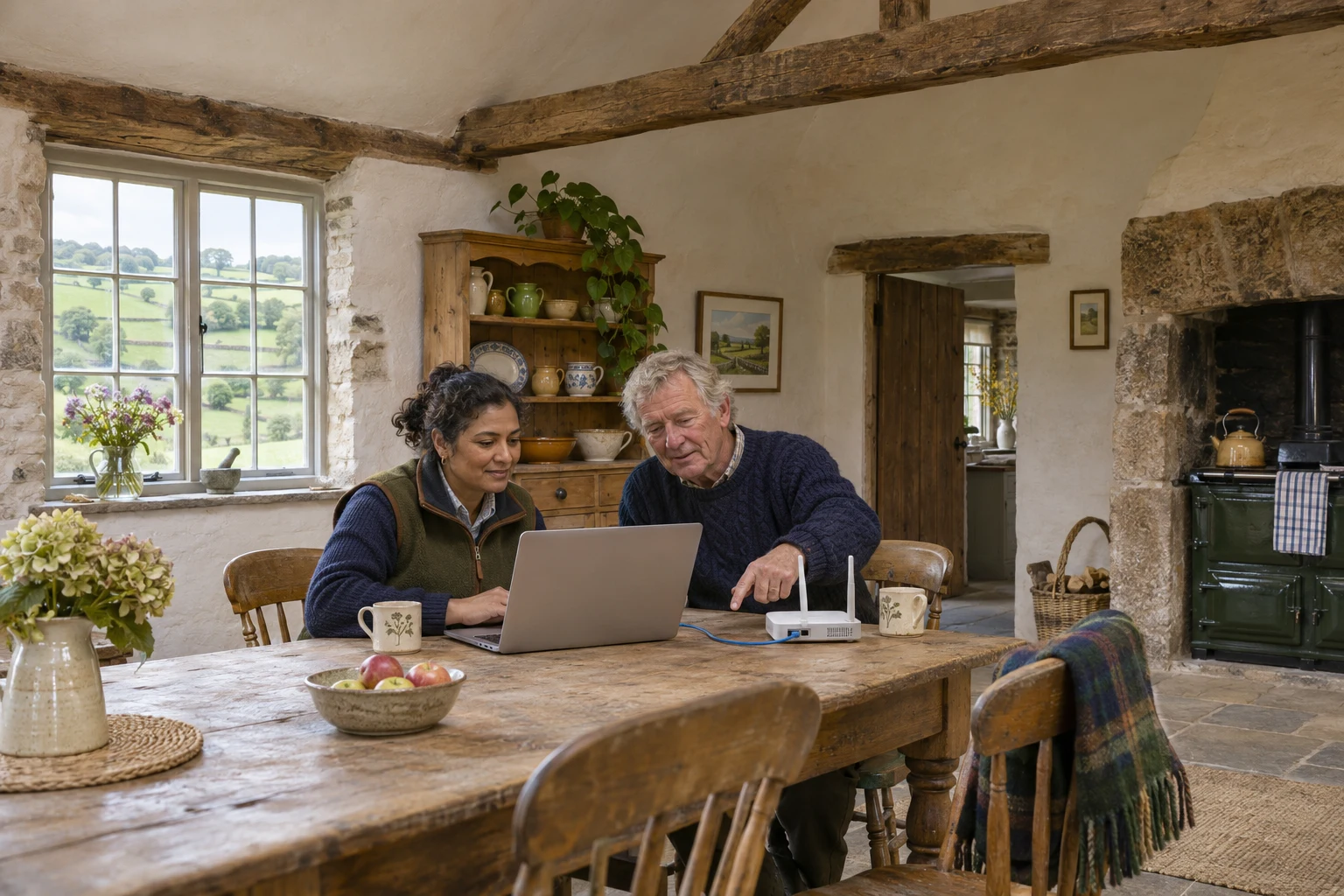
Start with your flood risk, a household plan and a bag of essentials, rather than waiting for water to reach the door. Official guidance recommends preparing a flood plan and keeping useful supplies ready.[1][6] For a rural household, a useful first conversation is who would collect the children, where everyone would meet and what you would do if the usual lane home was closed.
Keep this separate from the farm’s wider winter jobs. This article is about preparing the people in your household, not assessing buildings, engineering flood defences or planning a livestock evacuation. Follow current local warnings and emergency instructions ahead of any general checklist.
Check the right information for your address
GOV.UK’s preparation guide links to flood-risk and warning information, with separate routes for Scotland, Wales and Northern Ireland.[1] Use the route for the nation where you live. Save it somewhere you can find again, and show another person in the household how to reach it.
Do not treat an old photograph of a flooded road in a village group as a current warning. Check its date and compare it with official information. You might also agree who will check updates if somebody is working in a shed or away from their phone.
In England, the government guidance says a flood warning means flooding is expected, while a severe flood warning means danger to life.[3] Do not assume every UK warning service uses identical arrangements; read the guidance for your own area.
Write down who does what
A personal flood plan can include useful contacts, people who might help and arrangements for pets.[6] Put the agreed details on paper as well as on your phone. Use actual names, not “someone will check next door”. Ask before giving a neighbour a job, and leave room for them to say they cannot help.
Northern Ireland’s official guidance recommends agreeing how household members will contact each other and where they will go if separated.[2] Make that conversation specific: if one person is collecting a child and another is already home, where should each go? Choose arrangements together before there is an urgent decision to make.
If you need help to leave, include that in the conversation now. The government’s emergency-preparation guidance recommends discussing plans with family and friends, including how you would get help.[5] Do not make an unconfirmed lift the only plan.
Pack for your household, not a photograph
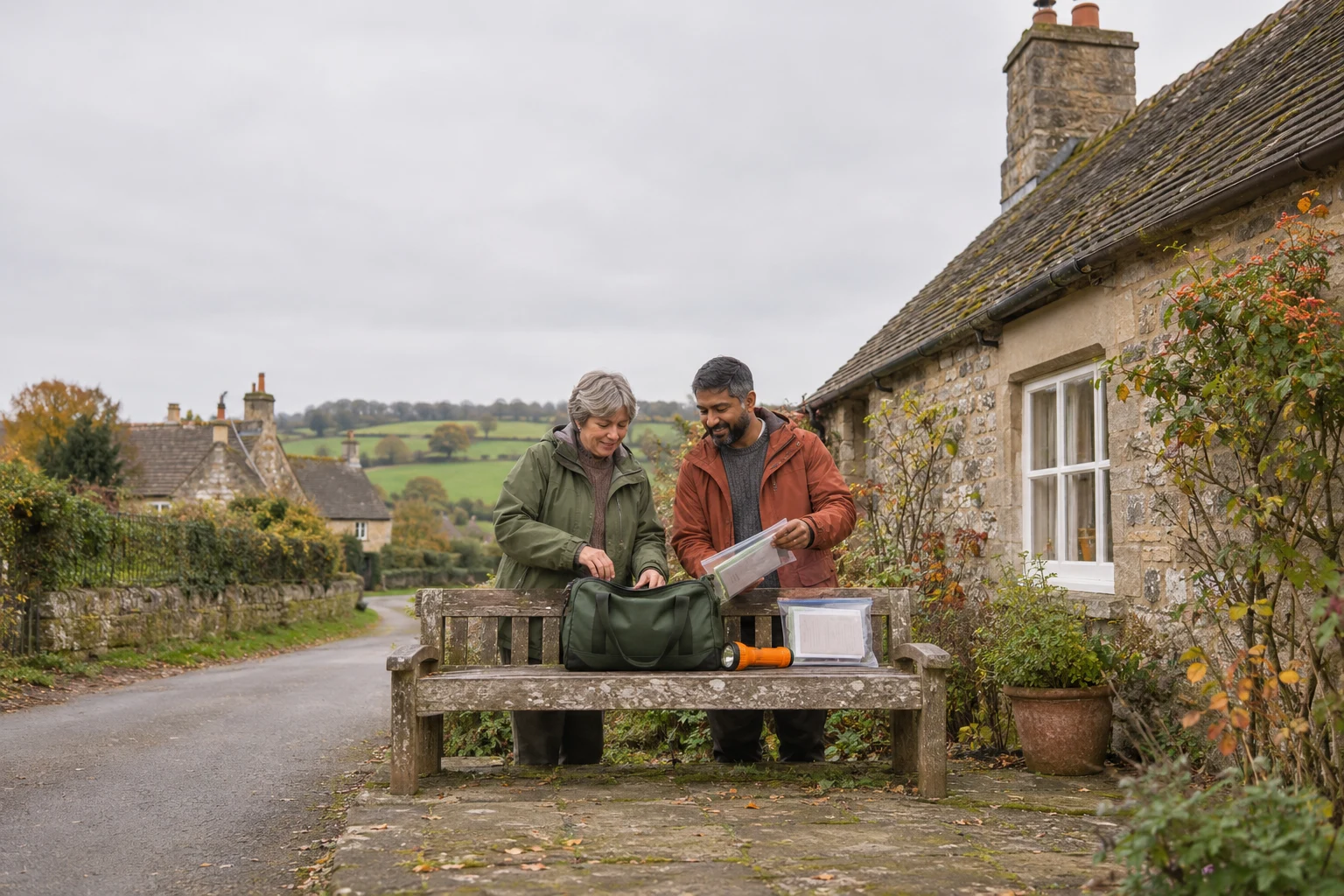
The government’s personal flood plan suggests a kit with documents, warm waterproof clothing, a torch, drinking water, medicines and a charger or spare batteries, alongside children’s or baby-care items where needed.[6] Start with what you already have and keep the bag somewhere everyone knows.
Consider the items your own household uses every day. A bag packed by one person without asking the others may miss something important. Check that the person expected to carry it can manage it, and agree how essential items still in daily use will be added when needed.
The wider government emergency guide also recommends a battery or wind-up radio and a power bank.[5] Check that the torch works and that charging cables fit your devices. Make checking the bag an agreed household task rather than leaving it unopened indefinitely.
Keep documents and animal arrangements separate
The Environment Agency recommends keeping important documents and possessions somewhere they will not be damaged by flood water, using a waterproof container for documents.[6] Think about where the pouch will live and who will take it. Keep copies of useful contact details with it rather than relying entirely on a phone search.
For pets, plan somewhere to go, food, carriers and medicines.[6] If you also keep livestock, use the relevant specialist guidance and local arrangements for those animals. Do not assume a household pet plan covers a yard or farm, and do not wait until roads are affected to start that separate conversation.
Know when preparation must stop
GOV.UK advises following emergency-service instructions if told to evacuate, and avoiding walking, cycling or driving through flood water.[3] A familiar lane is not a reason to try it. Leave possessions behind rather than putting yourself at risk to finish packing.
The same guidance says to call 999 if someone is in immediate danger, and to turn off utilities only if it is safe to do so.[3] This is general preparation information, not an instruction to enter water or tackle electrical equipment.
For your next step, open the official guidance for your area, agree one household contact arrangement and find a bag for the essentials. You can return to the Rural Mind hub for more practical rural-life reading.
Sources
[1] Prepare for flooding: Protect yourself from future flooding – GOV.UK
[2] Preparing for a flood | nidirect
[3] What to do before or during a flood – GOV.UK