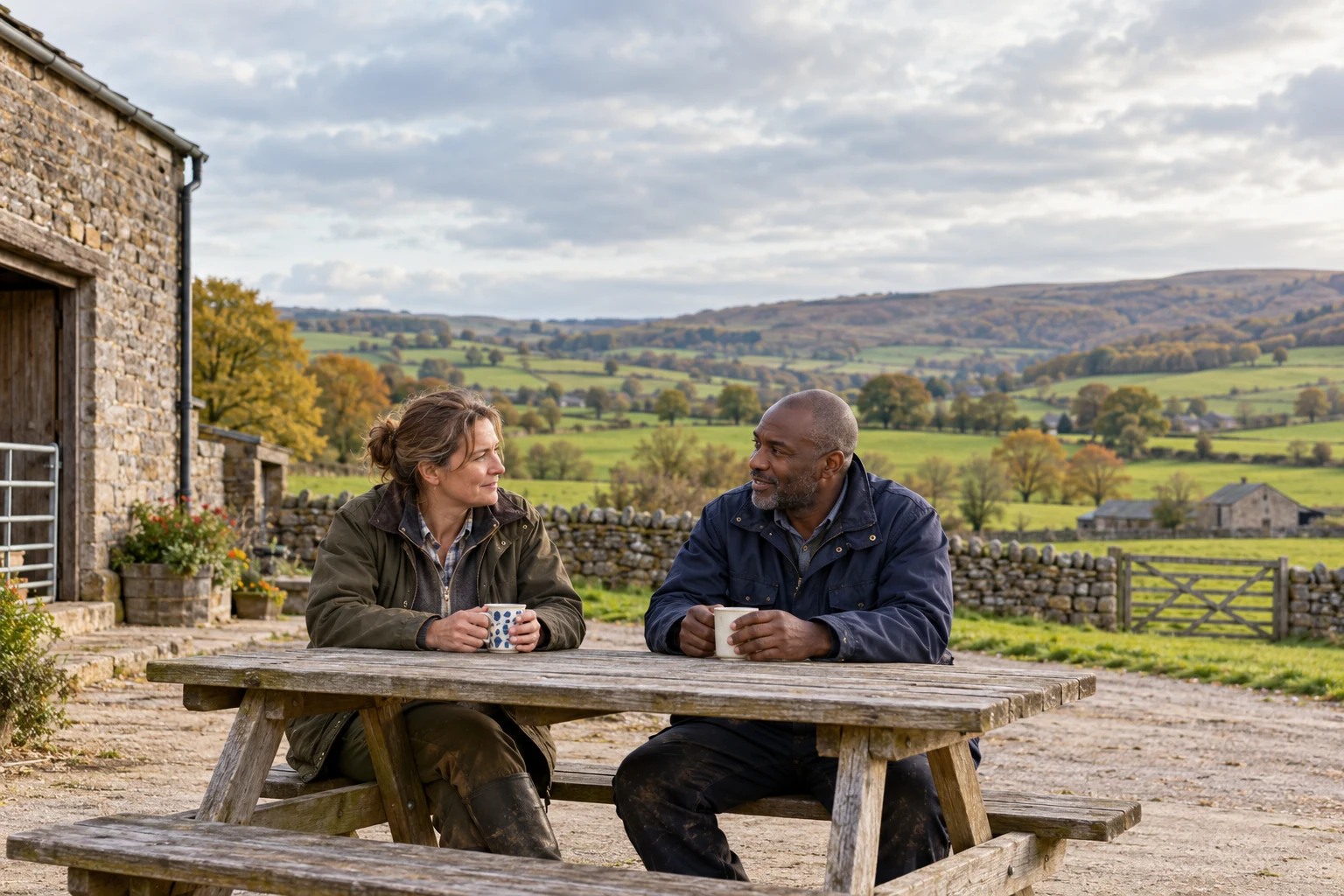

Start with what each person wants from the future, rather than trying to settle ownership or tax in the first meeting. AHDB’s succession guidance puts honest conversations, clear expectations and outside support at the centre of getting started.[1]
You can make the first conversation smaller than a complete handover plan. Suggest a time to talk about the coming years, with no expectation that anyone signs something or announces a retirement date. This article offers conversation prompts and signposting, not legal, financial or tax advice.
Give the first meeting a manageable purpose
Try an invitation such as: “Could we put an hour aside to talk about how we each see the farm in five years?” Explain that you want to hear people’s thoughts, not arrive with a decision already made. Ask whether the proposed time and place work for everyone.
Avoid squeezing the discussion between jobs or opening it when somebody is rushing out to check stock. You might prefer the kitchen table, a quiet room away from the yard or somewhere neutral. Agree an end time and leave room for another meeting instead of expecting to resolve everything before tea.
For this first discussion, a useful aim is to identify what needs talking about. AHDB describes succession as involving people and shared understanding, not only tax and inheritance.[1] You can put technical questions on a separate page without trying to answer them yourselves.
Ask people what they want, not what you assume
AHDB cautions against assuming that a family member who works elsewhere has no interest in the business, or that someone already farming necessarily wants to continue. Its guidance suggests writing down personal objectives before talking together.[9]
Invite each person to prepare a few notes privately. What work would they like to keep doing? What would they like to learn, change or stop? Is there something they have not felt able to say? These are prompts, not a test or a demand for a finished life plan.
Give people time to answer in their own words. If someone says they are unsure, record that uncertainty rather than turning it into agreement. Ask who else needs a chance to contribute, including family members living away. Avoid discussing an absent person’s future as though they have already accepted it.
Separate everyday responsibilities from bigger decisions
You could draw two headings in a notebook: “Questions about day-to-day work” and “Questions needing professional advice”. Under the first, note practical matters you want to discuss, such as who deals with suppliers, keeps records or trains someone on an unfamiliar task.
Under the second, record questions about ownership, tenancies, business arrangements, housing or money without guessing the answers. This article does not explain inheritance rights, tax reliefs or how to transfer a farm. Do not treat a family conversation or these notes as a substitute for advice on your circumstances.
If someone wants to explore taking more responsibility, ask what support and training they would need. Keep any suggested work changes separate from assumptions about ownership. Write down what is merely an idea and what, if anything, everyone has actually agreed to explore.
Make room for disagreement and outside help
AHDB recommends clear, calm communication and identifies advisers or farming peers as possible sources of support with succession discussions.[1] You do not have to keep repeating an unproductive conversation in exactly the same way.
If the discussion becomes heated, suggest a pause and agree when to return to it. Try describing your own concern rather than assigning a motive: “I am worried about how the workload would change” gives the other person something specific to respond to. This is a suggested way to phrase a concern, not a promise that it will resolve disagreement.
Before inviting an outside person, agree what help you want and ask about their role, experience and charges. AHDB’s guidance also discusses talking with professionals who know the business, including an accountant.[9] Ask which questions they can address and which need someone with different expertise.
Leave with one next step and a date to return
Read back the notes together. Separate shared intentions, unanswered questions and points where people disagree. Ask before circulating personal comments, and make sure nobody mistakes the summary for a settled handover arrangement.
Choose one manageable next step: each person preparing their questions, finding an appropriate adviser or arranging another conversation. Name who will do it and agree when to check in. For more practical reading about farming and rural life, visit the Rural Mind hub.
If the discussion leaves you struggling, Samaritans is free on 116 123, day or night.[4] In England, for urgent mental health help, call NHS 111 and choose the mental health option. In an emergency, or if you cannot keep yourself or someone else safe, call 999 or go to A&E.[5] Urgent NHS routes differ across UK nations.
Sources
[4] Samaritans: contact a Samaritan