

- Charities & Not-for-Profits Hub
Volunteering can be one way to spend time with other people, but the role needs to suit you. The NHS includes volunteering with a local charity among things you can try if you feel lonely.[4] Start by asking what an ordinary session involves, rather than promising a regular commitment before you have visited.
This guide is for people considering a charity role and the small charities welcoming them. It offers practical starting points, not mental health advice or a promise that volunteering will resolve loneliness.
Choose a role with the contact you want
Think about what you would like your week to include. Perhaps you miss working alongside someone, want to get out of the house or would enjoy a familiar place to return to. You do not need to tell a charity your personal history to ask whether a role involves company.
NCVO suggests considering the causes that interest you, the time you can realistically give and whether you want to volunteer in person, remotely or both.[11] Add a question about the people: will you work with the same group, on your own or mainly with visitors?
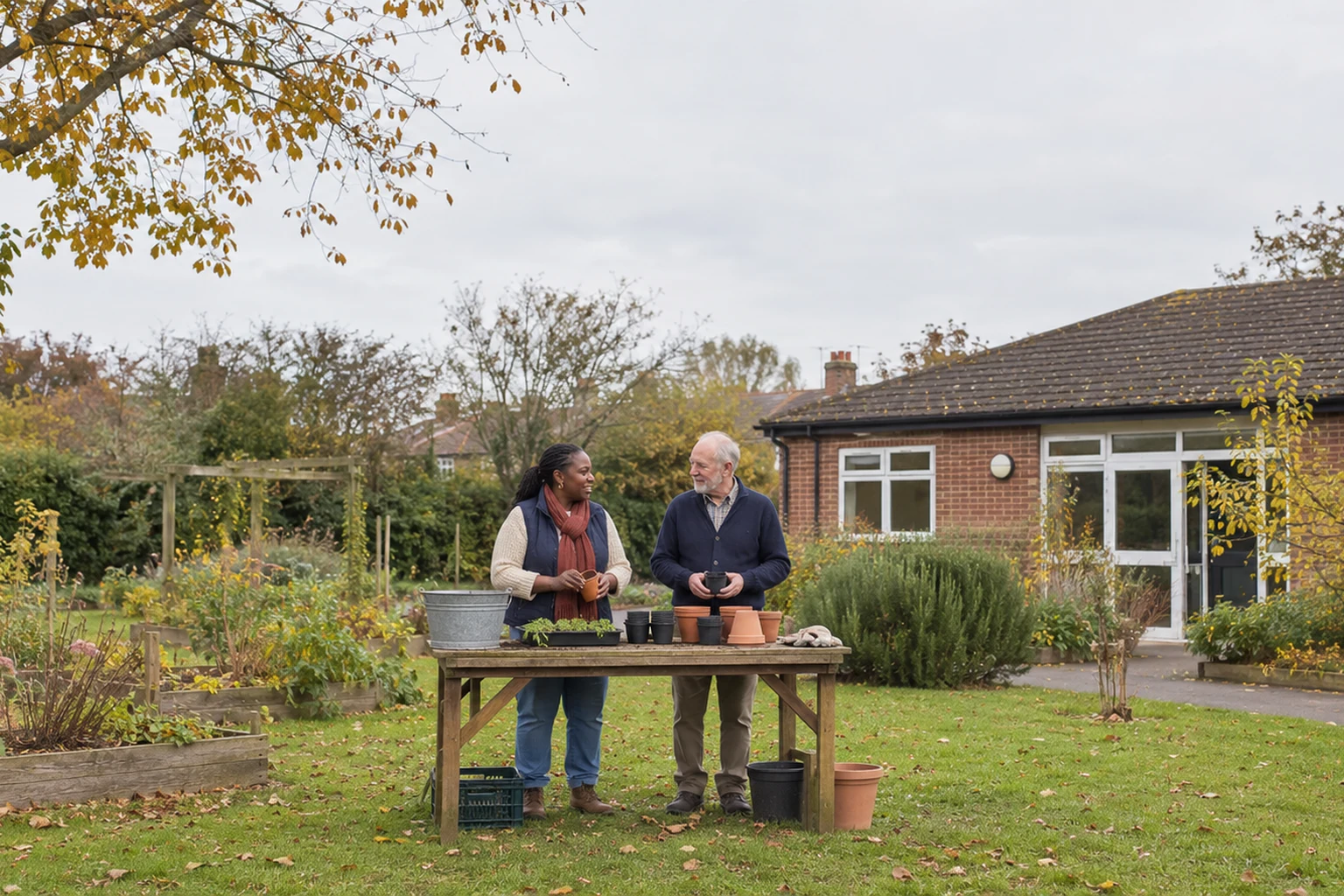
For example, ask whether a garden session involves working together or tending separate plots. An online role might include a regular team conversation, or it might be mostly independent. The job title alone will not tell you which. Choose the arrangement you would actually look forward to trying.
Ask for a clear first visit
Before travelling, ask who will meet you, where to go and what the first session will involve. Explain any practical adjustment you want to discuss, such as somewhere to sit or written directions. Ask about transport and expenses early enough to make an informed decision.
You could write: “I’m interested in helping, and I’d like to meet the team before deciding. Could someone show me what a normal session looks like?” Ask whether a short introductory visit is possible; do not assume every charity offers taster sessions.
If you coordinate volunteers, send a named contact and a clear arrival time. Try giving a newcomer one familiar person to work alongside rather than leaving them to introduce themselves around a busy room. Explain what happens at the end, too, so they know whether to arrange another visit or wait to hear from you.
Keep the first commitment manageable
A weekly role is not the only starting point. NCVO describes opportunities ranging from one-off events to regular volunteering, in person or online.[11] Ask what is available locally and what preparation a particular role requires.
Work out the whole commitment, including the journey and any tasks expected between sessions. You might be comfortable with an occasional event but unable to promise every Tuesday. Tell the organiser that before agreeing a rota.
The NHS suggests setting small, achievable targets rather than trying to do everything at once when dealing with loneliness.[4] For your volunteering enquiry, that could mean sending one message and deciding about a visit after you receive a reply. It does not need to become a complete plan for your social life.
Notice how the welcome feels
After a visit, give yourself time to decide whether you want to return. Consider whether someone explained the task, whether you knew who to ask for help and whether the contact matched what you wanted. Feeling useful and having a chance to talk may matter differently to different people.
For charities, ask a newcomer something specific, such as whether the arrival instructions worked or whether they spent more time alone than expected. Avoid asking them to explain their wellbeing in front of the group. Offer a private way to raise a practical concern.
If the role is not right, you can ask about a different task or another organisation. NCVO points people towards local volunteer centres, volunteering directories and direct enquiries to charities.[11] A first enquiry need not commit you to the first opportunity you find.
Take one next step, and seek support when needed
Choose one cause you care about and ask one organisation about the people, the task and the first visit. If you welcome volunteers, review your next invitation from the perspective of someone arriving alone. The MH360 charities hub is a place to explore more articles for charities and not-for-profits.
If loneliness is affecting your life or you are struggling to cope, speak to your GP rather than relying on a volunteering role as your only support.[4] This article is not a substitute for professional help.
You can call Samaritans free on 116 123, day or night, if you need someone to talk to.[5] In England, for urgent mental health help, call NHS 111 and choose the mental health option; elsewhere in the UK, check your local NHS urgent support route.[10] In an emergency, or if you cannot keep yourself or someone else safe, call 999 or go to A&E.[10]
Sources
[4] NHS: Get help with loneliness
[5] Samaritans: Contact a Samaritan