- Carers Mind Hub
Tell your own GP practice that you provide unpaid care and ask how to record this on your patient record. NHS Thames Valley describes both online registration through a practice website and asking reception for a paper form.[5] Start with your own practice’s process rather than looking for a single form that covers every organisation.
If you support someone with dementia, the person whose appointments you organise may already be well known at their surgery. This conversation is about making your own caring role visible too. The NHS examples below describe services in England; elsewhere in the UK, ask your practice about its local arrangements. This is practical information and signposting, not medical or legal advice.
Start with your own GP practice
Look on the practice website for a carers section, or ask reception: “I provide unpaid care for a relative. How do I let the practice know?” In Thames Valley’s guidance, recording someone as a carer gives the practice an opportunity to discuss their support needs and signpost local services.[5] Ask what happens at your surgery rather than assuming every practice offers the same arrangements.
You could make this enquiry by phone before travelling. If you would prefer to complete a paper form, ask how to get one. If the website is difficult to use, explain that and ask for another way to provide the information.
Keep the first conversation simple. You might say that you support your partner at home, or regularly help a parent who lives elsewhere. You do not need to fit the whole history into a conversation at the reception desk. Ask where you can discuss anything private.
Describe the care, not just the relationship
Being a husband, daughter or friend does not stop the help you give from being care. The NHS includes regular help with shopping, appointments, medicines and bills, as well as keeping someone company or watching over someone who cannot be left alone.[2]
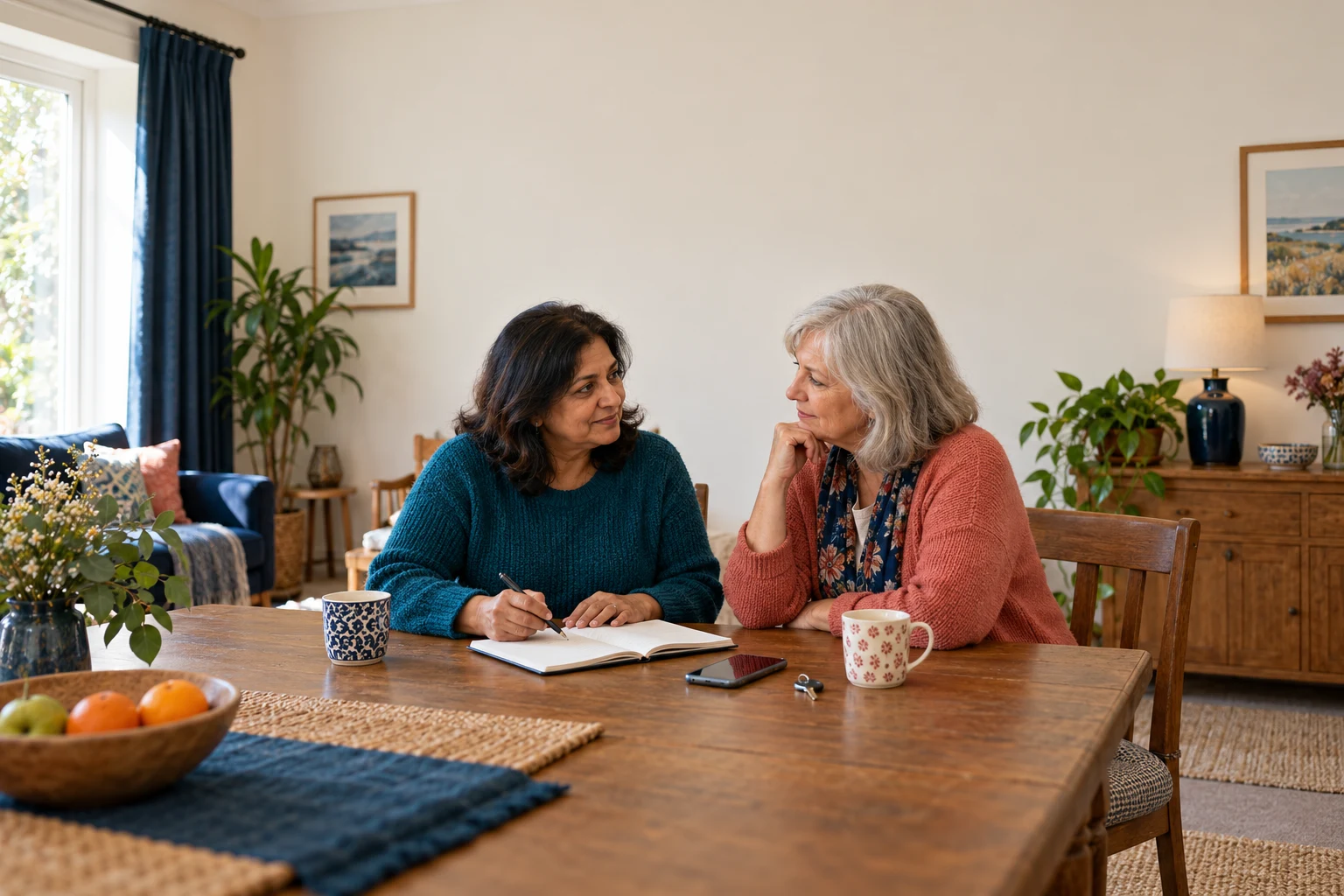
Before contacting the practice, write a few lines about what you do. For example, you could note the journeys you organise or the time you spend making arrangements. Use your actual routine rather than copying somebody else’s description. A small notebook is enough; there is no need to create a formal report for this enquiry.
Think about what you want to ask for yourself. Perhaps you need to understand how appointments can fit around caring, or want contact details for a local carers organisation. NHS Thames Valley says practices may be able to adjust appointment arrangements, but that is something to discuss, not a guaranteed service.[5]
Keep your record separate from access to theirs
Telling your own practice that you are a carer and arranging access to another adult’s health services are different enquiries. For family and carer access, also called proxy access, NHS guidance says to contact the surgery of the person who wants help with their healthcare.[6]
The surgery checks agreement where needed and decides what access is appropriate. You may both need to complete a form and provide photo identification.[6] If you are helping someone with dementia who cannot understand or agree to access, ask the surgery to explain its process; the NHS says it may still be able to provide access based on the person’s best interests.[6]
Ask which tasks the agreed access will cover, and how you will use it. Avoid assuming that being recorded as a carer on your own record settles those questions. Write down which practice is handling each enquiry, especially if you are registered at different surgeries.
Ask separately about wider support
A carer’s assessment is another route, separate from the needs assessment of the person you support. In England, the NHS says an adult carer’s assessment is free and can be requested through the local council’s adult social services.[2] Recording your caring role at the GP is not a reason to leave an assessment enquiry unmade.
If you want to explore that route, ask who to contact and what information they need. MH360’s existing guide to preparing for a carer’s assessment goes into that conversation in more detail. For this first step, keep a note of the organisation, the date you contacted it and what you are waiting for.
Finish with one clear next step
Before ending the conversation with reception, check whether you have submitted the required information or only asked for a form. Ask how to confirm that your caring role has been recorded. If you have also requested information about proxy access or local support, keep those actions separate in your notes.
Choose one manageable task today: find the carers page on your practice website or call reception. You can return to the other questions afterwards. Explore the Carers Mind hub for more practical information for people caring for someone with dementia.
Sources
[2] https://www.nhs.uk/social-care-and-support/support-and-benefits-for-carers/carer-assessments
[5] https://www.thamesvalley.icb.nhs.uk/your-health/support-for-carers/registering-as-a-carer
[6] https://www.nhs.uk/nhs-services/gps/health-services-for-someone-else-family-carer-access/how-to-get-family-carer-access-adults