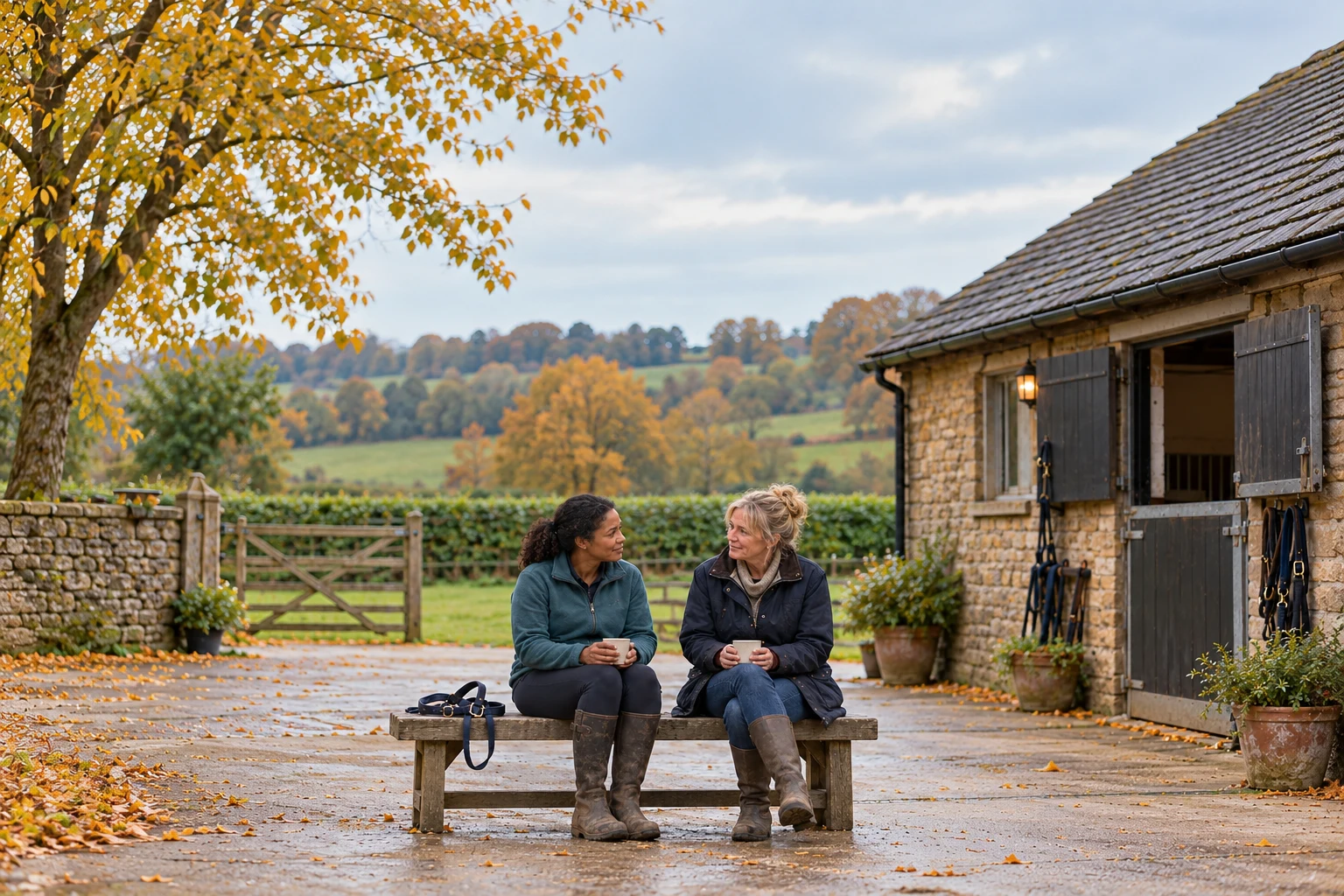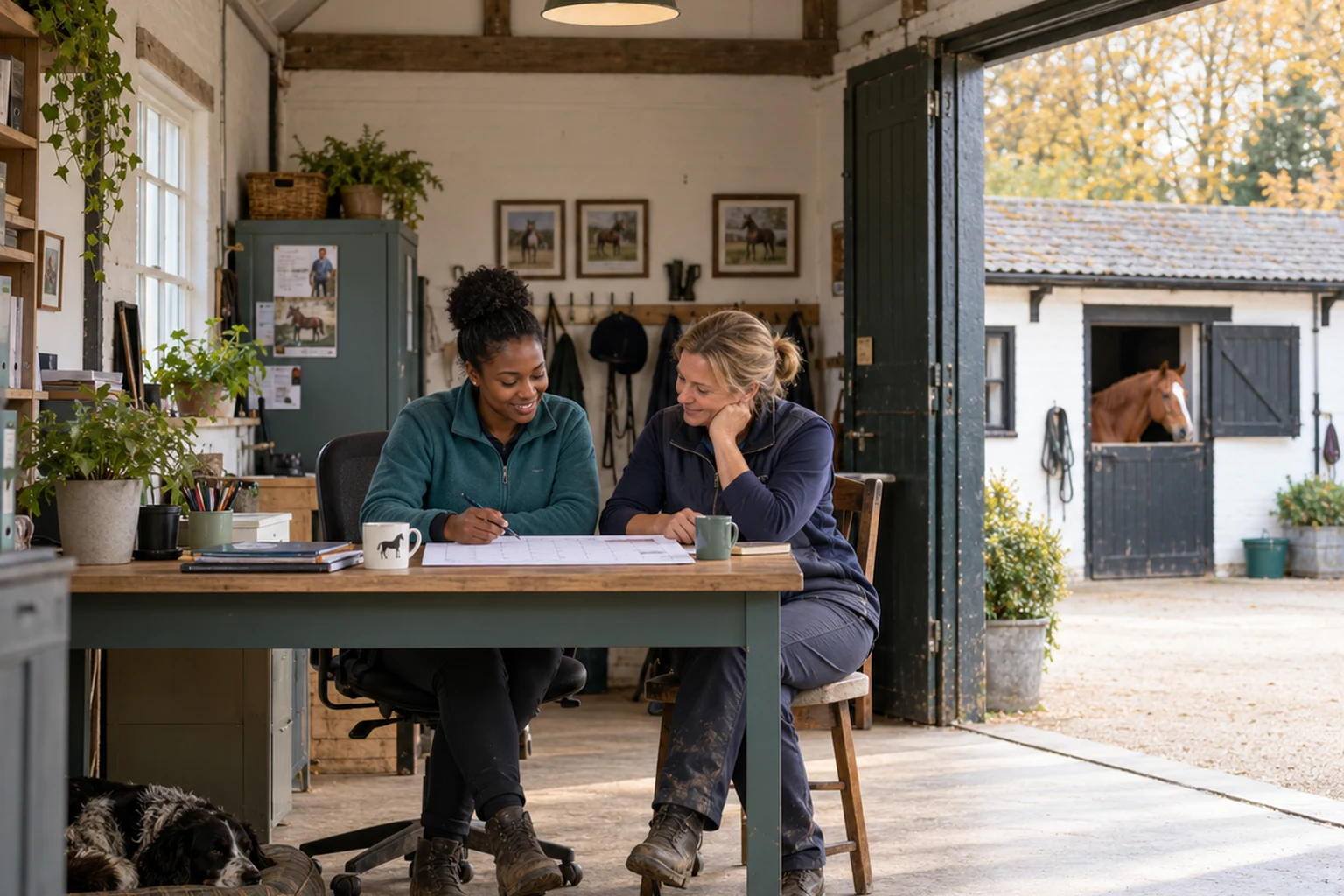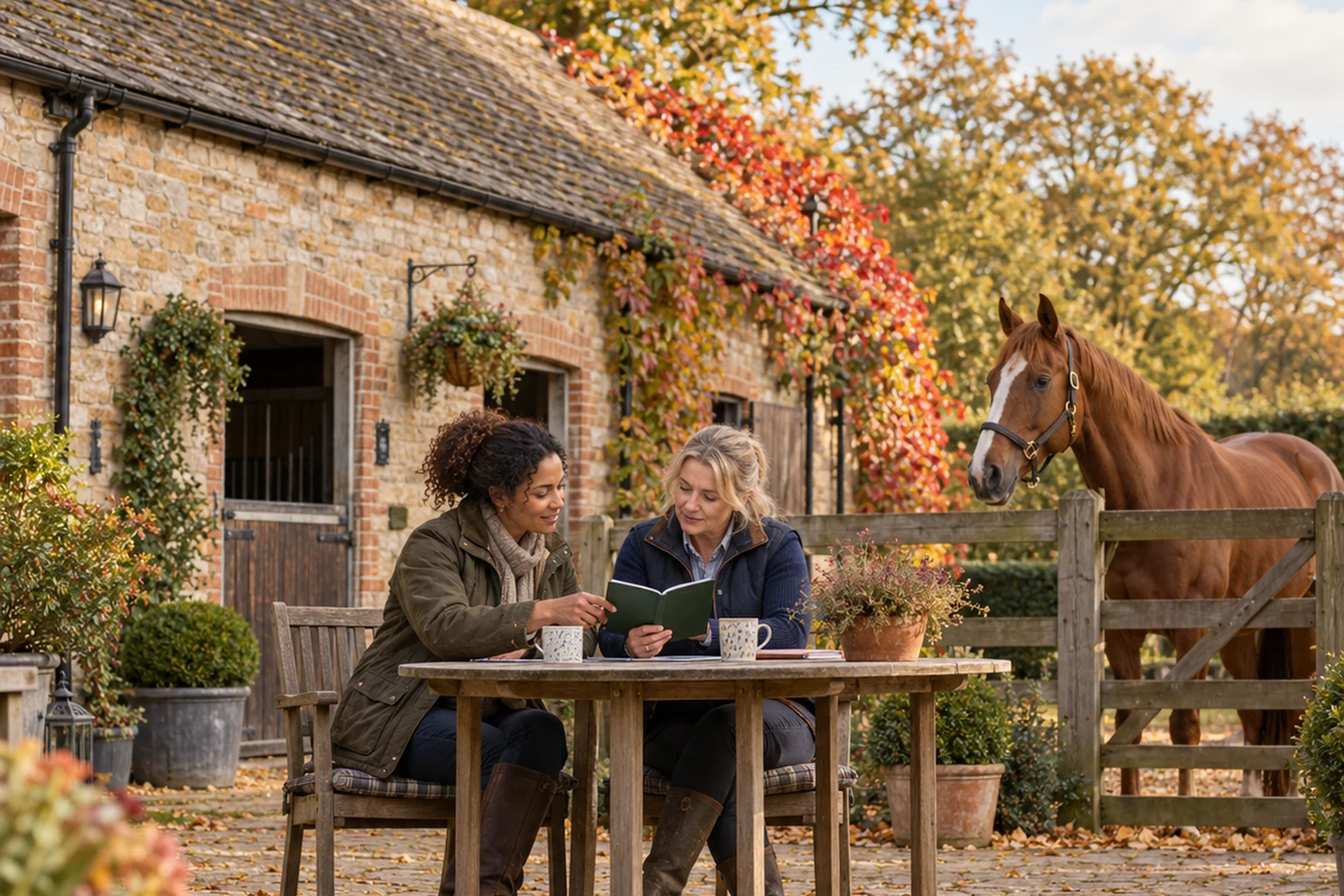

If you feel nervous about riding after a fall, start by telling your coach what worries you before agreeing another lesson. Ask for time to discuss your concerns without an expectation that the conversation ends with you getting on a horse.
This is a guide to preparing that conversation and finding support, not a riding programme, medical advice or a way to judge whether you are fit to ride. If the fall has left you with health concerns, take those to a healthcare professional rather than asking a coach to assess them.
Describe the worry in your own words
Before you contact your coach, jot down what you want them to understand. You might feel comfortable visiting the yard but worried about mounting, riding in a group or returning to the place where you fell. Try describing the particular situation rather than saying only that you have “lost your nerve”.
You could say: “Since the fall, I have been worrying about riding again. Could we have a conversation before booking a lesson? I want to explain what feels difficult and hear what you think.” This is a suggested opening, not a script you have to follow.
The NHS lists tension, sleep difficulties and trouble concentrating among possible anxiety symptoms, and advises against diagnosing yourself.[3] If any of those sound familiar, mention them when you seek help rather than deciding for yourself what they mean.
Separate health questions from riding questions
A conversation about confidence does not establish that an injury has healed or that returning to riding is safe. Where you have been given healthcare advice after the fall, ask the professional involved about anything you do not understand. Do not use a lesson booking as a deadline for recovery.
If you hit your head, use the NHS head injury and concussion guidance to check when and where to get medical help; it distinguishes situations requiring 999, A&E or advice from 111.[6] This article cannot assess symptoms or give clearance to ride.
For the coach conversation, explain any relevant instructions you have already received. Ask what they need to know to discuss riding arrangements, while keeping questions about symptoms and recovery with a healthcare professional. There is no need to share your whole medical history with everyone on the yard.
Ask about the horse and the setting
The British Horse Society encourages riders to describe what they can do confidently rather than relying on labels such as “intermediate”. It also recommends asking a coach for a second opinion about ability and goals.[7] You can use that approach to make the conversation specific.
Ask what your coach would want to assess before suggesting a lesson. Which horse would they consider, and why? Would you have time to talk privately beforehand? Explain if a busy arena, spectators or comments from other riders are part of your concern. Let the coach assess suitable riding arrangements rather than copying somebody else’s return after a fall.
If you do book, ask how you can say that you want to pause or finish. Clarify what the session would involve before you pay, including whether there is an option to rearrange. You are asking for a clear agreement, not promising to complete a particular exercise.
Decide what you want to tell other people
You can keep your explanation to yard friends brief: “I am talking it through with my coach. I am not setting a date to ride again yet.” If encouragement has started to feel like pressure, ask for something more useful, such as company for a conversation or a lift to an appointment.
Avoid agreeing to a public comeback because someone else has announced it for you. If a friend offers to help with your horse, check the arrangement with the appropriate yard professional first. Keep welfare and safe handling separate from anyone’s wish to cheer you up.
Choose one next step you can arrange now: contacting your coach, writing down your questions or speaking to your GP. You do not need to settle every future decision in the same conversation.
Find support beyond the yard
The NHS recommends seeing a GP if you are struggling to cope with anxiety, fear or panic, or things you are trying yourself are not helping.[3] You can describe how the worry is affecting everyday life without arriving with a diagnosis. A riding coach and a healthcare professional have different roles.
For urgent mental health help in England, call NHS 111 and choose the mental health option. If someone’s life is at risk or you cannot keep yourself or someone else safe, call 999 or go to A&E.[4] Samaritans is available free on 116 123, day or night, if you need someone to talk to.[5]
Keep your notes for the conversation you choose to have next. For more information written for the equestrian community, visit the Equi Mind hub.
Sources
[3] Get help with anxiety, fear or panic – NHS
[4] Where to get urgent help for mental health – NHS