
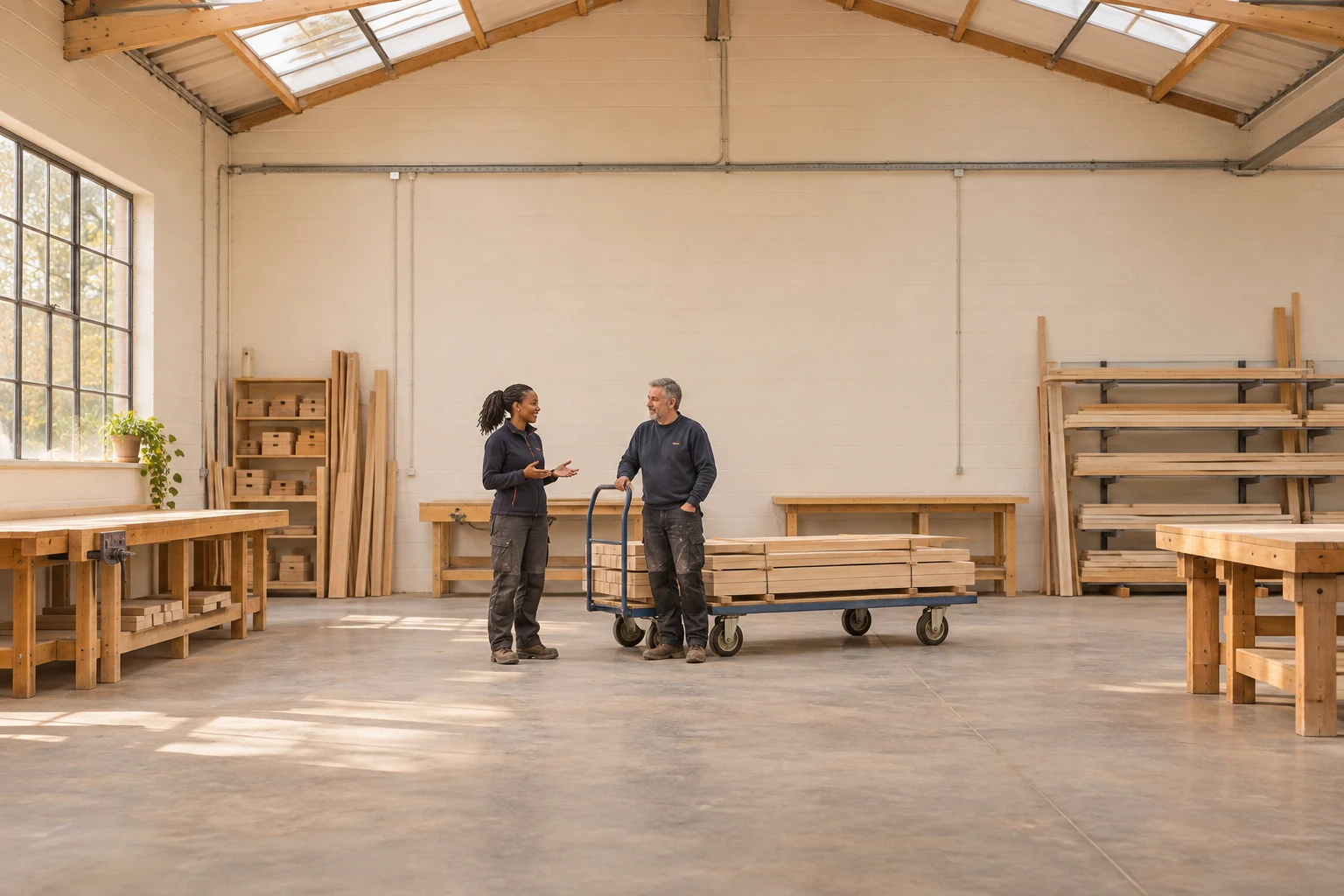
There is no single weight that makes a load safe to lift on your own. HSE says the risk depends on the person and the task, and it does not recommend a universal lifting limit.[1] Before the next delivery, look at whether the load needs handling at all and how it will reach its destination.
For a self-employed carpenter, plumber or builder, that conversation belongs before the materials arrive. This is general information and signposting, not a lifting lesson, a site assessment or medical advice. Ask a competent safety adviser about the actual work rather than using this article to decide what you can lift.
Start with the delivery, not your strength
HSE’s overview puts avoiding hazardous manual handling before assessing handling that cannot be avoided and reducing the remaining risk.[3] Think about the whole movement, including unloading and putting materials into storage. Manual handling includes pushing and pulling, not only carrying something in your arms.[3]
When ordering, ask exactly where the delivery will finish. The kerb, the driveway and the room where you need the materials are different destinations. Tell the supplier about access restrictions and ask what arrangements are possible. Do not assume a driver will move everything to the work area or that the customer can help unload.
Keep that answer with the job details. If the delivery arrangement changes, pause and revisit the plan with the people responsible. A note saying “delivered on Tuesday” leaves an important question unanswered: who has agreed how the materials get from there to the job?
Describe the awkward parts of this particular job
HSE’s construction guidance asks people to consider the load, the person and the surroundings, including awkward postures, repeated handling, stairs, slippery surfaces and time pressure.[2] A weight printed on packaging cannot describe the whole route.
Before asking for help with the plan, gather useful details. Where does the load start and finish? Are there narrow turns or changes in floor level? How often will the movement happen? Could you see where you were going while carrying it? Describe what you know and flag what still needs checking rather than filling gaps with a guess.
If you work for someone else, raise those details with the supervisor or site manager. If you organise the work yourself, bring them to a competent adviser. Photographs or a sketch may help explain the space, but ask what else the person needs before treating a remote conversation as a completed assessment.
Check the proposed equipment before relying on it
HSE describes options such as delivering materials closer to their point of use and using suitable handling aids, while warning that unsuitable equipment can introduce risks.[2] A trolley in the van is not proof that it suits a particular load or route.
Ask the equipment supplier or hire company to explain suitability, operating instructions and the training needed. Give them the actual load details and site conditions. Confirm who will provide the equipment, when it will arrive and who will check it before use. Keep the instructions accessible to the person doing the work.
Northern Ireland’s HSENI guidance also stresses involving workers when considering handling aids, so the proposed solution works in practice without introducing new hazards.[4] If you are the person who will use it, say where the suggestion does not match the job. That is useful information for improving the plan.
A second pair of hands is not the whole answer
HSE’s plasterboard example puts two-person handling after other options have been explored, with further controls in place.[1] Asking a mate to pop round does not, by itself, settle whether a particular task is appropriate.
Explain what help you think is needed before anyone agrees. Give the person enough information to raise concerns, rather than introducing the awkward part once they arrive. Do not assume an apprentice, customer or available neighbour has the training or capability for the task.
Training belongs alongside other controls. HSE says correct handling techniques are an addition to those controls, not a substitute for them.[2] A course certificate should not end a discussion about unsuitable equipment or a changed delivery route. Bring the conversation back to the work in front of you.
Resolve one handling question before the next booking
Choose an upcoming job and identify the movement you have not yet planned properly. Contact the supplier, site manager or competent adviser with the load and access details. Ask for a clear next step, then record who is arranging it and when you will confirm it is ready.
The HSE pages below are a starting point for Great Britain; use HSENI’s guidance for Northern Ireland. They cannot assess your individual job. For more practical reading about working for yourself in the trades, visit the Trade Mind hub.
Sources
[2] Construction physical ill health risks: Manual handling – HSE
[3] Manual handling at work – HSE
[4] Manual handling | Health and Safety Executive for Northern Ireland, controlling risk together