
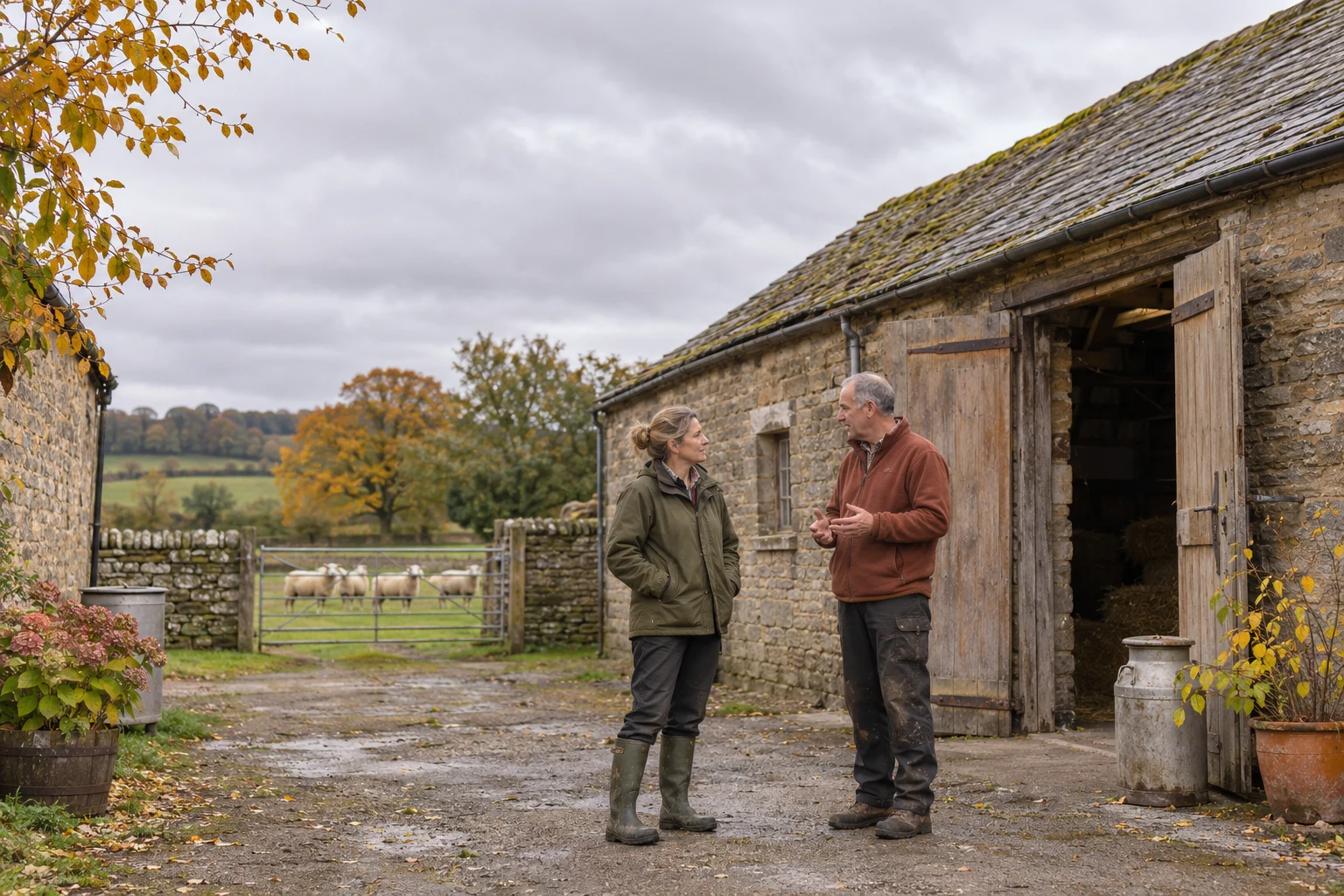
After losing livestock, start by asking for practical help with the work that cannot wait and finding someone you can talk to away from the immediate job. GriefLink’s livestock-loss guidance recognises that farmers can experience grief after losing farm animals, alongside concerns about their livelihood.[19]
The rest of the herd or flock may still need attention while you are trying to take in what happened. These are practical prompts for farmers, farm workers and farming families, not veterinary, clinical, legal or financial advice. Keep decisions about animal health and immediate welfare with your vet and the appropriate professionals.
Decide who will handle the next essential jobs
Take the next part of the day, rather than trying to organise the whole week. Ask the person responsible for the farm which essential duties need cover and who is competent to do them. Be specific about what you are asking someone to take on and when you will speak again.
If you work alone, consider asking a trusted farming contact to help you arrange appropriate cover. Someone offering company is not automatically the right person to handle stock or machinery. Keep that distinction clear, and do not give an unfamiliar helper a task they are not trained for.
The NHS suggests setting small, achievable targets rather than trying to do everything at once when dealing with grief.[21] For now, you could postpone a non-urgent meeting or ask someone to handle routine calls. Confirm any arrangement rather than assuming an offer of help has become a booking.
Keep unanswered questions for a conversation with your vet
If you are going over what happened, make a short note of the questions you want to ask the vet. Separate what you know from what you are unsure about. Ask what needs attention now, what follow-up is planned and how you should raise further concerns about the remaining animals.
This article cannot explain why an animal died or whether a different decision would have changed the outcome. Avoid treating a comment online, or somebody else’s experience with a different animal, as an answer about your farm. Take those questions back to the professional who knows the circumstances.
You might ask a trusted person to sit with you during a follow-up conversation and help write down the answers. Tell them whether you want help keeping track or simply want company. Afterwards, check that you understand any instructions rather than trying to fill gaps yourself.
Tell someone how the loss has affected you
You can describe what is difficult without first deciding what to call it: “I’m finding it hard to go back into that building” or “I keep thinking about what happened.” These are suggested words, not a test of how somebody should react.
The NHS says grief affects people differently and that there is no right or wrong way to feel.[21] Try not to use another farmer’s reaction as a standard you have to meet. Equally, ask a colleague what would help rather than assuming they want to discuss the details.
For a farming-specific starting point, the Farming Community Network offers a helpline on 03000 111 999, answered from 7am to 11pm every day.[28] Its health page describes listening and support for people facing difficulties in farming and rural life.[28] Check the linked page for details. It is separate from urgent NHS help.
Agree what to share with family and the farm team
Before telling a wider group, ask the people directly involved what they are comfortable sharing. You could agree who will answer routine questions so that one person does not have to repeat a difficult account throughout the day.
Keep essential work information clear without asking everyone to discuss their feelings in a team meeting. Offer a private conversation instead. If someone wants to talk later, agree how they can get in touch and follow through on that offer.
At home, make one practical request if you can: company over a meal, help organising tomorrow or some time without questions. The NHS includes talking to a friend, relative or healthcare professional among its suggestions for coping with grief.[21] Choose the person and setting that feel useful to you.
Make a next step and know where further help is
Before today ends, confirm tomorrow’s essential cover and choose one person to contact. Leave bigger business decisions for a separate, properly supported discussion wherever possible. You can find more farming and rural reading in the Rural Mind hub.
Speak to a GP if you are struggling to cope with stress, anxiety or low mood, or the things you are trying are not helping.[21] Describe the effect on daily life rather than waiting until you have a particular explanation.
Samaritans is free on 116 123, any time, day or night.[7] For urgent mental health help in England, call NHS 111 and choose the mental health option.[8] Urgent NHS routes differ across UK nations. In an emergency, if someone’s life is at risk or you cannot keep yourself or someone else safe, call 999 or go to A&E now.[8]
Sources
[8] NHS: urgent mental health help
[19] GriefLink: loss of livestock