
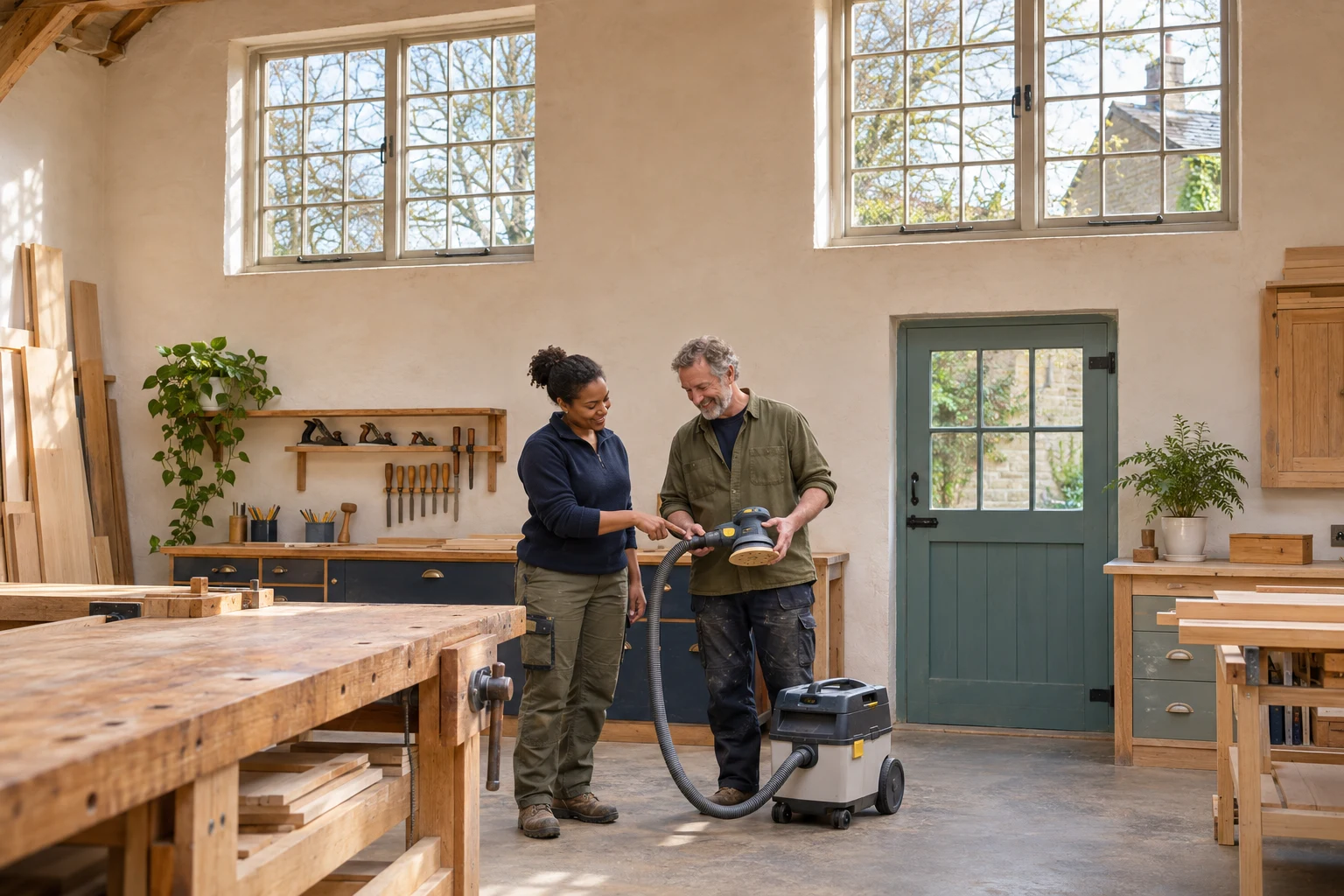
Before a dusty job, check how you will prevent or capture the dust, not just which mask to wear. HSE says a mask alone is not the normal answer for high-risk construction tasks: the priority is stopping dust getting into the air.[1]
For a self-employed tradesperson, make that part of preparing the job, alongside materials and access. This is general information and signposting, not a site assessment, equipment recommendation or medical advice. Use competent safety help for your particular work. The HSE guidance linked here covers Great Britain.
Start with the material and the whole task
HSE identifies silica, wood and other construction dusts, and explains that cutting, drilling and grinding can release fine silica dust from materials such as concrete and mortar.[1] A short job or an outdoor setting does not automatically remove the risk.[1]
Before the next visit, write down what you will work on and how. Include preparation and clearing up, rather than recording only the main cut or sanding stage. Ask whoever manages the site what is known about the materials and which controls have been planned. Do not guess from appearance or treat this article as permission to disturb an unknown material.
HSE’s task guidance separates work such as chasing concrete, cutting roofing tiles, sanding wood and sanding plasterboard joints.[3] Find the guidance for your actual task. Take unresolved questions to a competent adviser before deciding the working method.
Ask what can change before reaching for a mask
HSE’s examples include using materials that need less cutting, changing the method, and controlling remaining dust with properly applied water suppression or suitable on-tool extraction.[1] These are task-specific controls, not interchangeable accessories.
For your next equipment conversation, describe the material, tool and working space. Ask the supplier or safety adviser to explain the appropriate setup and demonstrate its use. Bring the tool’s instructions, or its exact model details, rather than asking for something that will work with whatever is in the van.
Agree what needs to be available before arriving. Who provides the extraction equipment? Who checks compatibility and condition? What happens if the planned control is missing or stops working? Ask for a clear answer before the work starts, rather than making a substitution under pressure from a waiting customer.
Keep other people in the conversation too. HSE points out that a mask protects only its wearer; controlling dust at source also matters for others nearby.[1] Discuss who could enter the work area and how the job will be organised around them.
Check the fit as well as the filter
HSE says tight-fitting respiratory protective equipment needs a good seal and that one make or size will not fit everyone.[6] A box marked with a protection rating does not establish that the mask fits your face or suits the task.
Ask how the selected mask will be fit tested by a competent person. HSE recommends testing during selection and making the same make, model, type and size available afterwards; each type of tight-fitting facepiece used needs testing.[6] Keep the details with your work records so you can identify the equipment rather than relying on its colour or shape.
Facial hair matters. HSE warns that stubble and beards prevent a good face seal, and says alternatives that do not rely on a tight fit are available where there are good reasons for a beard.[6] Ask a competent adviser about suitable alternatives rather than trying to tighten a mask over facial hair.
A fit test is not a replacement for putting the mask on correctly and checking the seal each time you wear it.[6] Ask for instruction you can follow, including how the equipment works with your other protective kit.
Plan the clean-up before making the mess
Dry sweeping concrete dust and building debris can put high levels of dust into the air.[2] HSE advises avoiding it where possible and describes controlled methods, including appropriate vacuum attachments with H- or M-class extraction for finer material.[2]
Ask which cleaning method is suitable for this job and what equipment it needs. Do not assume the customer’s household vacuum is the answer. Include removing collected waste, looking after filters and leaving the work area ready for its next user in the discussion.
HSE also calls for checking that controls are used properly and maintaining equipment according to the relevant guidance and supplier’s instructions.[2] Ask who owns those checks when equipment is shared or hired, and where faults should be reported.
Settle one practical question before the next job
Choose an upcoming dusty task and gather its material details, tool instructions and planned controls. Contact the site manager, supplier or competent safety adviser with the gaps. Aim to leave that conversation knowing what equipment and training are needed, who provides them and what must be resolved before starting.
Keep the answer with the job notes and revisit it if the task changes. For more practical reading about working in the trades, visit the Trade Mind hub.
Sources
[1] HSE: construction dust questions
[2] HSE: construction dust and dry sweeping